


How to Remove Green Mold From Metal Starts With Identification
The safest way to remove green mold from metal is to first confirm whether it is really mold or just metal corrosion. This matters because the wrong cleaning method can damage the surface, spread spores, or make oxidation worse.
If the green area is on copper, brass, bronze, or a copper-containing alloy, it is very likely verdigris or patina. Verdigris is a green or blue-green corrosion product that forms when copper reacts with moisture, oxygen, carbon dioxide, salts, acids, or pollutants over time. The Copper Development Association describes green patina as a natural coating seen on older copper roofs, statues, and outdoor copper surfaces.
Mold works differently. Mold is a living organism that needs moisture and organic material. Clean bare metal is not a good food source. But mold can still appear on metal if the surface has dust, skin oils, food residue, soap scum, paint, rubber seals, insulation, cardboard contact, or a humid layer of grime.
Here’s the simple distinction:
| What You See | Most Likely Cause | Common Surface |
|---|---|---|
| Green-blue crust, powder, or stain | Verdigris/corrosion | Copper, brass, bronze |
| Green fuzzy or slimy growth | Mold or algae-like growth | Dirty, painted, damp surfaces |
| Green stain around screws, joints, or water-exposed areas | Oxidation or mineral reaction | Outdoor metal, bathroom fixtures |
| Musty smell plus damp nearby material | True mold nearby | Wall, wood, fabric, insulation |
A key clue is texture. Corrosion often looks crusty, chalky, powdery, or stained into the metal. Mold often looks fuzzy, spotty, smeary, or dusty, and it may come with a musty smell.
The Core Misconception: Metal Usually Doesn’t “Grow Mold”
The big misconception is thinking that every green mark on metal is organic mold. In reality, metal does not support mold the same way drywall, wood, carpet, fabric, paper, or dust does.
Mold needs three things: moisture, suitable temperature, and something organic to feed on. Metal can provide a cold surface where condensation forms, but it does not feed mold by itself. That is why green marks on copper pipes, brass fittings, bronze decor, old hardware, or outdoor metalwork are usually a chemistry problem, not a mold colony.
This is especially common in places like:
- Copper pipes under sinks
- Brass door handles
- Bronze decorative items
- Outdoor copper roofs or gutters
- Metal bathroom fixtures
- Old coins, tools, or ornaments
- AC parts with condensation
- Metal storage shelves in humid rooms
If you clean verdigris as if it were mold, you may waste time using disinfectants that don’t solve the oxidation. Worse, harsh chemicals can stain, pit, or dull the metal.

But the opposite mistake is also risky. If you assume everything is corrosion, you may ignore a moisture problem nearby. For example, a greenish spot on a metal shelf in a damp storage room may be corrosion on the shelf, while the cardboard boxes beside it have active mold.
So the real question is not only, “How do I remove the green stain?” It is also, “Why did this green stain appear?”
If there is ongoing dampness, condensation, leakage, or poor ventilation, the stain can come back. And if true mold is growing on nearby porous material, wiping the metal alone won’t solve the source.
How to Clean Verdigris From Metal Surfaces
The most practical way to clean verdigris is to start gently. Your goal is to remove loose green corrosion and grime without scratching the metal, stripping the finish, or causing more chemical damage.
Before cleaning, identify the metal and finish. A decorative antique, plated object, lacquered brass, or valuable collectible should not be cleaned aggressively. Patina can sometimes be part of the object’s character or value. For everyday fixtures, tools, handles, and hardware, gentle cleaning is usually fine.
Start With Dry Removal
Put on gloves, then use a soft cloth, soft toothbrush, or microfiber towel to remove loose green powder. Do not use a hard wire brush unless you are cleaning industrial metal where appearance does not matter.
For small corners, use a cotton swab or soft detailing brush. The goal is to lift loose corrosion, not grind the surface.
Wash With Mild Soap and Water
Mix warm water with a small amount of mild dish soap. Dip a cloth into the solution, wring it out, then wipe the affected area. For textured areas, use a soft toothbrush.
Avoid soaking the metal, especially if there are seams, screws, joints, hollow parts, or electrical components. Too much moisture can worsen corrosion.
After washing, rinse with a clean damp cloth and dry immediately with a towel.
Use a Gentle Acid Only When Appropriate
For ordinary copper, brass, or bronze items, a mild acid can help dissolve green oxidation. Common home options include white vinegar or lemon juice, often used with a little salt or baking soda depending on the item.
But use caution. Acid can brighten the metal unevenly, remove patina, or damage coatings. Always test a small hidden area first.
A practical method:
- Apply a small amount of white vinegar or lemon juice to a cloth.
- Rub the green area gently.
- Use a soft toothbrush for crevices.
- Rinse with a damp cloth.
- Dry completely.
- Buff with a clean dry cloth.
Don’t leave acidic cleaners sitting on the metal for a long time. The longer they remain, the higher the chance of discoloration.
Protect the Surface After Cleaning
Once the green residue is removed, keep the surface dry. For some items, a light metal polish or protective wax may help slow future oxidation. For plumbing, outdoor fixtures, or humid rooms, the real protection comes from reducing moisture exposure.
If the green returns quickly, look for leaks, condensation, acidic cleaners, salt air, or chemical exposure. In coastal or humid environments, corrosion can return faster.
Signs of True Green Mold on or Around Metal
True green mold usually looks and behaves differently from verdigris. It is more likely to appear as fuzzy, dusty, velvety, or patchy growth. It may be green, gray-green, dark green, black-green, or mixed with white and brown areas.
The strongest sign is the environment. True mold is more likely when the area has moisture and organic residue.
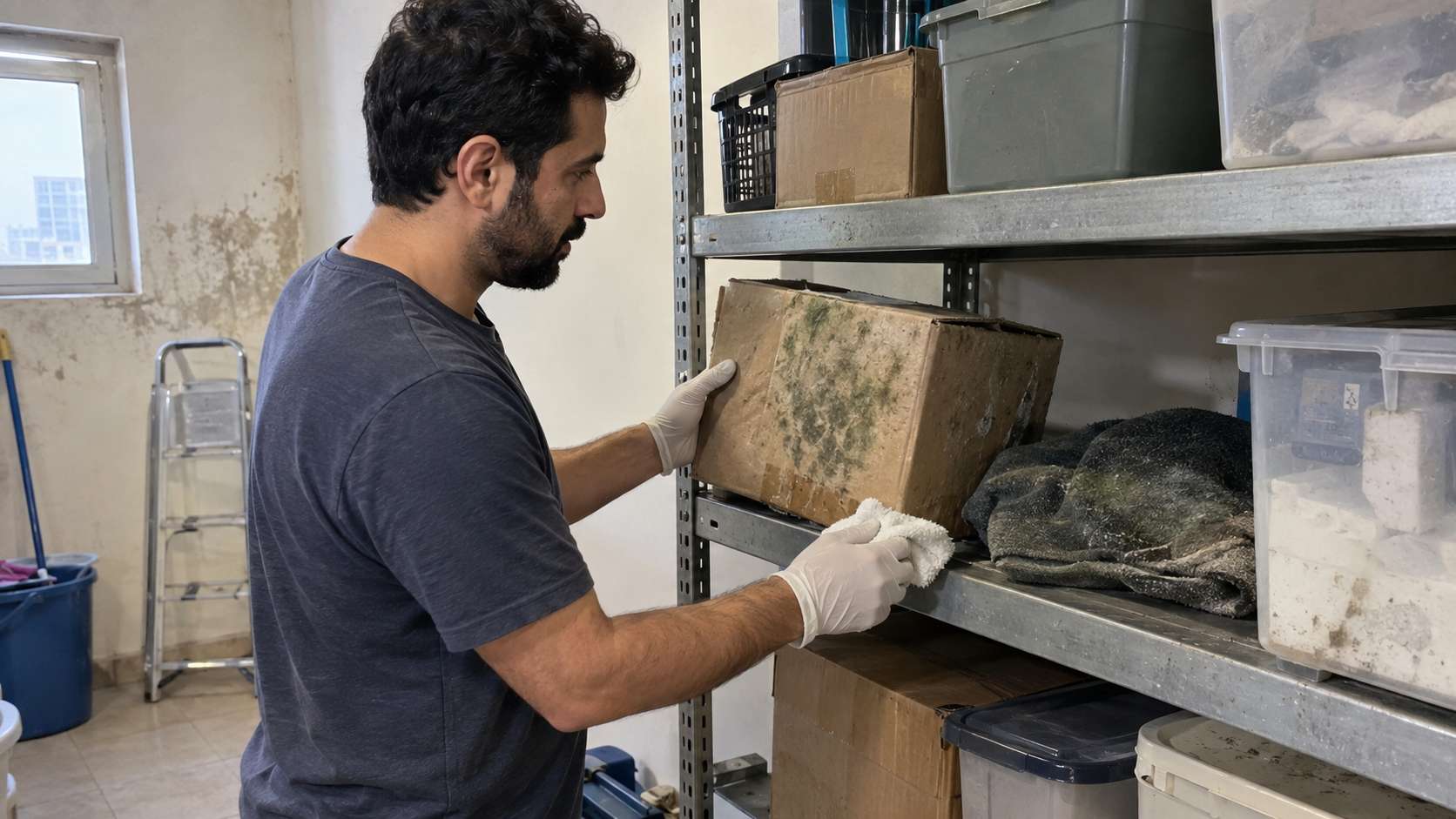
Look for these signs:
- A musty or earthy smell
- Fuzzy or soft growth instead of hard crust
- Growth that wipes away like dirt or smear
- Spots spreading onto nearby walls, cardboard, wood, fabric, or rubber
- Condensation on the metal
- Damp dust or grime on the surface
- Water leaks or poor ventilation nearby
- Mold returning after simple wiping
Metal shelves in storage rooms are a good example. The shelf may not feed mold, but dust on the shelf can. Cardboard boxes sitting on the shelf can grow mold, then spores can settle on the metal. In bathrooms, mold may grow on soap scum, caulk, silicone, paint, rubber seals, or mineral-dust buildup around metal fixtures.
AC systems can also confuse people. Metal vents, coils, drain pans, and ducts may show grime, corrosion, or microbial growth depending on moisture and maintenance. If the green material appears inside HVAC equipment, it’s better to be cautious because airflow can distribute particles and odors.
The main rule is simple: if it is fuzzy, musty, spreading, and connected to damp organic material, treat it as possible mold. If it is crusty blue-green on copper or brass, treat it as corrosion first.
Where True Green Mold Usually Grows
True green mold usually grows where moisture stays long enough for spores to settle and feed. It prefers organic surfaces more than metal.
Common places include:
- Drywall behind furniture
- Wood framing or cabinets
- Bathroom ceilings
- Shower grout and caulk
- Carpet backing
- Fabric, leather, and upholstery
- Paper, books, and cardboard
- Dusty AC vents
- Window frames with condensation
- Under sinks with slow leaks
- Storage rooms with poor airflow
Metal can still be involved, but usually as a nearby surface. A metal window frame may collect condensation, but mold may grow on the dust, paint, rubber gasket, or nearby drywall. A metal rack may look moldy, but the actual source may be damp boxes or stored fabric.
This is why cleaning only the visible green spot may not be enough. If the humidity stays high or the leak continues, mold can return on nearby materials. EPA guidance emphasizes drying wet materials quickly and cleaning mold from hard surfaces with detergent and water, while absorbent materials may need removal if they become moldy.
That point is important for metal objects in storage. If your metal tool, shelf, or decor item has green staining, inspect everything around it. Mold on cardboard, wood, cloth, or leather nearby is often the bigger problem.
How to Clean True Green Mold From Metal Properly
If you are confident the green material is true mold sitting on a metal surface, clean it like a hard, non-porous surface. EPA says mold can generally be removed from hard surfaces by wiping or scrubbing with water and detergent, then drying completely.
Start with basic safety. Wear gloves, avoid breathing dust, and ventilate the area. If the patch is small, this is usually manageable. If the mold covers a large area, keeps returning, or is connected to water damage, the cleanup may need a more careful approach.
Step-by-Step Cleaning Method
- Move the item away from porous materials.
If the metal object is near moldy cardboard, fabric, or wood, separate it first. - Dry the area if it is wet.
Don’t clean in standing water or active leakage. Fix the moisture source first. - Wipe loose debris with a damp disposable cloth.
Avoid dry brushing suspected mold because it can disturb particles. - Scrub with detergent and warm water.
Use dish soap or mild detergent. Scrub the metal with a sponge, microfiber cloth, or soft brush. - Rinse with a clean damp cloth.
Remove detergent residue so the surface does not stay sticky. - Dry completely.
This step matters. Mold comes back when moisture remains. - Disinfect only if appropriate.
For non-sensitive metal surfaces, you may use a suitable disinfectant. CDC notes that mold can be removed from hard surfaces with household products, soap and water, or a diluted bleach solution of no more than 1 cup of household bleach in 1 gallon of water.
Be careful with bleach on metal. Bleach can corrode some metals, especially if left on too long or used repeatedly. Never mix bleach with ammonia or other cleaners because it can create toxic vapors; CDC specifically warns against mixing bleach and ammonia.
For many household metal items, detergent and thorough drying are safer than bleach.
When the Green Stain Means a Bigger Moisture Problem
A green stain on metal may look like a small cleaning issue, but sometimes it points to a bigger moisture problem. This is especially true when the green mark appears near plumbing, AC units, window frames, basements, storage rooms, or bathrooms.
Check for:
- Slow pipe leaks
- Condensation on cold metal
- High indoor humidity
- Poor ventilation
- Water-damaged walls or cabinets
- Mold smell in the room
- Damp cardboard, wood, or fabric nearby
- Rust, peeling paint, or swollen materials
If you remove the green mark but the surface gets wet again, the problem will return. With verdigris, moisture keeps feeding corrosion. With mold, moisture keeps supporting growth on dust and nearby organic materials.
A practical moisture check is simple. Dry the area completely, then monitor it for a few days. If moisture returns without obvious spills, you may have condensation, leakage, or humidity issues. For indoor spaces, improving airflow and reducing humidity often helps. For plumbing, the source has to be repaired.
You should be more careful if the affected area is inside an AC system, behind a wall, under a sink, or near electrical components. Cleaning the visible metal surface may not address hidden contamination or water damage.
For small, isolated spots on non-porous metal, DIY cleaning can be enough. For recurring musty smell, widespread growth, or mold on porous materials, the issue is no longer just “green mold on metal.” It becomes a moisture and building-material problem.
The Bottom Line
Green “mold” on metal is usually not mold. If it appears as a blue-green or green crust on copper, brass, or bronze, it is most likely verdigris or oxidation. Clean it gently with a soft cloth, mild soap, careful rinsing, complete drying, and a mild acid only when the metal can tolerate it.
True green mold is different. It usually grows on dust, grime, paint, rubber, caulk, wood, drywall, fabric, paper, or other organic material around the metal. If the growth is fuzzy, musty, spreading, and linked to damp conditions, clean the metal with detergent and water, dry it fully, and fix the moisture source.
The right approach is simple: identify first, clean second, dry completely, then stop the moisture that caused the problem. That is what keeps the green stain from coming back. The article structure follows the supplied content guidance to answer the central topic clearly and keep the article focused on the primary keyword.