


How Long After Mold Removal Do Symptoms Go Away?
Symptoms often improve within 2–3 weeks after mold removal, but the exact timeline depends on the person and the home. If the mold exposure was light and your symptoms were mild, you may feel better in a few days. If the exposure lasted for months or affected your bedroom, AC system, carpet, furniture, or walls, recovery may take longer.
The key phrase is after proper mold removal. If the mold was only sprayed, painted over, or cleaned on the surface while the moisture source remained active, symptoms may not improve much at all. The EPA says mold cleanup is not complete until the water or moisture problem has been fixed. If that water problem is not solved, mold can return.
You may notice improvement in stages:
- Less musty smell
- Less sneezing or coughing indoors
- Better sleep
- Less eye or throat irritation
- Fewer asthma or allergy flare-ups
- Less heavy or stale indoor air feeling
But symptoms are not always caused by mold alone. Dust, dust mites, pollen, pet dander, cleaning chemicals, AC contamination, humidity, and other indoor air problems can create similar symptoms. So if the mold is gone but symptoms stay, the next step is not panic. The next step is to check whether the remediation was complete and whether another indoor trigger is still present.
Recovery Timeline: Acute Symptoms vs Chronic Symptoms
The recovery timeline is different for acute symptoms and chronic symptoms. Acute symptoms are usually short-term reactions that happen when you are exposed to moldy air or a damp room. Chronic symptoms are longer-lasting problems that may build up after repeated exposure or happen in people with existing health conditions.
First Few Days After Mold Removal
In the first few days, the biggest changes are usually smell and irritation. If the remediation was done properly, the room should start smelling fresher. You may notice less throat irritation, less eye burning, and fewer sneezing episodes.
However, the home may still need airing out, HEPA vacuuming, AC filter replacement, or final dust removal. Remediation work can disturb dust and particles, so the first few days are not always perfect.
During this stage, avoid sleeping in the remediated room until it is fully dry, cleaned, and cleared for use.
Week 1
By the end of the first week, mild symptoms may start calming down. This includes runny nose, itchy eyes, mild cough, skin irritation, and musty-smell discomfort.
If symptoms only happened inside the moldy room, you should notice that the room feels easier to tolerate. If nothing improves, check whether the AC, curtains, mattress, carpet, wardrobes, or nearby walls still hold moldy dust or odor.
Weeks 2–3
This is where many people feel the clearer improvement. The body has had more time away from the exposure, the room has had more time to dry, and indoor air should be more stable.
This is the practical answer most homeowners want: 2–3 weeks is a reasonable window for noticeable improvement after successful mold remediation.
But if someone has asthma or mold allergy, symptoms may take longer to settle. The CDC states that mold exposure can trigger asthma attacks and cause eye, nose, skin, and respiratory irritation.
After 3–4 Weeks
If symptoms continue after 3–4 weeks, take it seriously.

It may mean one of four things:
- Mold is still present somewhere.
- The moisture source was not fully fixed.
- The AC or HVAC system is still contaminated.
- The symptoms are caused by another medical or indoor air issue.
If symptoms include shortness of breath, chest tightness, coughing blood, fever, or severe breathing difficulty, contact a doctor immediately. People with weakened immune systems or chronic lung disease are at higher risk of serious fungal infections from mold exposure.
Detox and Recovery Tips to Feel Better Safely
The safest “detox” after mold removal is not extreme supplements, harsh cleanses, or internet detox routines. The safest recovery plan is to reduce exposure, improve clean air, support your body normally, and get medical help when symptoms are serious.
Mold recovery starts with your environment. If the home is still damp, dusty, or musty, your body may keep reacting.
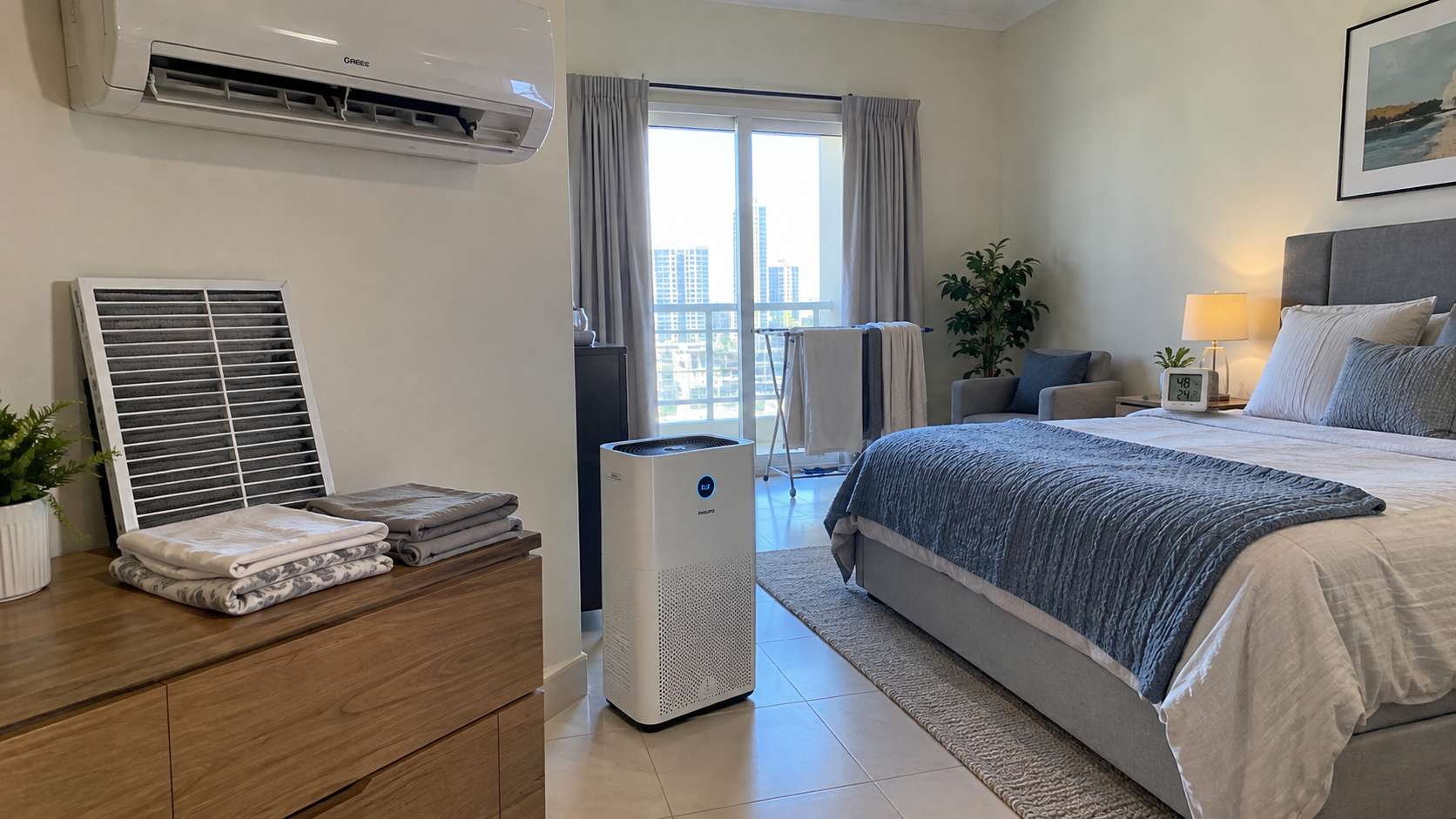
Practical recovery tips include:
- Stay away from the affected area until work is complete.
Do not re-enter too early, especially if you have asthma, allergies, lung disease, or weak immunity. - Ventilate after remediation when safe.
Fresh air helps remove leftover odor and cleaning smells. Avoid opening windows during very humid UAE weather for too long if it raises indoor humidity. - Use HEPA filtration.
A HEPA air purifier can help reduce airborne particles in bedrooms and living areas. - Replace or clean AC filters.
If mold was near AC vents or ducts, dirty filters can keep spreading odor and particles. - Wash washable fabrics.
Curtains, bedsheets, cushion covers, and soft items may hold musty odor. - Avoid aggressive fragrances.
Air fresheners may hide odor but do not improve the air. - Drink water, sleep well, and reduce other irritants.
Smoke, strong perfumes, dust, and harsh cleaners can make irritated airways feel worse. - Follow your doctor’s treatment plan.
If you have asthma, allergies, eczema, sinus problems, or lung disease, do not stop medication just because mold was removed.
Be careful with “mold detox” claims online. There is no one-size-fits-all detox plan that magically clears mold symptoms. If you feel unwell, especially after long exposure, speak with a healthcare professional.
When Air Quality Testing Helps After Mold Removal
Air quality testing can help after mold removal when you need confirmation that the remediation worked, especially after serious mold growth, AC-related mold, water damage, or recurring symptoms.
Testing is not always required for every small mold cleanup. If the mold was tiny, on a hard surface, and the moisture source is fixed, visual inspection and prevention may be enough.
But post-remediation testing is useful when:
- Mold covered a large area
- Mold was hidden behind walls or ceilings
- Mold was near AC vents or ducts
- Someone in the home is vulnerable
- Symptoms continue after remediation
- You need proof before moving back in
- You rent the property and need documentation
- The home still smells musty
The EPA says pre- and post-remediation sampling may be useful for determining whether remediation efforts have been effective. After remediation, indoor mold types and concentrations should be similar to those found in outdoor air. The EPA also notes that there are no federal threshold limits for mold or mold spores, so testing should not be treated like a simple pass-or-fail number.
Good testing should be paired with inspection. A lab report without a moisture check can be confusing. The question is not only “how many spores are in the air?” The better question is “is there still an active mold source inside the home?”
What to Do After Professional Mold Remediation at Home
After professional mold remediation, your job is to make sure the home stays dry, clean, and monitored. Even good remediation can fail if the original moisture condition returns.
Use this after-remediation checklist:
- Confirm the moisture source was fixed.
Ask whether the leak, AC condensation, roof seepage, or humidity issue was corrected. This is the most important step. - Ask for before-and-after proof.
Photos help you understand what was removed, cleaned, treated, or repaired. - Check whether damaged materials were replaced.
Porous materials like drywall, gypsum board, carpet, insulation, or MDF may need removal if they were heavily contaminated. - Keep the area dry.
Use ventilation, AC maintenance, dehumidifiers, or exhaust fans depending on the cause. - Replace AC filters.
If mold was near airflow, clean filters and AC servicing matter. - Avoid repainting too early.
Do not paint until the area is fully dry and stable. - Monitor the same spot for 2–3 weeks.
Watch for new stains, musty odor, bubbling paint, or dampness. - Track symptoms.
Notice whether symptoms improve away from the home, return in one room, or worsen when the AC starts. - Consider post-remediation air testing.
This is helpful if symptoms continue or the mold was serious. - Call the remediation company for follow-up if needed.
If odor or stains return, do not restart DIY cleaning. Ask for reassessment.
The CDC recommends that people with asthma, COPD, or weakened immune systems stay away from moldy spaces and protect themselves from breathing in mold during cleanup. For vulnerable people, returning too early can slow recovery or trigger symptoms again.
Why Symptoms May Not Go Away After Mold Removal
Symptoms may not go away after mold removal if exposure is still happening or if something else is triggering your body.
Common reasons include:
- Hidden mold was missed
- The AC system still has mold or dust contamination
- The water source was not fixed
- The room is still humid
- Carpets, curtains, or mattresses absorbed odor
- Moldy materials were cleaned instead of removed
- Remediation dust was not fully cleaned
- Another allergen is present
- You have an existing asthma, allergy, or sinus condition
- You need medical evaluation
If the AC smells musty when it starts, pay attention. The EPA advises that if you suspect an HVAC system is contaminated with mold, you should not run it because it could spread mold through the building.
If symptoms improve outside the home but return indoors, that is a strong clue that the indoor environment still needs checking.
The Bottom Line
Most people who react to mold may feel noticeable improvement within 2–3 weeks after mold removal, especially when the mold source is removed, the moisture problem is fixed, the room is dried, and indoor air quality improves.
Mild irritation may improve in days. Allergy-like symptoms may take one to three weeks. Chronic symptoms, asthma flare-ups, sinus issues, or symptoms in vulnerable people may take longer and should be discussed with a doctor.
After remediation, do not only wait for your body to recover. Make sure the home is truly fixed. Confirm moisture control, clean or replace contaminated materials, service the AC, improve ventilation, consider air quality testing, and monitor symptoms for the next few weeks. If the same smell or symptoms return, the mold problem may not be fully gone.