


What Should You Do If You Find Hotel Mold?
If you find mold in your hotel room, the first step is to document the problem and notify the hotel immediately. Avoid trying to clean it yourself because disturbing mold growth may spread spores into the air and make the situation harder to prove later.
Start by taking clear photos and videos of:
- Visible mold spots on walls, ceilings, bathrooms, carpets, or furniture
- Water stains, leaks, peeling paint, or damaged surfaces near the mold
- Any affected personal belongings
- The overall condition of the room
After documenting the issue, contact the front desk or hotel manager. Clearly explain what you found and request a solution, such as:
- Moving to a different room
- Inspecting the affected area
- Providing a refund or partial refund if the room is unusable
If you experience symptoms such as coughing, throat irritation, worsening allergies, or breathing discomfort after staying in a moldy room, keep records of when the symptoms started and seek medical advice if needed.
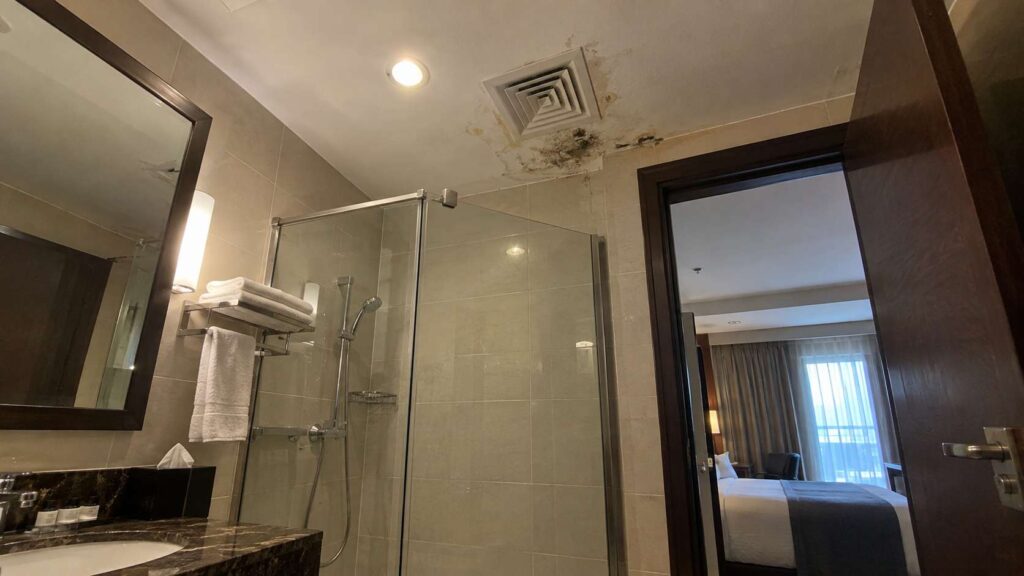
The important thing is not to silently accept the condition. A hotel room is expected to provide a clean and safe environment for guests, and visible mold may indicate a maintenance problem that requires attention.
Why Hotel Mold Is a Problem You Should Not Ignore
Hotel mold is not just a cosmetic issue. It often points to excess moisture, leaks, poor ventilation, or water damage that has not been properly repaired.
Mold can grow in hidden places, including:
- Behind wallpaper or wall coverings
- Inside bathroom ceilings
- Around air conditioning units
- Under carpets
- Behind furniture placed against damp walls
The main concern with mold is that it can release spores into the air. When guests breathe contaminated air, some people may experience irritation, especially those who are sensitive to allergens.
Possible reactions may include:
- Sneezing and nasal irritation
- Coughing or throat discomfort
- Watery or irritated eyes
- Increased allergy symptoms
- Worsening asthma symptoms in sensitive individuals
However, the impact of mold exposure varies from person to person. Not everyone who enters a moldy room will experience health problems, but that does not mean visible mold should be ignored.
Another concern is that mold may signal a larger building problem. A small patch on the wall may be caused by a leaking pipe, condensation from an AC system, or water intrusion inside the structure. If the moisture source is not fixed, mold can continue returning even after surface cleaning.
Should You Get a Refund If Your Hotel Room Has Mold?
You may be able to request a refund if your hotel room has mold, especially when the condition significantly affects the quality or safety of your stay.

However, whether you receive a full refund depends on several factors. Factors that may affect the outcome include the extent of the problem, whether the hotel offered another suitable room, the booking and cancellation terms, how the reservation was made, and the consumer-protection rules that apply in that location.
For example, a small amount of suspected mold in a bathroom corner may be handled differently from extensive mold growth throughout the room, a strong mold odor, or a room with visible water damage.
If you plan to request a refund or file a complaint, keep a clear record of what happened:
- Report the problem immediately instead of waiting until checkout.
- Keep evidence such as photos, videos, and messages with hotel staff.
- Request a written response if possible.
- Keep receipts if you need to move to another hotel.
- Contact the booking platform if you reserved through a third party.
If the hotel refuses to help despite clear evidence that the room is unsuitable, you may have stronger grounds to request a refund or file a complaint.
Can You Sue Hotel Owners for Mold Problems?
Yes, you may be able to sue hotel owners in certain situations, but having mold in a hotel room alone does not automatically mean you have a successful legal claim.
A lawsuit usually depends on whether you can prove important factors such as:
- The hotel knew or should have known about the mold problem
- The hotel failed to properly address the issue
- The mold caused actual harm, such as health problems or property damage
- You suffered measurable losses because of the condition
For example, a guest may have a stronger case if a hotel repeatedly ignored complaints about leaks, continued renting a severely affected room, or failed to repair known moisture problems.
Possible claims may involve:
- Negligence
- Failure to maintain safe premises
- Breach of accommodation standards
- Compensation for medical expenses or damaged belongings
The legal process depends heavily on where the hotel is located. Different countries and regions have different rules regarding hotel responsibilities, consumer protection, and personal injury claims.
Before considering legal action, it is usually helpful to collect evidence:
- Photos and videos of the mold
- Booking records
- Communication with hotel staff
- Medical documents if health issues occurred
- Receipts for additional expenses
A lawyer familiar with local laws can help determine whether your situation supports a claim.
How Can Guests Avoid Mold Problems When Staying at Hotels?
While guests cannot completely control hotel maintenance, you can reduce the chance of staying in a problematic room by paying attention to warning signs when you arrive.
Before unpacking, quickly check:
- The bathroom ceiling and corners
- Around the shower area
- AC vents for stains or unusual buildup
- Walls near windows
- Areas with a strong musty smell
A mold problem is not always visible. Sometimes the first warning sign is the smell. A persistent earthy, damp, or stale odor may suggest hidden moisture problems.
If you notice warning signs:
- Do not place luggage directly on carpets or beds until you are comfortable with the room condition.
- Ask for another room if something feels wrong.
- Avoid staying in a room with obvious water damage or strong mold odors.
- Report problems early instead of waiting.
Hotels that maintain proper ventilation, repair leaks quickly, and regularly inspect moisture-prone areas are less likely to develop serious mold issues.
So, Do You Still Want to Stay in a Hotel With Mold Signs?
Hotel mold should never be ignored. If you find mold in your room, document the condition, report it immediately, and request a proper solution from hotel management. Whether you receive a refund depends on the severity of the issue, hotel response, and applicable policies.
You may also have the option to sue hotel owners if you can prove that negligence caused harm, but legal claims require evidence and depend on local laws.
The best protection for travelers is simple: pay attention to warning signs, trust your observations, and do not accept a room with serious moisture problems or visible mold. A clean hotel room is not just about comfort; it is part of providing a safe environment for guests.