


When Home Insurance and Mold Damage May Be Covered
Home insurance and mold damage may be covered when the mold is a direct result of a covered sudden and accidental event. In simple words, the mold must usually be connected to an insured water-damage claim, not a long-term maintenance problem.
For example, your claim may be stronger if mold developed after:
- A pipe suddenly burst.
- A water heater failed suddenly.
- A washing machine hose burst.
- A covered AC water line or apparatus leaked suddenly.
- Flash flooding or storm water damage was included in your policy.
- A sudden escape of water damaged walls, cabinets, flooring, or ceilings.
Some UAE policy wording does include escape of water. For example, Dubai National Insurance’s home policy wording lists damage caused by “escape of water from water tanks, apparatus or pipes, washing machines, water mains or air conditioning apparatus,” subject to policy terms and exclusions. It also includes an exclusion related to the residence being unoccupied for more than 60 consecutive days.
This is why the cause matters more than the mold itself. If the insurer accepts the original water damage as a covered claim, related mold cleanup may have a better chance of being included, depending on the policy wording, limits, exclusions, and how quickly you acted.
But do not assume coverage automatically. Some policies cover the resulting water damage but may limit mold remediation, testing, or alternative accommodation. Others may cover building damage but not contents, or contents but not structural repairs, depending on what you purchased.
So the real question is not only, “Does my insurance cover mold?” It is: “Does my policy cover the event that caused the mold, and did I respond fast enough?”
When Mold Is Usually Not Covered
Mold is usually not covered when it is caused by gradual damage, poor maintenance, high humidity, or a problem you could reasonably have prevented. This is where many UAE homeowners and tenants get disappointed.
Your insurer may reject or reduce a claim if mold came from:
- Ongoing AC condensation
- Poor ventilation
- High indoor humidity
- Old bathroom sealant failure
- Long-term roof seepage
- Repeated minor leaks
- Damp walls ignored for months
- Wet cabinets left untreated
- Mold growth while the home was unoccupied beyond policy limits
- General wear and tear
- Lack of maintenance
- Gradual deterioration
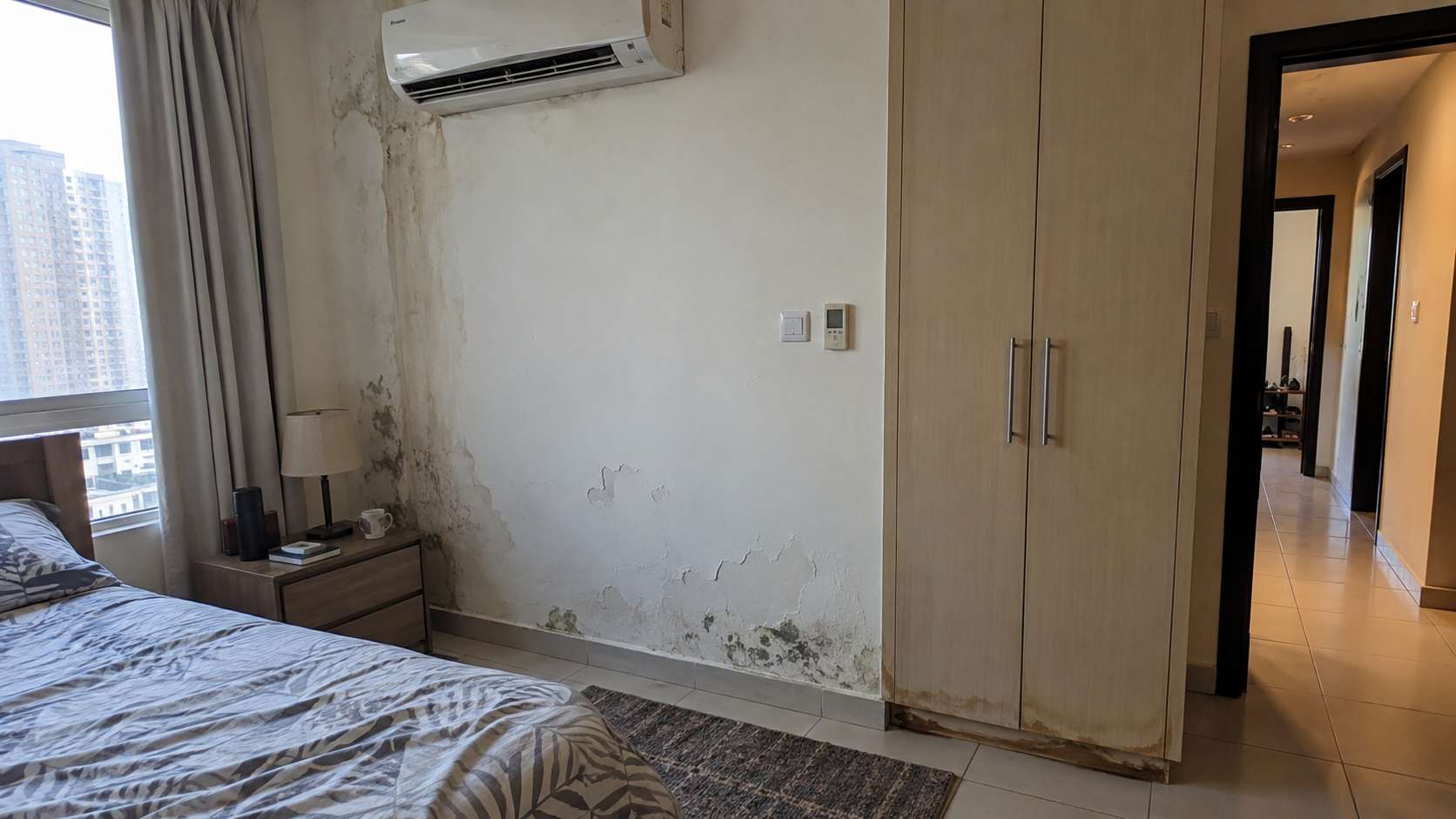
UAE insurance guides commonly distinguish sudden accidental water damage from gradual damage. InsuranceMarket.ae explains that many UAE home policies can cover sudden and accidental rain, storm, flood, and water leakage damage if the cause is an insured peril and policy conditions are met, but gradual damage, such as a small leak dripping for months, is commonly excluded.
InsuranceMarket.ae also notes that contents cover may apply when belongings are affected by insured perils such as fire, storm, escape of water, impact damage, riots, or theft, depending on the policy. But it lists wear and tear, gradual deterioration, damp, rot, mould, and pest damage as common exclusions.
That means a moldy wardrobe after months of humidity is very different from mold after a sudden burst pipe. A musty AC smell from poor maintenance is different from water damage caused by a sudden insured incident.
If the insurer believes the mold was preventable, gradual, or caused by delayed action, they may say the remediation is your responsibility.
Your Duty to Mitigate After Water Damage
Your duty to mitigate means you must take reasonable steps to reduce damage after discovering the problem. This is extremely important for mold claims.
Insurers generally expect you to act quickly. If you see water damage and do nothing for days or weeks, mold may be treated as preventable.
That can weaken your claim, even if the original leak might have been covered.
Mitigation does not mean you must complete full repairs before the insurer responds. It means you should take sensible emergency steps, such as:
- Stop the water source if safe.
- Shut off the nearest valve or main water supply.
- Move furniture and contents away from wet areas.
- Remove standing water.
- Start drying with fans, AC, or dehumidifiers.
- Avoid throwing away major damaged items before documenting them.
- Prevent children or sensitive people from entering the affected area.
- Call your insurer or broker quickly.
- Call an emergency plumber or leak detection technician if needed.
- Keep every receipt and report.
This matters because mold can grow when materials stay damp. If drywall, cabinets, carpet, or insulation remain wet, the claim can shift from “sudden water accident” to “delayed maintenance damage.”
A good rule is this: document first, mitigate immediately, repair after approval where possible. For emergency drying, temporary repairs, or safety work, ask the insurer or broker what they allow and how they want invoices submitted.
Claim Filing Steps for Water Damage Before Mold Spreads
If you want the best chance of a successful claim, treat the situation like an evidence file from the first hour.

Do not wait until the mold spreads.
1. Stop the Water Source
Turn off the nearest valve. If needed, shut off the main water supply. If the water is near electricity, do not enter the wet area. Call building maintenance, a plumber, or emergency services if needed.
2. Take Photos and Videos
Document everything before cleaning too much. Capture:
- The leak source
- Wet flooring
- Wet walls
- Damaged ceilings
- Swollen cabinets
- Mold patches
- Damaged furniture
- Damaged personal belongings
- Water heater, AC unit, pipe, hose, or appliance involved
- Date and time if possible
Take wide shots and close-up shots.
3. Notify Your Insurer or Broker Quickly
Call your insurer, broker, bank insurance provider, or claims hotline. Ask:
- Is escape of water covered?
- Is mold remediation covered if caused by this leak?
- Do I need pre-approval before remediation?
- Can I use my own contractor?
- Do you have approved contractors?
- What reports and invoices do you require?
- Is there a deductible or sub-limit?
- Are contents, buildings, or both covered?
- Is alternative accommodation covered?
4. Get a Technician Report
Ask a plumber, AC technician, leak detection specialist, or remediation company to provide a written report. The report should explain:
- Cause of leak
- Whether it was sudden or gradual
- Affected areas
- Moisture readings if available
- Immediate mitigation performed
- Recommended repairs
- Photos
- Date of inspection
- Company details and license information
This report may become one of the most important claim documents.
5. Start Drying and Mitigation
Use fans, dehumidifiers, AC, wet-dry vacuuming, and temporary containment where appropriate. Keep receipts for equipment rental, emergency callouts, and drying services.
6. Get Mold Inspection or Remediation Quote
If mold has appeared or the area stayed wet, request an official mold inspection or remediation quote. The quote should separate:
- Inspection cost
- Moisture testing
- Mold testing, if needed
- Containment
- Removal of affected materials
- Cleaning and HEPA vacuuming
- Antimicrobial treatment where appropriate
- Drying and dehumidification
- Structural repair or reinstatement
- Post-remediation verification
7. Keep Damaged Items Until Approved
Do not throw away damaged flooring, cabinets, furniture, or contents before photographing and asking the insurer. If you must discard something for safety, photograph it clearly first.
8. Submit a Complete Claim File
Your claim file should include:
- Policy number
- Claim form
- Photos and videos
- Leak report
- Mold inspection report
- Remediation quotation
- Structural repair quotation
- Invoices and receipts
- Communication records
- Dates of discovery and action taken
- Any building management report
The goal is to show that the damage was sudden, documented, and mitigated quickly.
What to Check in Your UAE Home Insurance Policy
Do not rely only on a sales brochure. Open the policy wording and check the exact clauses.
Look for these terms:
| Policy Term | Why It Matters |
|---|---|
| Escape of water | May cover sudden water leakage from pipes, tanks, appliances, or AC apparatus |
| Accidental damage | May support sudden incident claims |
| Flood, storm, rainwater | Important after heavy rain or flash flooding |
| Gradual deterioration | Often used to exclude slow damage |
| Wear and tear | Often excludes old or poorly maintained systems |
| Mould, fungus, rot, damp | May be excluded unless caused by covered peril |
| Unoccupancy clause | Coverage may reduce if home is empty too long |
| Buildings cover | Covers structural parts if included |
| Contents cover | Covers belongings if included |
| Deductible / excess | The amount you pay before insurance contributes |
| Sub-limits | Some categories may have lower payout limits |
| Approved contractors | Insurer may require specific vendors or reports |
Also check whether you have building insurance, contents insurance, or both. Tenants often insure contents, while landlords or property owners may insure the building. If mold damages kitchen cabinets, built-in wardrobes, walls, ceilings, and flooring, the buildings section may matter. If mold damages clothes, furniture, electronics, carpets, or loose belongings, contents cover may matter.
Why Insurance-Approved Mold Contractors Matter
Insurance-approved or insurance-experienced mold contractors can help because they understand documentation. This does not guarantee your claim will be approved, but it can make your file clearer and more professional.
A good mold remediation company should be able to provide:
- Official inspection report
- Cause-based explanation
- Moisture readings
- Photos before, during, and after work
- Scope of work
- Itemized quotation
- Structural repair recommendations
- Emergency mitigation record
- Drying logs if needed
- Completion report
- Invoice suitable for insurer review
This is different from a cleaner who only says, “We will spray and clean the mold.” Insurance adjusters usually need cause, extent, method, cost, and proof of mitigation.
Ask contractors:
- Have you handled insurance-related mold or water damage cases?
- Can you provide written reports with photos?
- Can you separate emergency drying, remediation, and reinstatement costs?
- Can you identify whether materials need removal or only cleaning?
- Can you communicate with the insurer or loss adjuster if needed?
- Are you licensed and insured?
- Do you follow recognized mold remediation practices?
A professional report can help show whether the damage came from sudden water escape or long-term moisture. That distinction may decide the claim.
The Bottom Line
Home insurance and mold coverage in the UAE is usually a cause-based decision. If mold follows a sudden and accidental covered water event, such as a burst pipe, water heater failure, covered escape of water, or covered flood damage, your insurer may cover inspection, remediation, and structural repairs according to the policy. If the mold comes from gradual humidity, AC condensation, poor ventilation, unresolved leaks, or maintenance neglect, you will likely have to pay out of pocket.
To protect yourself, act quickly. Stop the water, document everything, call your insurer early, mitigate the damage, get technician reports, and use mold remediation contractors who understand insurance documentation.
This article is general information, not legal, financial, or insurance advice. Your actual coverage depends on your policy wording, insurer, exclusions, limits, deductibles, and claim evidence. Always verify directly with your insurer or broker before assuming mold inspection, remediation, or repair costs are covered.