


Air Fresheners Can’t Hide Mold Smell, Here’s Why
Air fresheners may make a room smell better for a short time, but they cannot actually remove mold smell.
This happens because mold odor is not caused by something simple like cooking smells or cigarette smoke. It often comes from microbial volatile organic compounds (MVOCs), which are chemicals released during fungal growth.
When mold grows in damp areas, it can create a musty, earthy, or stale smell that spreads through:
- Walls
- Carpets
- Furniture
- Air conditioning systems
- Wooden materials
- Fabrics
- Hidden spaces
An air freshener works by adding fragrance molecules into the air. It does not:
- Kill mold growth
- Remove moisture
- Clean contaminated materials
- Stop odor-producing sources
The result is often a combination of smells: artificial fragrance mixed with a damp, musty odor.
This can actually make the problem harder to identify because the strong perfume may temporarily cover the warning signs of an active mold issue.
Another problem is that homeowners may continue using air fresheners for weeks or months while mold continues spreading behind walls, under flooring, or inside furniture.
The smell is not the problem itself. It is a symptom telling you that something in the environment may need attention.
Why Mold Smell Keeps Coming Back
Mold smell often returns because the source has not been removed.

Even if a room smells better after cleaning, odor can return when moisture and contamination remain.
Common reasons include:
Hidden mold growth
Mold may not always be visible.
It can grow behind:
- Drywall
- Wallpaper
- Cabinets
- Flooring
- Ceiling panels
- Furniture placed against damp walls
A room may appear clean while hidden areas continue producing odors.
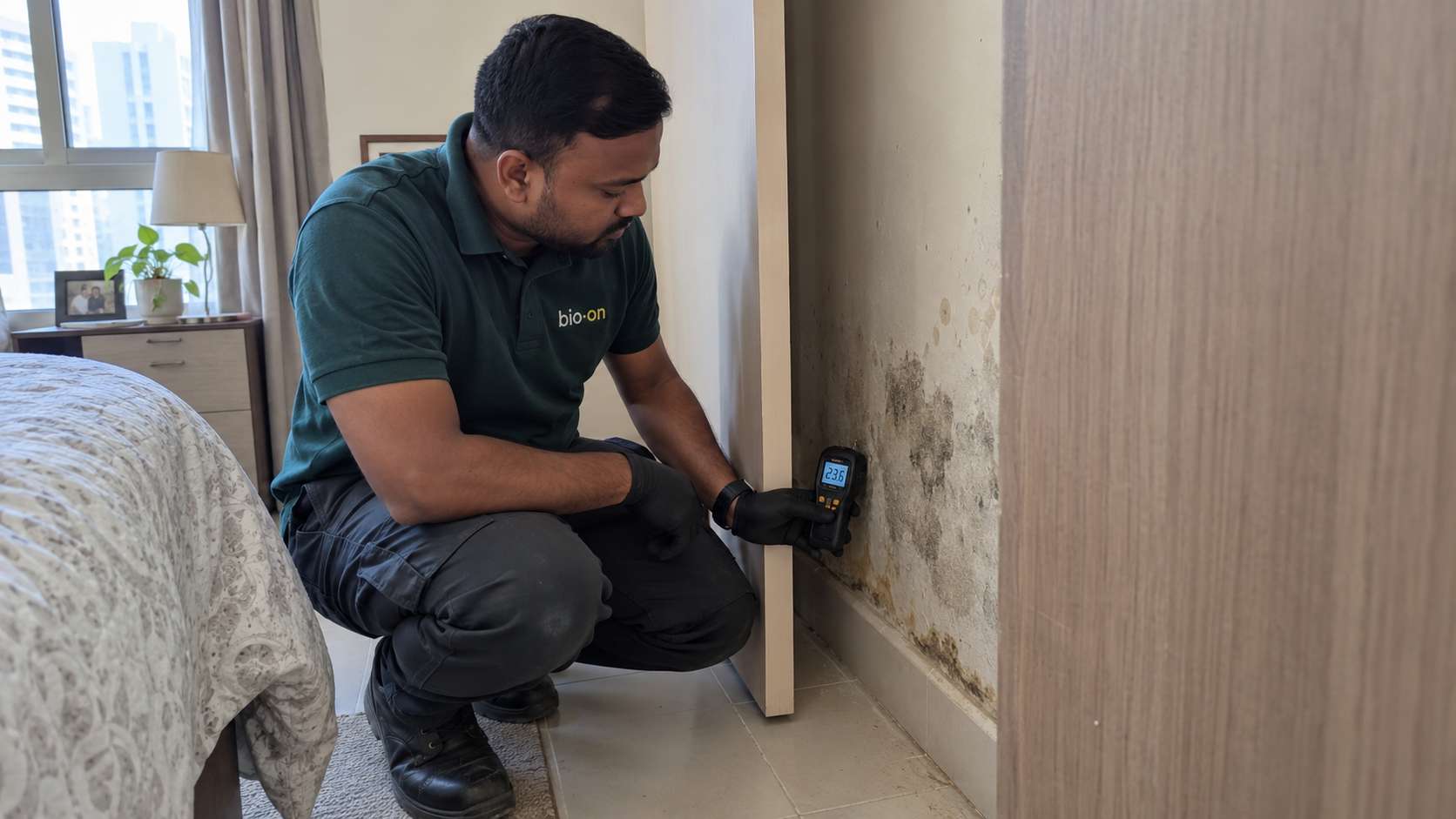
Moisture problems are still active
Mold requires moisture to survive. Common causes include:
- Plumbing leaks
- Roof leaks
- AC condensation problems
- Poor bathroom ventilation
- High indoor humidity
- Water damage
If the moisture source remains, mold odor can return even after surface cleaning.
Porous materials absorbed the smell
Some materials hold odors deeply because they absorb moisture.
Examples include:
- Upholstery
- Mattresses
- Carpets
- Curtains
- Wooden furniture
- Drywall
Cleaning the surface may not remove odors trapped inside these materials.
What Should You Do to Remove Mold Smell?
The best way to remove mold smell is to remove the source, not cover the odor.
A proper approach usually involves several steps.
Find the source of the smell
Start by identifying where the odor is strongest.
Check areas such as:
- Behind large furniture
- Under sinks
- Around windows
- Near AC units
- Bathrooms
- Basements or storage areas
- Recently water-damaged spaces
If the smell exists but no visible mold is found, hidden moisture may be the reason.
Professional tools such as moisture meters, thermal imaging cameras, and air quality testing can help locate hidden problems.
Fix the moisture problem
Removing mold without fixing moisture is one of the biggest reasons odors return.
Common solutions include:
- Repairing leaking pipes
- Fixing roof or window leaks
- Improving ventilation
- Repairing AC drainage issues
- Controlling indoor humidity
The area must be completely dry before restoration begins.
Clean or remove affected materials
The correct solution depends on the material.
Non-porous surfaces such as tile, glass, or metal may often be cleaned effectively.
However, porous materials may require more attention.
Materials that may need replacement include:
- Severely damaged drywall
- Moldy carpet padding
- Heavily contaminated insulation
- Permanently damaged furniture
Trying to save heavily affected materials can allow odors to continue.
Improve indoor air quality
After addressing the mold source, improving air circulation can help remove remaining odors.
Useful methods include:
- HEPA air filtration
- Proper ventilation
- Air conditioning maintenance
- Dehumidification
These methods help reduce airborne particles and maintain conditions that are less favorable for mold growth.
Can You Remove Mold Smell Forever?
Yes, mold smell can be removed permanently, but only when the cause has been fully addressed.
There is no spray, candle, or air freshener that can guarantee permanent odor removal because the smell is connected to an underlying environmental problem.
Long-term odor prevention requires:
- Keeping humidity under control
- Quickly drying water damage
- Repairing leaks immediately
- Maintaining AC systems
- Keeping areas properly ventilated
- Monitoring areas that previously had mold problems
A properly remediated home should not continue producing a moldy smell after the contamination source has been removed.
However, if new moisture problems appear later, mold odors can develop again.
The goal is not simply to make a room smell fresh. The goal is to create an environment where mold has no opportunity to grow.
The Bottom Line
Air fresheners cannot hide mold smell permanently because they only cover the odor temporarily while the actual source remains.
The only reliable way to remove mold smell is to identify what is causing it, eliminate the moisture problem, remove mold contamination, clean affected materials, and restore healthy indoor conditions.
If a musty smell keeps returning, treat it as a possible warning sign rather than something to cover. A fresh-smelling home comes from solving the source of the odor, not masking it.