


HG Mould Spray Review From Real Customer Feedback
HG Mould Spray is usually reviewed as a “fast result” product. People often buy it after trying ordinary bathroom cleaners, vinegar, scrubbing brushes, or cheaper mould sprays that did not make much difference. The review pattern is very consistent: users spray it on black mould or mildew stains, leave it for a short time, then see the dark marks fade without much scrubbing.
That is the strongest reason people like it. They are not usually praising it because it smells nice or feels gentle. They like it because it works visually. B&Q’s product page describes the product as suitable for removing mould from bathroom surfaces, and the ingredient listing includes sodium hypochlorite and sodium hydroxide. That matters because sodium hypochlorite is the active chemistry behind the bleach-like stain-removing effect.
The most common positive comments usually sound like this:
- It removes black mould stains quickly.
- It works better than standard bathroom cleaners.
- It improves grout and silicone edges.
- It can clean shower corners with little scrubbing.
- It makes old bathroom mould look dramatically better.
- It feels powerful enough for stubborn stains.
Trustpilot reviews for HG as a brand also include short positive comments specifically calling the mould spray “top tier” and saying people use HG mould remover widely around the home.
Still, the reviews are not perfect. The most common complaints are about the strong smell, bleaching effect, possible surface discoloration, and the fact that mould can return if the damp problem is not fixed. Some Reddit discussions also show people being unsure about using it on painted walls or ceilings, especially when rinsing is difficult or when the smell lingers.
So, the fair review summary is this: HG Mould Spray is very popular because it gives fast cosmetic results. But it works best when the problem is surface-level, not structural.
Our Hands-On View as a Professional Mold Cleaning Service
From a professional mould cleaning point of view, HG Mould Spray is a strong consumer cleaner for small visible mould stains. It is not useless, and it is not just hype. For the right situation, it can be genuinely impressive.
In our hands-on judgement, it performs best when the mould is on a hard, washable, non-porous or semi-non-porous surface. That includes bathroom tiles, glazed ceramics, shower screens, bath edges, white grout, and some silicone sealant. HG’s own product page says the spray eliminates mould and makes black stains disappear, while also mentioning indoor and outdoor use.
The reason it looks so effective is simple. A lot of bathroom mould problems are also stain problems. The black marks are ugly, and people judge success by whether those marks disappear. Bleach-based sprays are especially good at making those dark marks fade.
But professional mould cleaning is not only about appearance. When we inspect mould, we look at the cause. We ask where the moisture is coming from, how long the material has been damp, whether the mould is only on the surface, and whether the same area keeps coming back after cleaning.
That is where HG Mould Spray has limits.
If the mould is growing because steam sits on your bathroom ceiling every day, the spray may clean the ceiling today. But if there is no extractor fan, no airflow, and the surface stays damp, the mould may return. If the stain is on silicone sealant, the spray may lighten it, but old silicone that has mould inside the material may still need replacement.
So, as professionals, we would call HG Mould Spray a strong spot-treatment product. We would not call it a full mould solution.
How Good Is HG Mould Spray at Killing Mold?
HG Mould Spray can be effective against surface-level mould because it contains sodium hypochlorite, a bleach-based ingredient used in many mould and mildew stain removers. Product and retailer information for HG Mould Spray lists sodium hypochlorite and sodium hydroxide, which explains the strong cleaning action and bleaching effect.
For visible surface mould, that can work very well. If the mould is sitting on the surface of tile, grout, or a shower area, the cleaner can directly contact the growth and break down the staining. This is why many users say it works fast and often without heavy scrubbing.
But “killing mould” is not always the same as “solving mould.”
A mould stain can fade while the deeper issue remains. Mould can grow into porous or damaged material. It can sit behind paint, inside grout pores, behind tiles, behind cabinets, or under sealant. In those cases, the spray may only bleach the visible part.
That is why some people see amazing results, while others say the mould comes back. The product may have cleaned the visible stain, but the moisture source was still active.

HG Mould Spray is usually good for:
- Small mould spots in the bathroom
- Black marks on white grout
- Mildew around showers and baths
- Surface stains on tile
- Mould marks around silicone edges
- Stains caused by regular bathroom condensation
It is less reliable for:
- Damp walls
- Mould behind paint
- Contaminated plasterboard
- Mouldy wood
- Carpet or fabric mould
- Large mould areas
- Mould linked to leaks
- Musty smells with no visible source
So, effectiveness depends on the mould location. For surface stains, it is strong. For hidden contamination, it is not enough.
What People Usually Like About HG Mould Spray
People usually like HG Mould Spray because it makes mould cleaning feel easy. Many mould cleaners require scrubbing, soaking, repeating, and hoping. HG gets praise because users often see visible changes quickly.
Amazon’s product summary says customers find the spray highly effective, with multiple reviews noting that it works within around five minutes. Robert Dyas also shows hundreds of reviews, with user comments describing it as one of the most effective mould sprays they have used.
The product’s biggest strengths are:
Fast visible results.
This is the main selling point. People want black marks gone, and HG often delivers that visual change quickly.
Low scrubbing effort.
Many users like that it reduces the need for aggressive brushing, especially on grout lines, corners, and ceilings.
Strong performance on bathroom stains.
Bathrooms are where this product seems to get most of its praise. Shower mould, grout stains, silicone edges, and ceiling spots are the common use cases.
Better than ordinary cleaners.
People often buy it after normal bathroom sprays fail. Because it has a stronger bleach-based action, it can produce a result that weaker cleaners cannot.
Useful for quick refresh jobs.
If guests are coming, a landlord inspection is near, or the bathroom looks embarrassing, HG Mould Spray can make a visible difference fast.
That last point is important. HG Mould Spray is not always solving the whole mould story, but it can solve the immediate visual problem very well.
What People Usually Complain About
The most common complaint is the smell. HG Mould Spray has a strong bleach-like odour, and that is not surprising given the sodium hypochlorite content. Some users accept this as part of the product’s strength. Others find it unpleasant, especially in small bathrooms or bedrooms with poor ventilation.
The second complaint is the bleaching effect. The product can lighten or discolor surfaces, fabrics, clothing, and some painted areas. HG’s Amazon listing also notes that the cleaner has a bleaching effect, which is important for anyone using it near coloured surfaces or textiles.
The third complaint is that it may be messy or hard to use on certain surfaces. A liquid spray can run down vertical walls, ceilings, or window areas. This is one reason some users prefer foam mould removers for better control. HG also sells a foam spray version, and product descriptions say the foam version is designed to be easier to direct and less likely to splash.
The fourth complaint is recurring mould. Some people spray, get a clean-looking result, then see mould return later. This is usually not because the spray did nothing. It is usually because the environment still supports mould growth.
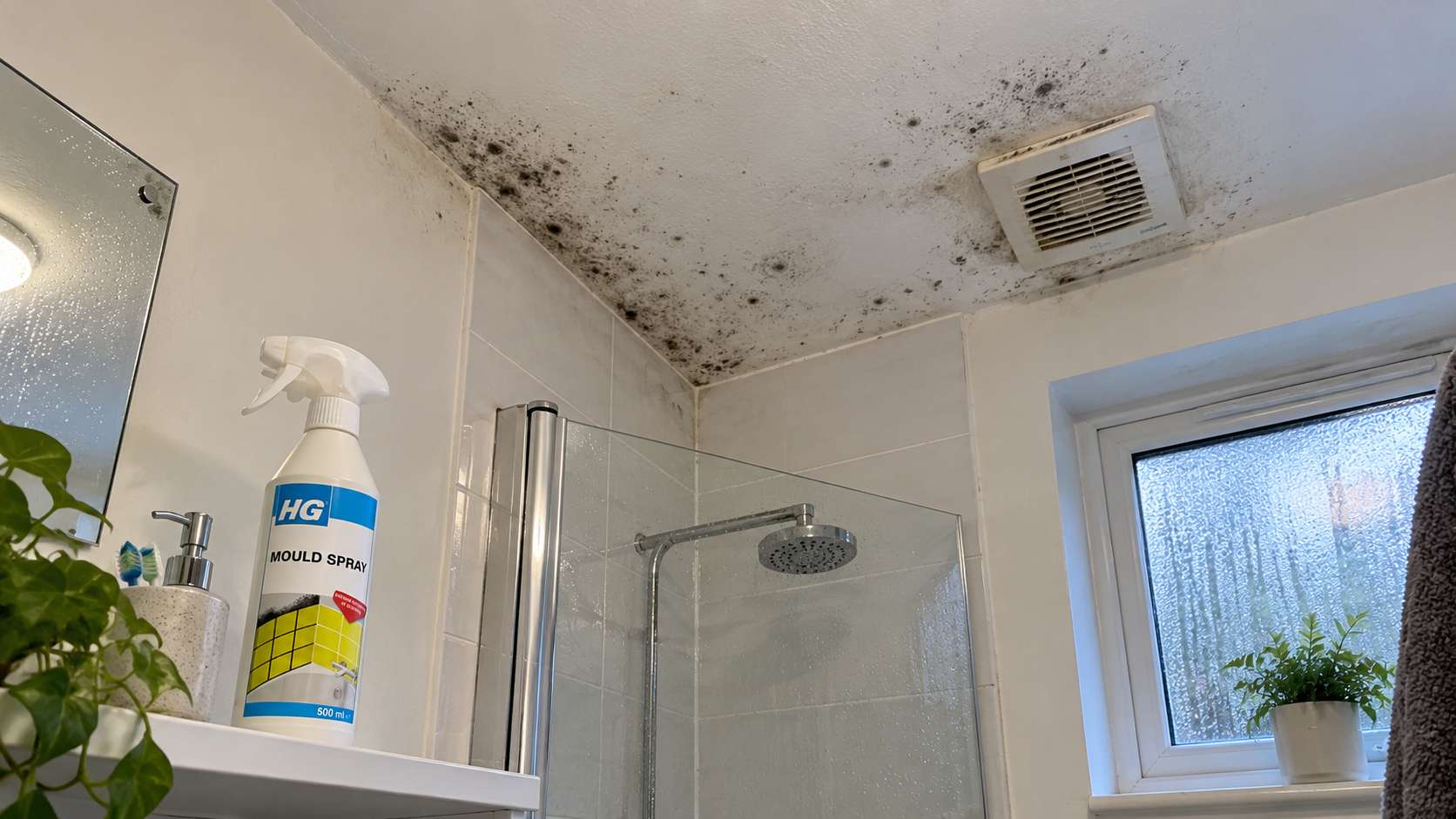
Common causes include:
- Poor ventilation
- Daily condensation
- Cold external walls
- Failed bathroom sealant
- Leaking pipes
- Roof or window leaks
- Damp plaster
- AC or HVAC moisture issues
- Hidden water damage
So, the complaints are real, but many of them come from using the product outside its best use case.
In What Cases HG Mould Spray Cannot Help at All
HG Mould Spray cannot help when the mould problem is deeper than the surface. This is the most important part of the review, especially if you are deciding whether to clean it yourself or call a professional.
It cannot properly solve these situations:
Hidden mould behind walls or ceilings.
If mould is behind paint, drywall, plasterboard, wallpaper, tiles, cabinets, or ceiling boards, spraying the surface will not reach the main contamination.
Active leaks.
If there is a leaking pipe, roof leak, window leak, AC drain issue, or waterproofing failure, the mould will keep returning until the water source is fixed.
Porous contaminated materials.
Materials like untreated wood, plasterboard, insulation, carpet, fabric, and some damaged grout can hold mould below the surface. A bleach-based spray may improve the appearance but not remove deep contamination.
Large mould growth.
If the affected area is large, spreading, or appearing across multiple rooms, a consumer spray is not a safe or complete plan.
Recurring condensation mould.
If condensation forms every day because of poor ventilation, cold walls, or high humidity, HG can clean the marks but cannot change the indoor moisture condition.
Musty odour without visible mould.
A musty smell often means hidden damp material. Spraying visible surfaces may not touch the real source.
Mould near AC or ventilation systems.
If the mould is connected to air movement, ductwork, vents, coils, or condensation inside an AC unit, you need inspection and proper cleaning.
This is where many people go wrong. They think a stronger spray means a permanent solution. But mould is usually a moisture problem first and a cleaning problem second.
How We Would Use HG Mould Spray Safely
For small mould spots, HG Mould Spray can be useful if you use it carefully. Because it is strong and bleach-based, it should not be treated like a casual everyday bathroom mist.
A safer basic method would be:
- Open windows or turn on the extractor fan.
- Wear gloves.
- Remove towels, clothes, bath mats, and coloured fabrics nearby.
- Test a small hidden area if the surface is sensitive.
- Spray only the affected surface.
- Leave it for the recommended time on the label.
- Rinse or wipe properly if the surface allows it.
- Dry the area completely.
- Keep the room ventilated after cleaning.
Do not mix it with vinegar, ammonia, toilet cleaner, descaler, or other bathroom chemicals. Mixing bleach-based products with other cleaners can create dangerous fumes.
For bathroom grout, HG may work very well visually. But if the grout is cracked or missing, it may need repair. For silicone sealant, deep black staining may mean the mould is inside the silicone. In that case, removing and replacing the sealant may work better than spraying it repeatedly.
For ceilings and painted walls, be more careful. The product may discolor paint, leave marks, or create a strong lingering smell if the room is not ventilated. Some online discussions show people struggling after using mould sprays on walls, especially when they used too much or could not rinse the surface properly.
HG Mould Spray vs Professional Mould Cleaning
HG Mould Spray removes visible stains. Professional mould cleaning investigates and treats the source. That is the main difference.
A professional mould service may check:
- Moisture levels
- Leak sources
- Ventilation problems
- Condensation patterns
- Hidden mould locations
- Material damage
- Whether the surface can be cleaned or must be replaced
- Whether containment or air filtration is needed
- How to reduce the chance of mould returning
This is not the same job as spraying a bathroom wall.
You probably do not need a professional if the mould is small, visible, on tile or grout, and does not return after cleaning and improving ventilation. In that case, HG Mould Spray can be a practical DIY option.
You should consider professional help if:
- The mould keeps coming back.
- The patch is getting larger.
- The room smells musty.
- The mould appeared after a leak or flood.
- The wall, ceiling, cabinet, or floor feels damp.
- The mould is on plasterboard, wood, carpet, or insulation.
- The mould is near vents, ducts, or AC systems.
- Someone in the home has asthma, allergies, or immune sensitivity.
- You have cleaned the same area several times and it always returns.
A mould spray can be good maintenance. It should not replace remediation when the issue is hidden, recurring, or moisture-driven.
The Bottom Line: HG Mould Spray Final Verdict
HG Mould Spray is a strong and well-reviewed mould stain remover. It gets so much positive feedback because it often does exactly what people want from a bathroom mould product: it makes black stains fade quickly with very little scrubbing. For tiles, grout, shower areas, bath edges, and small bathroom mould patches, it can be genuinely effective.
Our professional verdict is clear: HG Mould Spray is worth considering for small surface mould stains, but it is not a full mould remediation solution.
You likely do not need a professional if the mould is minor, visible, on a washable surface, and does not return after cleaning, drying, and improving ventilation.
You should hire a professional if the mould keeps returning, spreads, smells musty, follows water damage, affects porous materials, appears near AC or ventilation systems, or may be hidden behind walls, ceilings, cabinets, or flooring.
So, the final verdict is simple: HG Mould Spray is excellent for fast visual cleaning, especially in bathrooms. But if the mould problem is deep, recurring, hidden, or caused by moisture damage, the spray may only bleach the warning sign while the real mould problem continues underneath.