


Furniture for Mold-Prone Homes: What Materials Work Best?
Furniture for mold-prone homes should ideally be made from materials that do not easily absorb moisture. Mold needs three main things to grow: moisture, organic material, and time.
Materials like untreated wood, fabric with poor drying ability, and particle boards exposed to humidity can become more vulnerable because they can trap moisture internally.
For UAE homes, where humidity levels can rise and air conditioning systems may create condensation issues, homeowners should prioritize furniture materials that offer:
- Low water absorption
- Easy cleaning
- Resistance to swelling or warping
- Better airflow around surfaces
- Long-term durability in humid conditions
The goal is not to find furniture that can never develop mold. Instead, it is to choose materials that make mold growth more difficult and easier to manage if moisture problems occur.
7 Mold-Resistant Furniture Materials for UAE Homes
Different furniture materials perform differently in humid environments. Some are naturally resistant to moisture, while others need protective coatings or proper finishing to perform well.
1. Powder-Coated Metal Furniture
Metal is one of the most mold-resistant furniture materials because it does not provide the organic nutrients that mold typically feeds on.
Powder-coated steel or aluminum furniture works well for:
- Shelves
- Cabinets
- Storage units
- Outdoor furniture
- Office furniture
The powder coating adds an extra protective layer that helps prevent rust and makes the surface easier to clean.
However, damaged coatings can expose the metal underneath, allowing rust and moisture problems to develop. Regular inspection is still important, especially in humid areas.
2. Solid Wood With Proper Treatment
Solid wood can be used in mold-prone homes, but the type of wood and finishing matter significantly.
Untreated wood absorbs moisture easily, which can encourage mold growth. However, properly sealed wood with protective coatings can perform much better.
Good choices include:
- Teak
- Cedar
- Treated oak
- Other moisture-resistant hardwoods
For UAE homes, avoid placing wooden furniture directly against damp walls or areas with poor airflow. Even high-quality wood can develop mold if moisture becomes trapped behind or underneath the furniture.
3. High-Pressure Laminate (HPL) Furniture
HPL is a popular choice for modern UAE interiors because it combines durability, aesthetics, and easier maintenance.
HPL furniture usually consists of a protective laminate surface applied over a core material. The outer layer helps reduce moisture penetration and makes cleaning easier.
It is commonly used for:
- Kitchen cabinets
- Wardrobes
- Office desks
- Storage cabinets
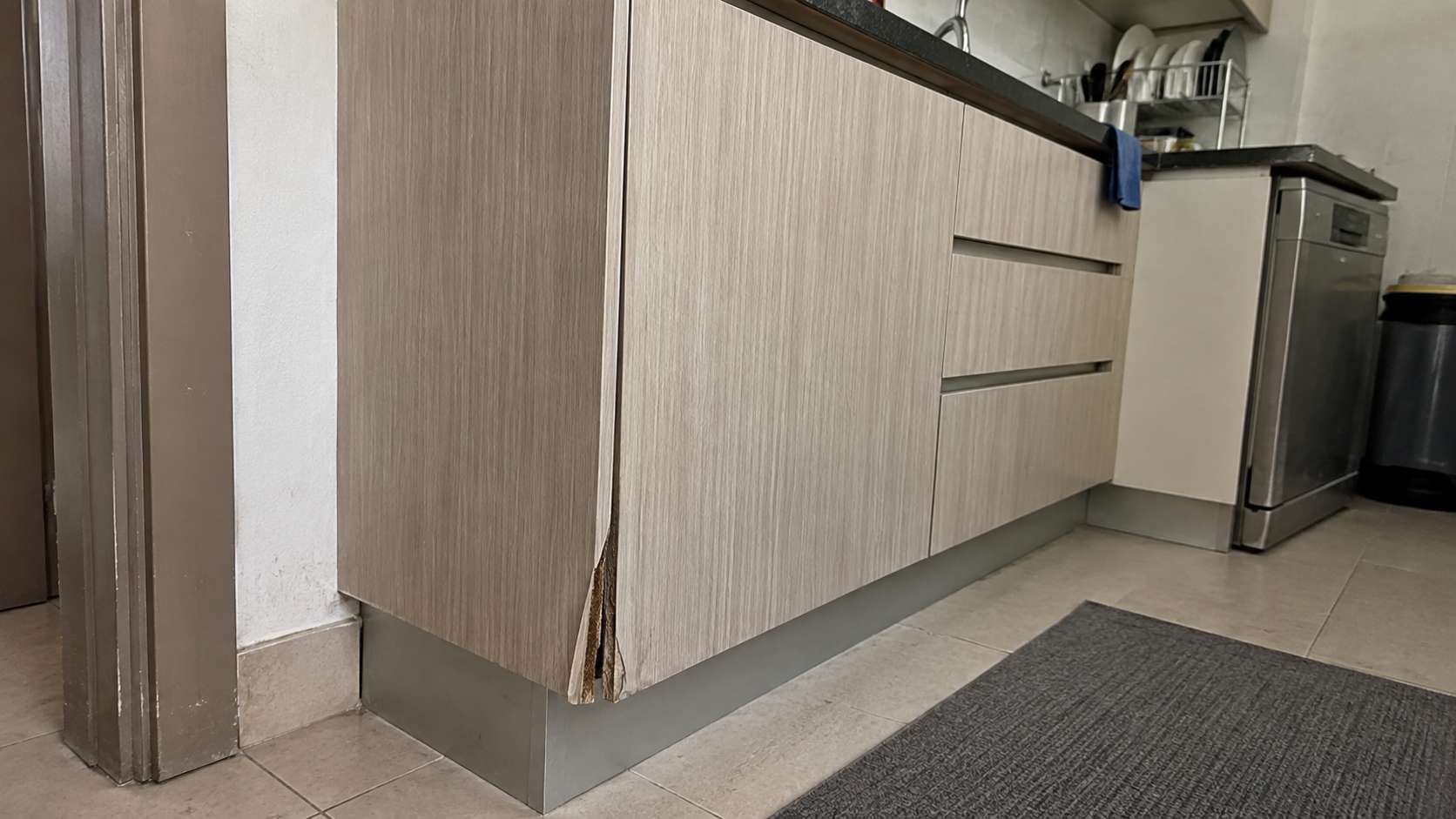
HPL does not make furniture completely waterproof. Water can still enter through damaged edges, joints, or exposed core materials. Quality installation and edge sealing are important for long-term performance.
4. Moisture-Resistant MDF and Plywood
Engineered wood products can work in mold-prone homes when homeowners choose the right type.
Standard MDF and low-quality particle board can absorb moisture quickly and may swell when exposed to humidity. However, moisture-resistant MDF and marine-grade plywood offer better protection.
These materials are commonly used for:
- Custom wardrobes
- Kitchen cabinets
- Built-in furniture
- Wall panels
The protective finish is just as important as the board itself. Poor sealing around cuts and edges can still allow moisture to enter.
5. Glass Furniture
Glass is naturally resistant to mold because it does not absorb moisture or provide an organic surface for fungal growth.
Glass works well for:
- Coffee tables
- Shelving
- Cabinet doors
- Decorative furniture elements
The main advantage is easy maintenance. Mold spores, dust, and stains can usually be removed quickly from glass surfaces.
The limitation is that glass furniture often needs to be combined with other materials, such as wood or metal frames, which may have different moisture resistance levels.
6. Plastic and Polypropylene Furniture
High-quality plastic furniture can be a practical option for humid environments because it does not absorb water easily.
Materials like polypropylene are commonly used for:
- Outdoor seating
- Storage boxes
- Bathroom furniture
- Utility spaces
Plastic furniture is especially useful in areas where occasional moisture exposure is expected.
However, lower-quality plastics may become brittle over time, especially when exposed to heat and sunlight. For indoor UAE homes, choose durable furniture designed for long-term use rather than temporary solutions.
7. Leather Alternatives and Performance Fabrics
Fabric furniture can be challenging in mold-prone homes because textiles can trap dust and moisture.
For sofas, chairs, and upholstered furniture, consider:
- Synthetic leather alternatives
- Performance fabrics
- Quick-drying upholstery materials
These options are generally easier to clean and less likely to retain moisture compared with traditional heavy fabrics.
However, even mold-resistant upholstery can develop problems if placed in rooms with high humidity, leaks, or poor ventilation.
What Should You Avoid in Mold-Prone Homes?
Some furniture choices require extra caution in humid environments.
Materials that may create higher mold risks include:
- Untreated natural wood
- Low-quality particle board
- Thick fabrics that stay damp
- Furniture placed directly against walls
- Upholstery in rooms with poor ventilation
The problem is often not only the material itself. Furniture design and placement also affect moisture buildup.
For example, a wardrobe pushed tightly against a damp wall may develop hidden mold on the back panel even if the front looks completely normal.
How to Make Any Furniture More Mold Resistant
Even the best materials need proper care. Furniture in humid homes should be supported by good moisture control habits.
Useful steps include:
- Keep indoor humidity levels controlled
- Leave space between furniture and walls
- Improve airflow behind large cabinets
- Fix leaks quickly
- Avoid placing wet items directly on furniture
- Clean dust regularly because dust can support mold growth
Using humidity monitors can also help homeowners identify rooms where moisture levels are becoming risky before mold appears.
The Bottom Line
The best furniture for mold-prone homes is made from materials that resist moisture absorption and are easy to maintain. Metal, sealed solid wood, HPL, moisture-resistant boards, glass, plastic, and performance fabrics are all practical choices for UAE homes.
However, furniture material alone cannot prevent mold completely. Good ventilation, humidity control, proper installation, and quick action against water problems are equally important for keeping your home healthier and more resistant to mold growth.