


1. Check Safety Before Entering the Flooded Area
The first step in any flood cleanup checklist is making sure the area is safe.
Floodwater can create hidden dangers that are not immediately visible, including:
- Electrical hazards
- Contaminated water
- Structural damage
- Slippery surfaces
- Hidden mold growth
Before entering:
- Turn off electricity in affected areas if it is safe to do so
- Avoid contact with dirty floodwater
- Wear protective equipment such as gloves, waterproof boots, and a mask
- Keep children and pets away from the damaged area
If the flood came from sewage, stormwater, or contaminated sources, extra caution is required because bacteria and other contaminants may be present.
Do not begin cleanup until the area is safe to work in.
2. Remove Standing Water as Quickly as Possible
The next priority is removing standing water.
Water that remains inside your home continues soaking into:
- Drywall
- Flooring
- Wooden structures
- Furniture
- Insulation
- Cabinets
The longer these materials stay wet, the more difficult drying becomes.
Depending on the amount of water, removal may involve:
- Pumps for large amounts of water
- Wet vacuums
- Mops and buckets for small areas
- Professional water extraction equipment
Removing visible water is only the first step. Materials can still hold hidden moisture even after surfaces look dry.

3. Remove Water-Damaged Materials
Flooded materials often cannot simply be dried and reused.
Some porous materials absorb water deeply and may become a long-term mold risk.
Common materials that may need removal include:
- Wet drywall
- Damaged insulation
- Saturated carpets
- Swollen laminate flooring
- Mold-damaged furniture
- Water-damaged ceiling panels
Removing these materials helps prevent trapped moisture from creating hidden mold growth.
For example, drywall can look dry on the surface while remaining wet inside. If moisture stays trapped, mold may develop behind walls where it is difficult to detect.
A careful inspection should determine which materials can be saved and which need replacement.
4. Dry the Entire Area Completely
Drying is one of the most important steps in flood cleanup.
Many homeowners make the mistake of stopping cleanup once visible water is gone. However, hidden moisture is one of the main reasons mold appears after floods.
Effective drying may require:
- Fans to improve airflow
- Dehumidifiers to remove moisture from the air
- Air movers to speed up evaporation
- Opening windows when outdoor conditions allow
Pay attention to hidden areas such as:
- Behind cabinets
- Under flooring
- Inside walls
- Around pipes
- Behind furniture
A moisture meter can help identify whether materials are actually dry or still holding water.
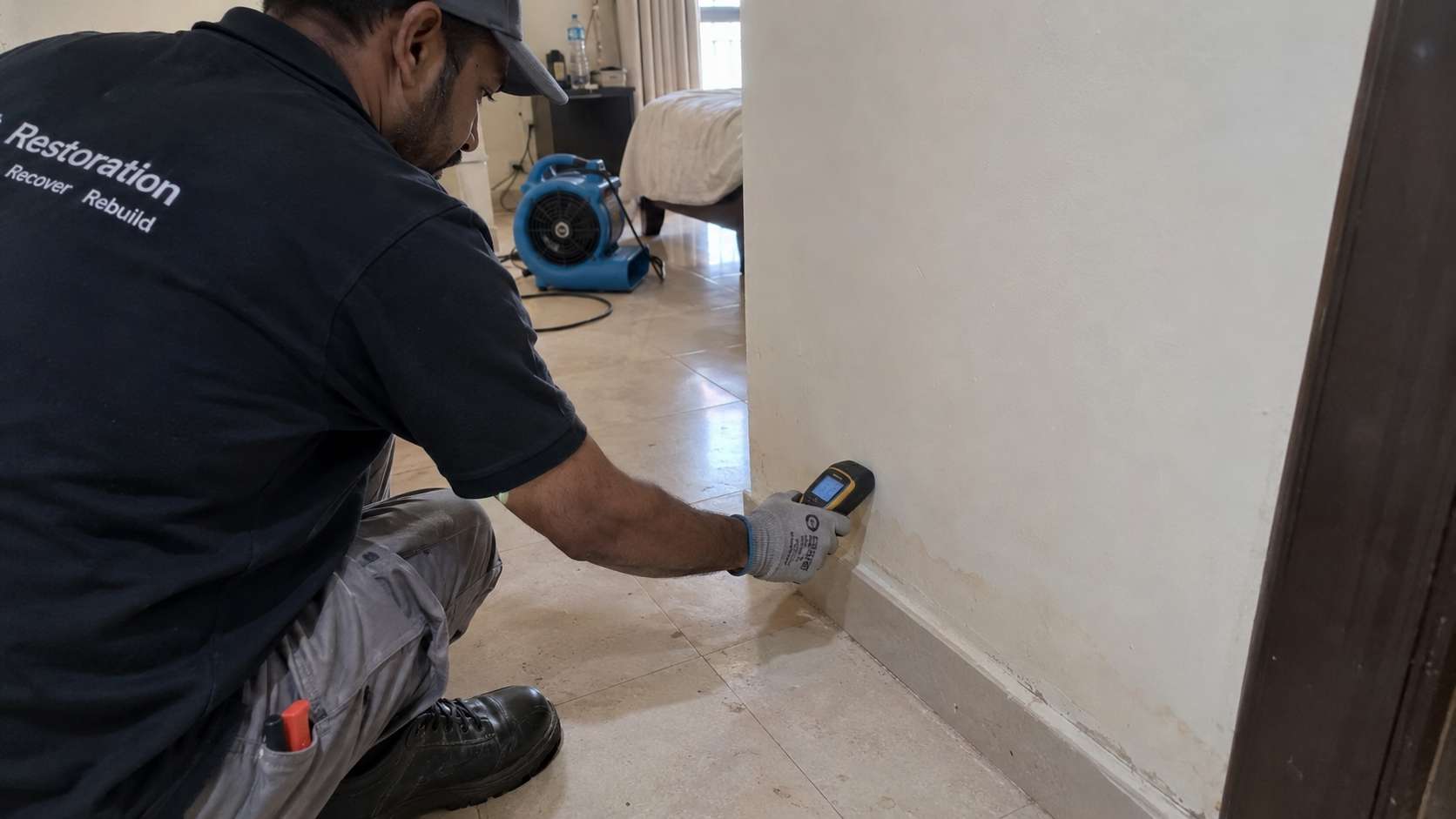
The goal is not just making the home feel dry. It is reducing moisture levels enough that mold cannot easily grow.
5. Clean and Disinfect Salvageable Belongings
After drying the structure, focus on belongings affected by floodwater.
Items should be separated into:
- Items that can be cleaned and saved
- Items that require professional restoration
- Items that should be discarded
Cleanable items may include:
- Plastic containers
- Metal furniture
- Glass items
- Some washable fabrics
Items that are often harder to restore include:
- Mattresses
- Upholstered furniture
- Paper documents
- Heavily soaked carpets
Floodwater can introduce dirt and contaminants, so cleaning should remove both moisture and potential sources of microbial growth.
Avoid putting items back into rooms before the area is completely dry.
6. Inspect for Early Signs of Mold Growth
After flooding, mold inspection should become part of the cleanup process.
Look for warning signs such as:
- Musty odors
- Black, green, or white spots
- Discoloration on walls
- Mold around baseboards
- Damp areas that do not dry
Mold may appear in hidden locations, including:
- Behind drywall
- Under flooring
- Inside insulation
- Around air conditioning systems
A home may look clean while mold is already developing in areas that are difficult to see.
Regular monitoring after a flood is important because mold problems can appear days or weeks later if moisture remains.
7. Prevent Future Mold Growth After Flood Cleanup
The final step is making sure the conditions that caused mold growth are removed.
Flood prevention and mold prevention strategies include:
- Repairing leaks quickly
- Improving ventilation
- Controlling indoor humidity
- Checking drainage systems
- Inspecting areas with previous water damage
Homeowners should also consider documenting the cleanup process.
Useful records include:
- Photos of damage
- Moisture readings
- Repair invoices
- Restoration reports
This documentation can be helpful for insurance claims, landlords, property managers, or future property inspections.
What If Mold Has Already Started Growing After a Flood?
If mold has already developed, the approach changes.
At this stage, simply drying the area may not be enough. Mold growth means moisture has already created conditions where fungal colonies can establish.
The next steps should include:
Find and fix the remaining moisture source
Mold will continue growing if the area remains damp.
Check for:
- Hidden leaks
- Wet insulation
- Trapped moisture behind walls
- Poor ventilation
Assess the extent of mold growth
Small surface areas may sometimes be cleaned safely, but larger contamination or hidden mold may require professional assessment.
Professional mold remediation may be needed when:
- Mold covers a large area
- It is growing inside walls or ceilings
- There is strong musty odor
- Floodwater was contaminated
- Mold keeps returning after cleaning
Remove contaminated materials when necessary
Some materials cannot be effectively cleaned once deeply affected.
Examples include:
- Saturated insulation
- Severely damaged drywall
- Mold-contaminated porous materials
Proper remediation focuses on removing mold contamination while preventing spores from spreading to unaffected areas.
The Bottom Line
Flood cleanup is not only about removing water. It is about preventing the moisture conditions that allow mold to grow.
The most important steps are acting quickly, removing damaged materials, drying thoroughly, cleaning belongings carefully, and monitoring for hidden moisture.
If mold has already started growing, the solution is not simply covering it up or repainting affected areas. The moisture source must be corrected, contaminated materials addressed, and the area properly restored to prevent the problem from returning.