



Why Your Cupboard Smells Musty
When a cupboard smells musty, the most likely underlying issue is excess moisture. Enclosed storage spaces can trap humid air, while clothing, wooden panels, and surrounding walls may retain dampness.
Several conditions can contribute to the problem.
Poor Ventilation and Trapped Humidity
Cupboards are often kept closed for extended periods. Without sufficient air circulation, moisture from stored items or humid indoor air may linger.
This becomes particularly noticeable in wardrobes packed tightly with clothes, where air cannot move easily between garments.
The problem may worsen when a cupboard stands against a relatively cool wall or in a poorly ventilated bedroom.
Damp Clothing and Stored Items
Clothes that have not dried completely can introduce moisture into an enclosed wardrobe.
Even a small amount of damp laundry may create unpleasant odors, especially when surrounded by other fabrics.
Shoes, towels, bags, and stored bedding can also retain moisture. Sometimes the odor comes mainly from these belongings rather than from the cupboard structure itself.
Condensation Behind the Wardrobe
Condensation can develop when humid air encounters a sufficiently cool surface.
A wardrobe placed close to a wall may restrict airflow behind it, allowing local moisture conditions to differ from those in the rest of the room.
A study by Mortensen and colleagues, published in Building and Environment, investigated airflow behind furniture and found that greater separation from the wall improved air movement.
Although the study does not establish that every musty wardrobe contains mold, it helps explain why poorly ventilated spaces behind cupboards deserve attention.
Hidden Leaks or Mold Growth
A more serious possibility is moisture entering from plumbing, damaged wall finishes, or another building defect.
Water may accumulate behind built-in cabinetry without becoming visible inside the cupboard.
Over time, damp wood-based panels, wallboard, or surrounding materials may support mold growth.
The EPA identifies walls behind furniture and concealed wall cavities as possible locations for hidden mold.
A persistent odor should therefore prompt an inspection beyond the cupboard’s visible shelves.

How to Get Rid of a Musty Smell in a Cupboard
Removing a musty odor requires eliminating contaminated or damp material and resolving the moisture conditions responsible for the smell.
For a small, uncomplicated problem without extensive mold or water damage, begin with the following steps.
Step 1: Empty the Cupboard Completely
Remove clothing, shoes, storage boxes, and other belongings.
Check whether particular items smell stronger than the cupboard itself. Inspect fabrics for dampness, discoloration, and visible spotting.
Keep affected items separate from clean belongings until they have been assessed.
Wash suitable clothing according to its care label and dry it completely before returning it to storage.
Items with substantial mold contamination or persistent odors may require specialist cleaning or replacement.
Step 2: Inspect the Cupboard and Surrounding Wall
Examine the back panel, corners, shelves, underside, and areas near the floor.
Look for water stains, swelling, peeling finishes, condensation, or irregular discoloration.
If the cupboard can be moved safely without damaging fixtures, inspect the wall behind it.
Do not attempt to detach heavy built-in cabinetry or disturb suspected mold-contaminated wall materials without appropriate assistance.
A clean-looking interior does not rule out moisture behind the cupboard.
Step 3: Clean Suitable Interior Surfaces
For ordinary dirt and minor surface odors, wipe compatible hard, nonporous surfaces using a lightly dampened cloth and mild detergent.
Avoid soaking wood, particleboard, or MDF panels. Excess cleaning water can worsen swelling and moisture retention.
For small areas of visible mold on hard surfaces, the EPA recommends cleaning with detergent and water, followed by complete drying.
Use suitable gloves and precautions when dealing with suspected mold.
Porous materials affected by established mold may be difficult to clean adequately. Do not scrub extensive growth or assume that removing visible spots resolves contamination inside the material.
Step 4: Dry the Cupboard Thoroughly
Leave the cupboard doors open to encourage air circulation while the cleaned surfaces dry.
A dehumidifier can help reduce moisture in the room, particularly when outdoor humidity is high.
Avoid putting clothing back while shelves, panels, or surrounding walls remain damp.
The EPA generally recommends keeping indoor relative humidity below 60%, ideally between 30% and 50%.
However, acceptable room humidity does not guarantee that moisture behind the wardrobe has disappeared.
Step 5: Neutralize the Remaining Odor
Once the cupboard is clean and dry, some residual odor may gradually disappear through ventilation.
Activated charcoal products or other household odor absorbers may help reduce certain remaining smells, but their effectiveness varies.
They should be treated as supplementary measures rather than solutions to mold or water damage.
Avoid relying on perfume, scented sachets, or air fresheners to cover a persistent musty odor.
These products may temporarily change how the cupboard smells while leaving the actual moisture problem unresolved.
Why Does the Musty Smell Keep Coming Back?
A returning musty odor suggests that the original source may still be present, although lingering odors in belongings or cupboard materials are another possibility.
The most useful distinction is whether the smell originates inside the wardrobe or from the surrounding building.
| Observation | Possible Explanation |
|---|---|
| Clothes smell musty, but shelves remain dry | Damp fabrics or retained odors |
| Smell is strongest behind the cupboard | Condensation or concealed wall moisture |
| Back panel is swollen or discolored | Previous or continuing water exposure |
| Odor returns after humid conditions | Recurring condensation or inadequate moisture control |
| Musty smell persists after cleaning | Hidden mold, retained odor, or unresolved dampness |
These observations are clues, not definitive diagnoses.
If a wardrobe has been moved away from the wall and the smell becomes stronger, inspect the exposed area for dampness and material deterioration.
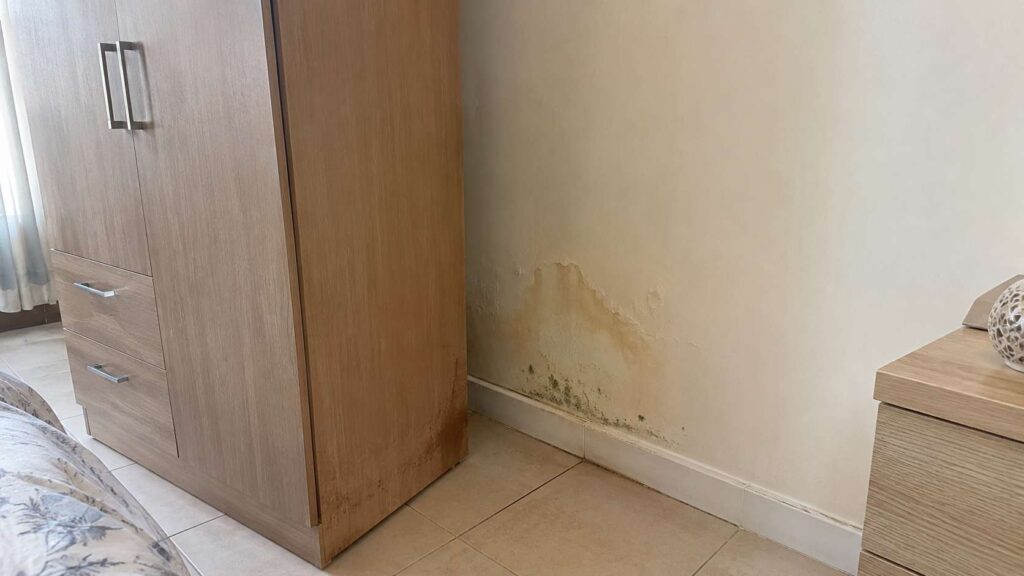
In Dubai apartments, air-conditioning operation, condensation, plumbing leaks, and differences between indoor and outdoor humidity can all be relevant depending on the building.
Do not assume the local climate alone is responsible.
If the wall remains damp, simply placing the cupboard farther away may improve airflow without fixing the underlying defect.
When Is Professional Mold Removal Necessary?
Professional mold removal becomes more appropriate when the problem extends beyond an easily cleaned cupboard or when significant hidden moisture damage is suspected.
For minor mold growth on accessible hard surfaces, carefully managed household cleaning may be sufficient.
The EPA indicates that mold covering less than approximately 10 square feet can often be handled by occupants, depending on the circumstances.
However, the affected area is not the only factor to consider.
Warning Signs of a Larger Problem
Consider professional assessment when:
-
The musty smell persists after thorough cleaning and drying.
-
Mold-like growth repeatedly appears on wardrobe panels.
-
The wall behind the cupboard is damp, stained, or swollen.
-
Water damage extends into wall cavities or insulation.
-
Multiple cupboards or nearby rooms develop similar odors.
-
The affected materials are porous, severely damaged, or difficult to access.
These conditions may indicate that surface cleaning is insufficient.
The EPA advises considering an experienced professional when hidden mold is suspected because investigating concealed areas can disturb contamination.
What Professional Mold Remediation Addresses
A qualified remediation provider should investigate the extent of the contamination and identify the moisture conditions supporting it.
Depending on the findings, appropriate work may involve moisture assessment, controlled removal of contaminated materials, cleaning, drying, and verification that the underlying water problem has been addressed.
Not every musty cupboard requires demolition or professional treatment.
However, when mold has penetrated porous cabinetry or affected concealed building materials, wiping the visible surfaces may not adequately resolve the problem.
The CDC’s National Institute for Occupational Safety and Health emphasizes that visual inspections and identifying musty odors are often more useful for recognizing building dampness problems than routine short-term air sampling.
Bio-On provides mold remediation services in the UAE for property owners dealing with mold contamination, including situations where the source may extend beyond visible surfaces.
How to Prevent Your Cupboard From Smelling Musty Again
Preventing another musty odor means keeping stored belongings dry and ensuring moisture does not repeatedly accumulate around the cupboard.
Only store clothing once it has dried completely. Avoid packing shelves so tightly that air circulation becomes unnecessarily restricted.
Leave some clearance behind movable wardrobes where practical, particularly when the surrounding wall has a history of condensation.
For built-in cabinetry, investigate persistent moisture rather than attempting to create ventilation openings without understanding the construction.
Maintain appropriate indoor humidity using air conditioning or dehumidification when necessary.
Periodically inspect the back of the cupboard, lower panels, and adjacent wall for new staining or odors.
Most importantly, repair plumbing leaks, condensation problems, or other water-entry sources promptly.
A consistently dry cupboard is less likely to develop the moisture conditions that support mold growth.
The Bottom Line
A musty cupboard usually points to excess moisture, inadequate ventilation, damp belongings, or possible mold growth. Cleaning the interior, thoroughly drying stored items, improving airflow, and controlling humidity can resolve many minor cases. However, deodorizing products cannot fix a continuing leak or concealed contamination.
If the smell repeatedly returns, inspect the wall and surrounding materials rather than treating the cupboard alone. Persistent dampness, damaged panels, or suspected hidden mold may justify professional assessment to identify and resolve the actual source before further damage develops.