


Couch With Mold: Can Cleaning Products Actually Fix It?
Yes, cleaning products can help fix a couch with mold if the contamination is limited to the surface.
A suitable product may help:
- Remove visible mold spots
- Reduce musty odors
- Clean organic residues where mold grows
- Refresh fabric surfaces
However, cleaning products have limitations.
A couch has multiple layers:
- Outer fabric
- Foam padding
- Inner lining
- Wooden frame
If mold has reached the inner foam or structure, surface cleaning may only remove what you can see while leaving hidden growth behind.
You should be more cautious when:
- The couch stayed wet for a long time
- Mold keeps returning after cleaning
- The smell remains after cleaning
- Mold appears inside cushions
- The affected area is large
For minor mold growth, these are some of the safer in-store products homeowners can consider.
1. Upholstery Cleaner Spray
Upholstery cleaners are usually the safest first choice for a couch with mold because they are specifically designed for fabric surfaces.

These products are made to remove:
- Dirt
- Food stains
- Body oils
- Organic residue
Some formulas also contain ingredients that help reduce odor-causing microorganisms.
Why it is a good option:
- Designed for fabric
- Less likely to damage upholstery compared with harsh cleaners
- Easy to apply
- Suitable for routine sofa maintenance
How to use:
- Vacuum the couch thoroughly.
- Apply the cleaner to a small hidden area first.
- Spray lightly on affected areas.
- Avoid soaking the fabric.
- Allow the couch to dry completely.
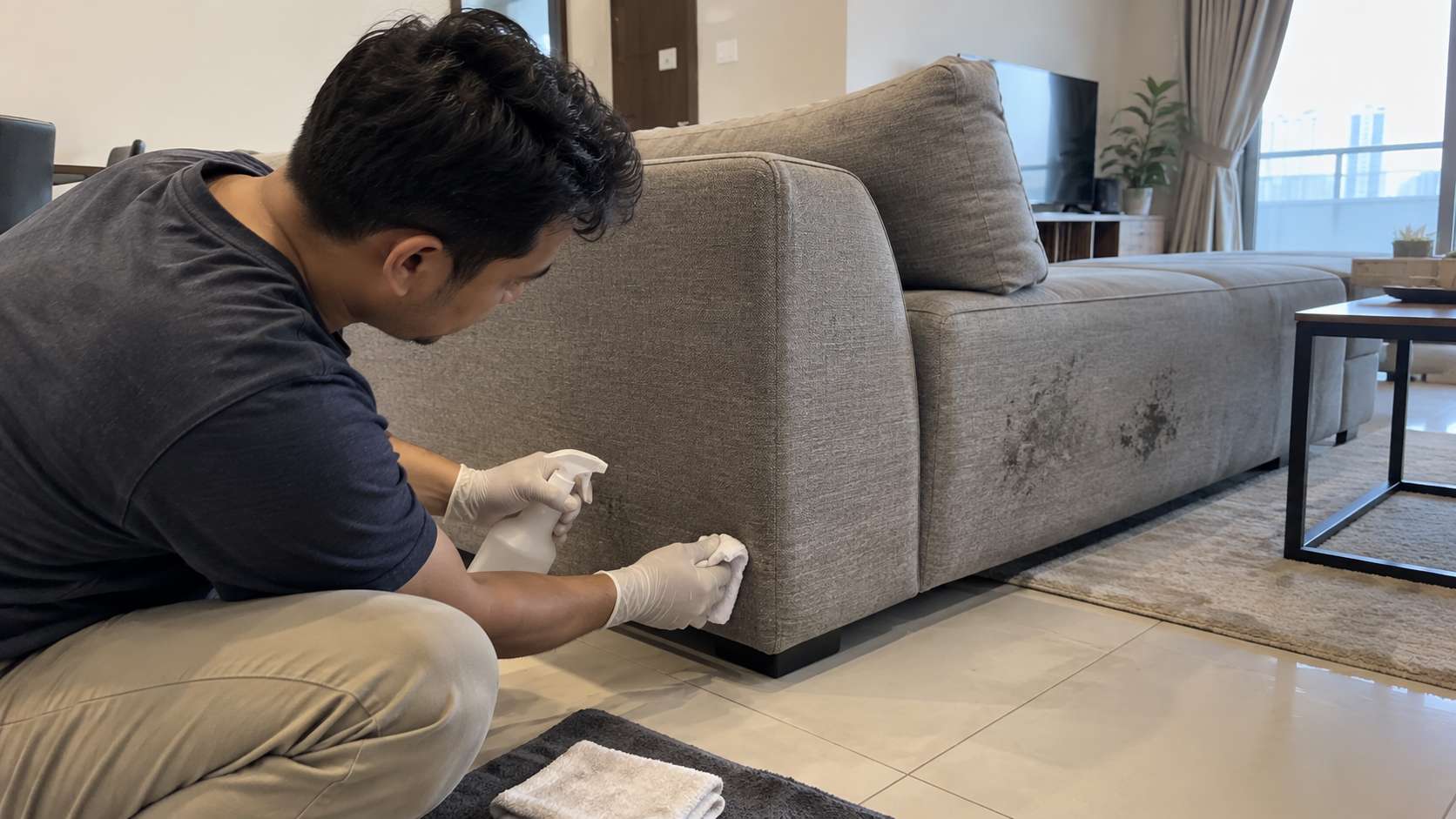
The biggest mistake is using too much liquid. Excess moisture can create the same environment that caused the mold problem.
2. Fabric-Safe Antimicrobial Spray
Fabric-safe antimicrobial sprays are another option for homeowners dealing with early mold spots or musty odors.
These products are designed to reduce microbial activity on surfaces while being gentler than household disinfectants.
Benefits include:
- Suitable for upholstery surfaces
- Helps control odors
- Less invasive than deep chemical treatments
- Convenient for regular maintenance
However, antimicrobial sprays are not a replacement for proper mold removal when contamination is severe.
They work best when:
- Mold is limited
- The fabric is still structurally healthy
- Moisture problems have already been fixed
Always check whether the product specifically states that it is safe for fabric or upholstery.
3. Enzyme-Based Fabric Cleaner
Enzyme cleaners are commonly used for upholstery because they break down organic materials that create stains and odors.
They can help with:
- Musty smells
- Organic residue
- General fabric contamination
Why homeowners like enzyme cleaners:
- Usually gentle on fabrics
- Low odor compared with stronger chemicals
- Useful for sofas with pets or food stains
For mold-related issues, enzyme cleaners may help clean the surrounding residue, but they should not be considered a guaranteed mold-killing solution.
The mold source still needs to be addressed.
4. White Vinegar Solution (For Light Surface Mold)
White vinegar is a common household option for mild surface mold on some fabrics.
It is popular because:
- It is inexpensive
- It does not contain harsh bleach
- It can help reduce some odors
A common approach is diluting white vinegar with water and lightly applying it.
However, homeowners should be careful.
Vinegar may not be suitable for every couch material, especially:
- Delicate fabrics
- Certain synthetic blends
- Materials sensitive to acidity
Always test first and avoid soaking the couch.
5. Baking Soda Upholstery Cleaner
Baking soda is one of the least intrusive options for freshening a couch affected by musty odors.
It works mainly by absorbing odors and moisture.
Benefits:
- Very gentle
- Affordable
- Easy to apply
- Does not usually affect fabric color
How to use:
- Sprinkle baking soda over the affected area.
- Leave it for several hours.
- Vacuum thoroughly.
Baking soda is useful for odor control, but it does not remove deep mold growth inside cushions.
Think of it as a supporting cleaning step, not a complete mold remediation method.
6. Hydrogen Peroxide-Based Fabric Cleaner
Some hydrogen peroxide-based cleaners are used for mold stains and fabric cleaning because they can help break down organic discoloration.
Potential advantages:
- Can help lighten mold stains
- Less aggressive than chlorine bleach
- Useful on some lighter-colored fabrics
But caution is important.
Hydrogen peroxide can still affect fabric color, especially dark upholstery.
Before use:
- Test a hidden area
- Follow product instructions
- Avoid mixing with other cleaners
Never combine cleaning chemicals together because unexpected reactions can occur.
7. Professional-Grade Upholstery Mold Cleaner
Some stores sell stronger upholstery mold and mildew cleaners designed specifically for furniture.
These products may provide stronger cleaning compared with regular fabric sprays.
They are more suitable for:
- Larger surface stains
- Outdoor furniture fabrics
- Heavily affected upholstery materials
Before buying, check:
- Is it safe for indoor furniture?
- Does it require ventilation?
- Does it leave chemical residue?
- Is it suitable for your couch material?
A stronger product is not always better. The wrong chemical can permanently damage expensive furniture.
What Should You Avoid Cleaning a Moldy Couch With?
Some common household cleaners can create more problems.
Avoid using:
Bleach
Bleach is often recommended for mold, but it is usually not ideal for many upholstered couches.
Problems include:
- Fabric discoloration
- Fiber damage
- Strong fumes
- Limited effectiveness on porous materials
Excessive water
A wet couch can become a bigger mold problem.
Avoid:
- Flooding the fabric
- Leaving cushions damp overnight
- Cleaning without proper drying
Strong multipurpose chemicals
Products not designed for upholstery may:
- Leave residues
- Damage fabric
- Create unpleasant odors
How to Prevent Mold From Returning to Your Couch
Cleaning the couch is only part of the solution. Mold returns when moisture conditions remain.
Simple prevention tips include:
- Keep indoor humidity controlled
- Avoid placing couches directly against damp walls
- Allow airflow behind furniture
- Dry wet spills immediately
- Vacuum regularly
- Keep rooms ventilated
For homes in humid climates, using a dehumidifier can also help protect upholstery and other porous furniture.
The Bottom Line: What Is the Safest Way to Clean a Couch With Mold?
The safest cleaning products for a couch with mold are usually gentle upholstery cleaners, fabric-safe antimicrobial sprays, enzyme cleaners, baking soda, and carefully tested household solutions.
For small surface mold, these options may help restore the couch without causing unnecessary damage. But if mold has reached the foam, inner layers, or keeps returning, cleaning products alone may not solve the problem.
The best approach is to remove the visible mold, keep the fabric completely dry, and fix the moisture issue that allowed mold to grow in the first place.