


What CLR Mold and Mildew Actually Is
CLR mold and mildew is a bleach-free foaming stain remover made for tough surface mold and mildew stains. According to CLR’s product page, it can be used on many household surfaces, including ceramic tile, baseboards, fabrics, glass, brick, concrete, natural stone, laminated countertops, fully cured oil-based painted surfaces, hard plastics, wood, grout, and fiberglass. CLR also says the product is EPA Safer Choice Certified and uses a foam sprayer for more direct application.
That sounds impressive, but the phrase “stain remover” is doing a lot of work here. This product is mainly designed to remove visible mold and mildew stains from surfaces. It is not the same as a professional antimicrobial treatment, containment process, HEPA cleaning process, or building remediation plan.
The bleach-free formula is one of the biggest selling points. Many people want a mold cleaner without the strong chlorine smell of bleach. Good Housekeeping’s testing also noted that the product is unscented and did not produce uncomfortable fumes during their lab testing.
But bleach-free also comes with a limitation. Good Housekeeping specifically notes that this product does not contain bleach, so it will not disinfect, kill existing mold, or stop mold from reappearing.
So, the best way to understand CLR mold and mildew is this: it is a surface stain cleaner. It can be helpful. It can be convenient. It can make surfaces look much better. But it is not a full mold solution.
What People Usually Say About CLR Mold and Mildew
Public reviews for CLR mold and mildew are mostly positive, but not perfect. The overall pattern is clear: people like it when they use it on the right surface, but they are disappointed when they expect it to remove deep, old, embedded, or recurring mold.
On Walmart, the product shows a 4.1 out of 5 rating from more than 1,200 ratings and over 400 reviews. Several positive reviewers say it works well on shower doors, acrylic shower walls, tubs, toilets, kitchen sink cabinet areas, car seats, and household mildew stains. Some users specifically praise the easy trigger, clean smell, and lack of overpowering odor.
A few review examples show why people like it. One buyer said it removed mold from car seats after food had been left in a vehicle. Another said they sprayed it under kitchen sink cabinets, waited about 10 minutes, and wiped the area clean. Another reviewer used it on shower doors and said it worked well as a bleach-free option.
Home Depot’s review page lists more than 1,100 customer reviews and highlights that the product cleans mold and mildew stains with a bubbling formula, suits ceramic tile and glass, and complies with U.S. EPA safer product standards.
Good Housekeeping also gave it strong editorial recognition, naming it “Best Overall” in its mold and mildew remover testing. Their testers found it useful for bathroom mold stains, painted walls, and shower rods.
But the negative reviews matter too. Walmart reviews include complaints that it did not work on patio cushions, left dried stains where sprayed, failed on vinyl boat seat mildew shadows, and worked on acrylic shower walls but not as well on caulking.
That review pattern makes sense from a professional cleaning standpoint. CLR performs best when the mold or mildew is on the surface. It struggles when the stain has penetrated deeper into porous, textured, old, stained, cracked, or absorbent material.
Our Professional Hands-On View of Its Effectiveness
From our professional mold-cleaning perspective, CLR mold and mildew is good at improving the look of surface staining. It is not the product we would rely on for a serious mold contamination job.
On suitable surfaces, the foam format is practical. It helps the cleaner stay where you spray it, although Good Housekeeping noted that the foam does not cling extremely well on vertical surfaces. Still, for shower rods, painted walls, bathroom corners, glass, ceramic tile, and small grout areas, it can be useful.
The official use instructions are also simple: test on a small hidden area first, saturate the stain, let it sit for 10 minutes, then wipe it off with a dry clean cloth. For carpet and fabric stains, CLR recommends saturating the stain, letting it penetrate for 10 minutes, and blotting thoroughly until dry.
That method is fine for stain cleaning. But professional mold work is more complex than “spray and wipe.” We look at moisture source, material type, air movement, dust contamination, hidden cavities, porous material damage, and recurrence risk.
In other words, CLR may help with the part you can see. A professional mold service has to deal with the reason the mold grew in the first place.
If someone uses CLR on light bathroom mildew, it may feel excellent. If someone uses it on mold inside drywall, wet carpet padding, damaged caulk, contaminated AC components, or a musty office, it will feel weak because the product was never designed to solve that kind of problem.
How Good Is CLR Mold and Mildew at Killing Mold?
CLR mold and mildew is not the best product to judge by “killing power,” because the product is positioned mainly as a stain remover, not a full mold-killing disinfectant.
This is where buyers can get confused. If the dark mold stain disappears, many people assume the mold has been killed and the problem is solved. But stain removal, disinfection, and remediation are different things.

Good Housekeeping’s review is very direct: because CLR Mold & Mildew Clear does not contain bleach, it will not disinfect, kill existing mold, or prevent mold from reappearing.
That does not mean the product is useless. It means you should use it for the right job. If the job is removing ugly mildew staining from a shower wall, glass door, or surface-level area, it can be effective. If the job is killing mold at the root and preventing regrowth, it is not enough by itself.
As a mold cleaning service, we would rate it like this:
| Category | Our Review |
|---|---|
| Surface stain removal | Good |
| Shower and bathroom usability | Good |
| Odor comfort | Better than many bleach products |
| Deep mold removal | Weak |
| Mold prevention | Weak |
| Hidden mold problems | Not suitable |
| Professional remediation replacement | No |
The key is expectation. CLR mold and mildew can be a strong household stain cleaner. It is not a mold remediation system.
Where CLR Mold and Mildew Works Best
CLR mold and mildew works best on small, visible stains on surfaces that can be safely cleaned and dried. This includes many bathroom and household surfaces, especially when the mold or mildew has not deeply penetrated the material.
Good use cases include:
- shower walls;
- glass shower doors;
- ceramic tile;
- tubs;
- shower rods;
- painted walls that are fully cured and suitable;
- fiberglass;
- hard plastics;
- surface mildew on grout;
- small mildew stains on washable surfaces;
- light surface staining around sink cabinets.
Customer reviews support this pattern. Positive reviewers often mention showers, glass doors, acrylic walls, tubs, toilet areas, and surface mold around household fixtures.
The bleach-free and fragrance-free angle is also helpful for people who dislike harsh bleach odor. One Walmart reviewer said it worked well for a household where a family member had a scent allergy, and Good Housekeeping also noted that the product did not create uncomfortable fumes in their testing.
However, even when using it on suitable surfaces, you still need to follow the basics. Test first. Let it sit for the recommended time. Wipe properly. Dry the area. Fix moisture. If the surface stays damp, mildew can come back.
In What Cases CLR Mold and Mildew Cannot Help at All
CLR mold and mildew cannot help when the real problem is hidden contamination, ongoing moisture, or mold growing inside porous materials.
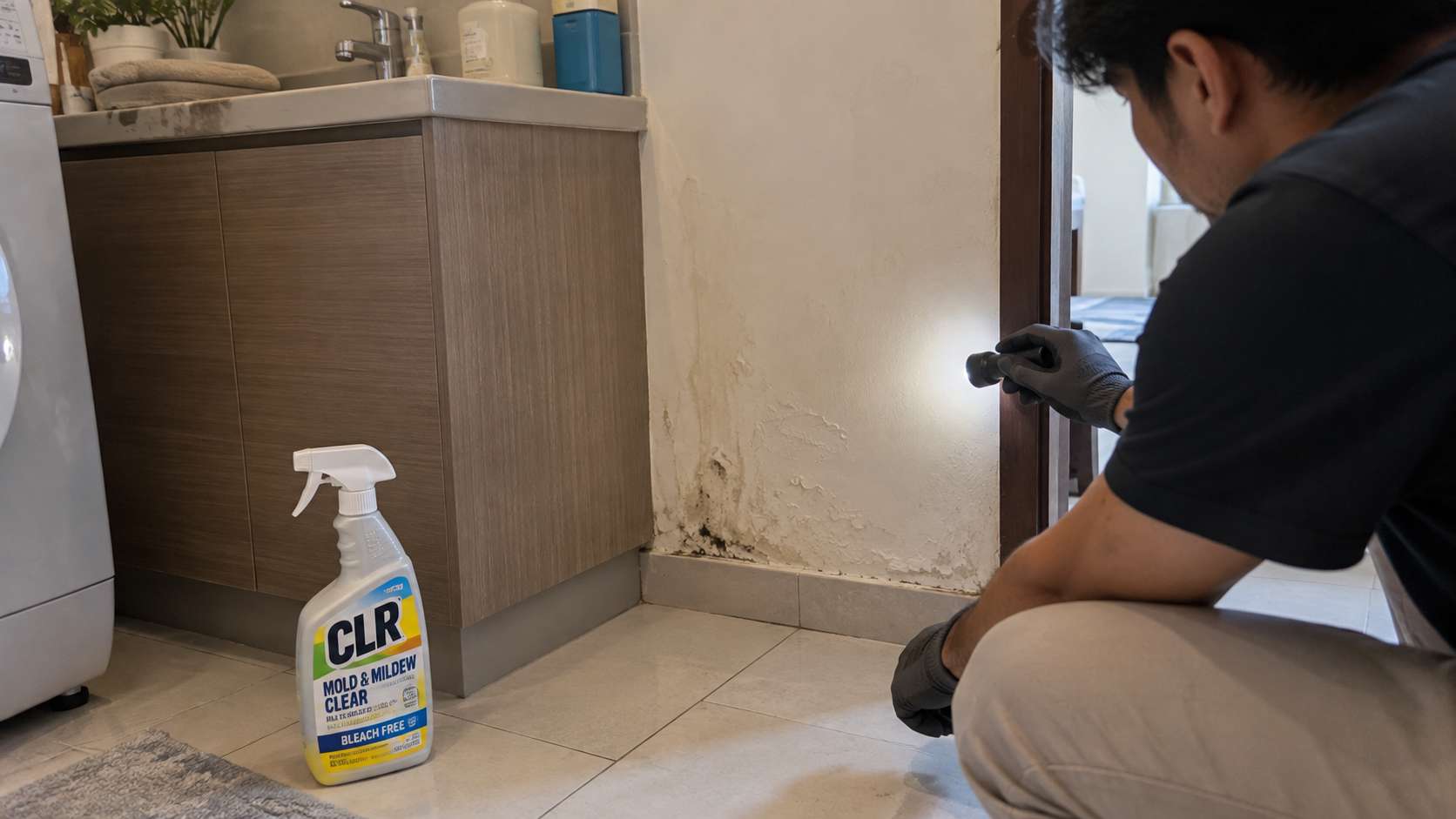
It cannot fix:
- leaking pipes;
- roof seepage;
- damp drywall;
- mold inside wall cavities;
- contaminated insulation;
- wet carpet padding;
- recurring AC condensation;
- mold inside ducts;
- rotting wood;
- moldy ceiling voids;
- deeply stained silicone caulking;
- large mold colonies;
- musty odor with no visible source.
It also may fail on certain fabrics, cushions, old vinyl stains, and porous outdoor materials. Public reviews include a complaint that it did not remove mildew spots from patio cushions and left spray marks, plus another complaint that it failed on mildew shadows in vinyl boat seats.
Caulking is another weak area. One reviewer said it worked on acrylic shower walls but was less effective on mildew in the caulking between the wall and shower base. That is not surprising. Once mold or mildew staining gets into silicone or caulk, surface cleaners often struggle. Replacement may be better.
CLR’s own instructions also include cautions. The brand says to test first on a hidden area, especially on wallpaper, fabrics, plastics, and fiberglass. It also says not to mix the product with other cleaners or chemicals, including bleach, because toxic fumes may result, and not to use it on stainless steel appliance exteriors.
So, this is not a “spray anywhere” product. It has a useful role, but also clear boundaries.
Safety, Smell, and Ease of Use
One of the strongest points of CLR mold and mildew is comfort compared with many bleach-based mold cleaners. It is bleach-free and fragrance-free, which makes it more appealing to people who hate strong chemical smells.
Good Housekeeping listed “unscented and didn’t produce irritating fumes” as a pro, and the official product page highlights that the formula is bleach-free and EPA Safer Choice Certified.
Still, “safer” does not mean careless. You should ventilate the room, wear gloves when cleaning moldy areas, avoid breathing spray mist, and keep the product away from children and pets. CLR itself says that if excess mold and mildew are present, users should wear heavy-duty vinyl gloves and a face mask, use an exhaust fan, and open windows.
The product is easy to use, but ease of use can become a problem if people oversimplify mold. Spraying a small bathroom stain is one thing. Spraying a large moldy wall without containment is another. If you disturb heavy mold growth, you can spread particles into the air and onto nearby surfaces.
Use CLR as a cleaner, not as personal protective equipment, not as a diagnosis, and not as a replacement for inspection.
CLR Mold and Mildew Pros and Cons
Here is the honest review summary.
| Pros | Cons |
|---|---|
| Bleach-free and fragrance-free | Does not disinfect or kill existing mold |
| EPA Safer Choice Certified | Does not prevent mold from returning |
| Works well on many surface stains | May struggle on caulk, vinyl shadows, cushions, and deep stains |
| Good for bathrooms, tile, glass, and shower areas | Not suitable for hidden or structural mold problems |
| Easier smell profile than bleach cleaners | Still needs ventilation and safe handling |
| Positive public reviews and editorial recognition | Results depend heavily on surface type and mold depth |
The product is strongest when the job is cosmetic stain removal. It is weakest when the job requires actual mold remediation.
Final Verdict: Do You Need a Professional or Not?
Our final verdict is this: CLR mold and mildew is worth trying for small, visible, surface-level mold and mildew stains on compatible materials. You do not need a professional for every tiny shower stain, especially if the surface is hard, washable, and the moisture problem is simple.
However, you should hire a professional mold remediation service if the mold is recurring, spreading, hidden, musty-smelling, connected to leaks, or affecting a business property. You should also call professionals if people in the property have asthma, allergies, respiratory symptoms, or immune concerns.
You likely need professional help when:
- mold covers a large area;
- mold returns after cleaning;
- you smell mold but cannot see it;
- there is water damage;
- walls, ceilings, or cabinets feel damp;
- mold appears near AC vents;
- carpets or insulation are affected;
- mold is inside an office, hotel, clinic, restaurant, or rental property;
- you need long-term prevention, not just stain removal.
A professional mold remediation service does not just use a stronger cleaner. The value is in inspection, moisture detection, containment, contaminated material handling, HEPA cleaning, drying, treatment, and prevention planning.
So, should you buy CLR? For small bathroom and household stains, yes, it can be a good cleaner. Should you depend on it for a real mold problem? No.
The Bottom Line
CLR mold and mildew is a strong option for removing surface mold and mildew stains, especially in bathrooms, showers, glass, tile, tubs, and some painted or washable surfaces. Public reviews are mostly favorable, and Good Housekeeping named it a top overall mold and mildew remover.
But it is important to be honest about what it does. CLR mold and mildew is a bleach-free stain remover. It can clean the visible surface, but it does not disinfect, kill established mold, or prevent mold from coming back.
For light stains, it is a practical DIY product. For deep, recurring, hidden, or moisture-driven mold, it is not enough. In those cases, professional mold remediation is the better investment because the real goal is not just a cleaner-looking surface. The real goal is to remove the mold problem and stop it from returning.