


Why Opening Windows Can Help
Opening windows, in most cases, helps prevent or limit mold growth. How? Doing this replaces humid indoor air with drier outdoor air. The added airflow may also speed evaporation from damp surfaces and reduce condensation, but it only works when outdoor conditions support drying.
As a matter of fact, mold needs moisture to grow. Indoor moisture can build up through ordinary activities such as:
- Showering
- Cooking and boiling water
- Drying clothes indoors
- Using an unvented clothes dryer
- Allowing wet towels to remain in a room
Rooms with closed doors and windows trap this moisture, particularly bathrooms, kitchens, laundry areas, and bedrooms with poor air circulation. Opening a window creates a route for humid air to escape.
This is why cross-ventilation will be one of the best solutions here. This happens when windows or doors are opened on different sides of a room or property, allowing air to move through rather than simply entering and remaining stagnant.
Ventilation can help by lowering indoor relative humidity and reducing stale or musty indoor air. But guys, note that ventilation controls the conditions that support growth. It does not kill or remove mold that is already attached to paint, drywall, wood, fabric, grout, or insulation.
When Should You Open Windows?
Open windows when the outdoor air feels dry, the weather is clear, and the room contains trapped moisture or condensation. Why? Short periods of strong ventilation are often more effective than leaving one window slightly open throughout a humid day.
Good times to open windows include:
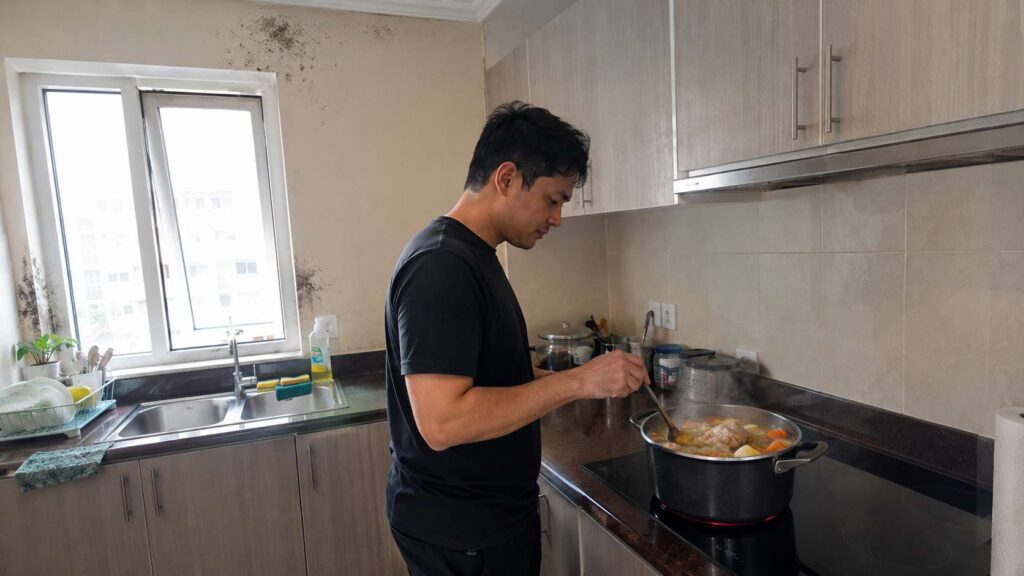
During and after cooking
Boiling, steaming, and dishwashing release moisture. In my experience, turning on an extractor fan and opening a nearby window when the weather is nice will definitely help reduce indoor moisture.
This is quite helpful when condensation appears on cabinets, walls, or windows.
After showering
Bathrooms can become highly humid after hot showers. So, letting that fog go away is a must. You can try opening the window and running the exhaust fan, when available, until steam and condensation have cleared.
When indoor air is noticeably humid
A humidity meter provides a clearer answer than relying on how the room feels. Opening windows may help when the indoor reading is higher than the outdoor humidity, and the incoming air is capable of absorbing additional moisture.
When Should Windows Stay Closed?
Keep the windows closed when outside air contains more moisture than indoor air. Ventilation in humid, rainy, or foggy conditions can raise indoor humidity and increase condensation instead of helping the room dry.
Opening windows is not recommended when:
During humid weather
Warm outdoor air can carry a large amount of moisture. Once that air enters and contacts cool walls, windows, pipes, or air-conditioned surfaces, water may condense.
This creates the damp conditions that mold needs.
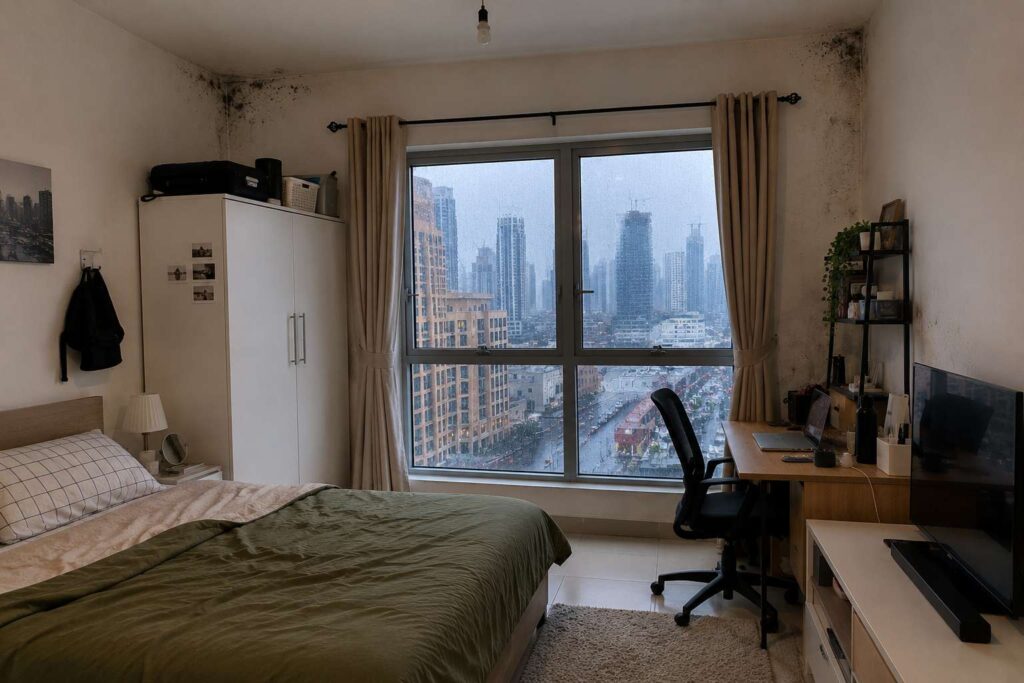
Raining or fogging
Rainy and foggy weather usually brings moisture-heavy air. Wind may also carry rain through the opening and wet curtains, window frames, flooring, or walls.
Wait until the weather clears and outdoor humidity falls.
Air conditioning is running
Air conditioning can cool down the room and remove moisture from indoor air. Leaving windows open allows warm humid air to enter continuously, making the system work harder and potentially causing condensation around vents or other cold surfaces.
In humid climates, it is generally better to keep windows and exterior doors closed while the AC is operating.
Can Windows Remove Existing Mold?
No. Opening windows may dry the environment and make future growth less likely, but established mold remains on the affected material until it is physically cleaned or the contaminated material is removed. So, yeah, it’s such an unfortunate but the answer is no.

Even dead or dried mold can keep bringing irritating particles. A patch that appears less active after the room dries has not necessarily disappeared.
For a small amount of surface growth on a non-porous material, try these tips to clean it:
- Correcting the moisture source
- Wearing gloves, eye protection, and an appropriate mask
- Cleaning the hard surface with detergent and water
- Removing all visible residue
- Drying the surface completely
- Monitoring the area for renewed growth
Note: Do not simply open the windows and wait for mold to fade. Also try not to paint, wallpaper, seal, or caulk directly over growth. Covering it may hide the marks while the moisture problem continues underneath.
Why Mold Returns After Ventilation
Mold returns after ventilation when the actual water source remains unresolved. A room may feel fresher after opening its windows, yet leaks, condensation, wet materials, or poor insulation can continue supplying enough moisture for new growth.
[bioon_funfacts title=”Shocking Fact” subtitle=”Get your home proper check!”]
[bioon_fact]A room does not need an obvious leak for mold to return.[/bioon_fact]
[bioon_fact]A study found that some building materials can trigger mold growth at around 75% relative humidity—so hidden condensation may be enough to keep the cycle going.
[/bioon_fact]
As a matter of fact, you’ll keep seeing the problem if you ignore these underlying factors:
- Roof or plumbing leaks
- Water entering around window frames
- Condensation on cold walls or pipes
- Blocked AC drain lines
- Dirty or overflowing drain trays
If the same area becomes moldy again after cleaning, treat that recurrence as evidence of an unresolved moisture issue.
Can Opening Windows Help With Mold Issues Long Term?
Not really. Sorry to disappoint you, guys. It’s true that opening windows, in some cases, helps control mold long term. But it cannot compensate for leaks, wet construction materials, faulty drainage, or contamination that has already spread.
My final verdict would be to use natural ventilation when outdoor air is dry and suitable. Keep windows closed during humid weather or while air conditioning is controlling indoor moisture. Most importantly, remove visible growth and identify why the affected area became damp.