


Does Mold Actually Cause Dizziness?
The answer to “So, can mold cause dizziness?” is no. Mold may be connected with dizziness in some situations, but mold does not directly cause dizziness. People respond differently to damp buildings, and the symptoms associated with mold exposure often overlap with allergies, respiratory irritation, poor indoor air quality, and unrelated health conditions.
The most commonly recognised reactions to household mold include:
- A blocked or runny nose
- Sneezing
- Itchy or watery eyes
- Throat irritation
- Coughing
- Wheezing
- Skin irritation
- Worsening asthma symptoms
A person might notice dizziness while mold is present without the mold being the direct cause. For example, a damp room may also have poor airflow, strong cleaning chemicals, overheating, dust, unpleasant odors, or another pollutant.
How Could Mold Contribute to Dizziness?
Mold-related dizziness is more likely to happen indirectly through irritation, allergic symptoms, breathing discomfort, or the wider conditions inside a damp building. There is no single mechanism that explains every case.

Allergic and Irritant Reactions
Mold releases microscopic spores and fragments into the surrounding air. These particles can irritate the eyes, nose, throat, and respiratory tract, particularly in people who are sensitive to mold.
An allergic or irritant reaction may produce congestion, sinus pressure, coughing, or difficulty breathing comfortably. Someone experiencing several of these symptoms at once may also feel tired, unsteady, or dizzy.
Nasal Congestion and Sinus Pressure
A damp or moldy room can aggravate rhinitis and nasal congestion in sensitive occupants. Severe stuffiness and sinus pressure may affect how comfortable or balanced someone feels.
Possible accompanying signs include:
- Pressure around the forehead or cheeks
- A blocked nose
- Postnasal drip
- Headaches
- Ear pressure
- Reduced sleep quality
These symptoms may make a person describe themselves as dizzy even when they are experiencing pressure, fatigue, or a general feeling of imbalance.
Breathing Discomfort
People with asthma, respiratory sensitivities, or mold allergies may react more strongly in damp environments. Coughing, chest tightness, wheezing, or shortness of breath can leave someone feeling weak or lightheaded.
Breathing discomfort should not be treated as a minor household inconvenience. The person should leave the affected area if symptoms become pronounced and seek medical help when breathing becomes difficult.
Poor Overall Indoor Air Quality
Mold often signals a wider moisture and ventilation problem. A room with persistent humidity may also contain accumulated dust, microbial growth, odors, cleaning residues, or emissions from damaged materials.
This mixture can make it difficult to identify one exact cause of dizziness. The room may simply have poor indoor air quality caused by several conditions operating together.
Signs the Dizziness May Be Related to Your Building
The answer is when it follows a repeatable pattern connected to a particular room, property, or period of occupancy. The pattern does not prove mold exposure, but it can help identify where to investigate.
Possible clues include:
- You feel worse after spending time in one room
- Symptoms improve after leaving the building
- Other occupants report irritation, headaches, or congestion
- The room smells damp or musty
- Mold or water damage is visible
- Symptoms began after a leak, flood, or air-conditioning problem.
- The dizziness appears alongside sneezing, coughing, or eye irritation
- The affected area has poor ventilation or constant condensation
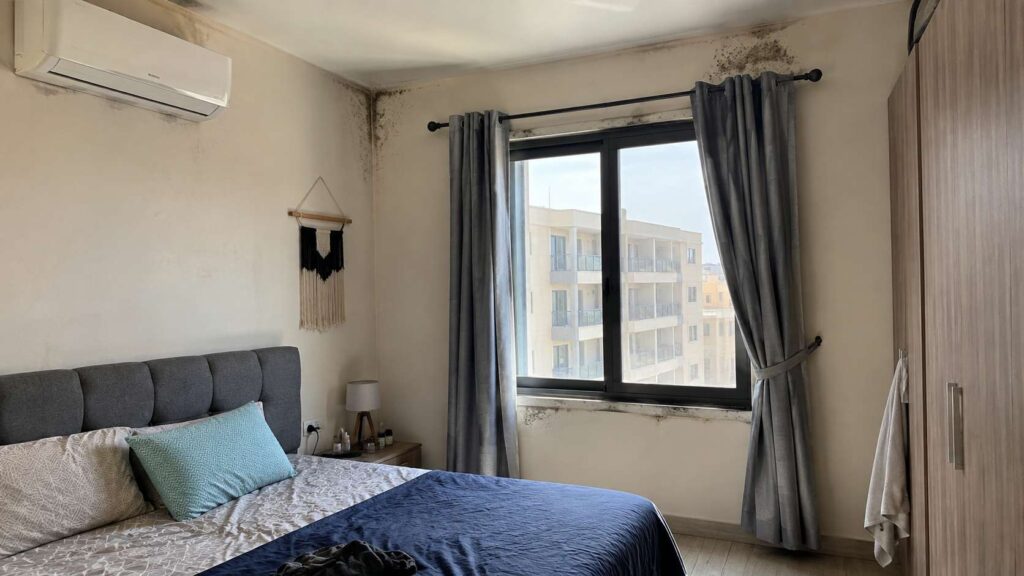
Keep in mind that expectations can also influence how people interpret symptoms. A visible mold patch may become the immediate suspect even when another indoor contaminant is present.
What to Do When Mold and Dizziness Occur Together
The safest response is to deal with the health concern and the building concern separately. Do not use improvement after leaving the room as proof of a diagnosis, but do take the pattern seriously.
-
Move away from the affected area
Get fresh air if you feel dizzy, short of breath, weak, or nauseated. Avoid driving or climbing if you feel unsteady.
-
Check for urgent hazards
Consider carbon monoxide, gas leaks, overheating, chemical fumes, and inadequate ventilation. Leave the property when there is any concern about a serious air-quality hazard.
-
Record the pattern
Note when the dizziness begins, where you were, how long it lasts, and which other symptoms appear. Record visible mold, odors, leaks, or recent renovation work.
-
Find the moisture source
Inspect plumbing, roofing, condensation, bathrooms, air-conditioning drainage, windows, and exterior walls. Mold will usually return if the material continues getting wet.

Finding the source of the moisture that triggers mold growth is a must -
Limit unnecessary disturbance
Scrubbing, sanding, or removing contaminated material can release particles into the air. Avoid disturbing extensive growth without suitable containment and protection.
-
Arrange appropriate medical advice
Seek medical care for symptoms that persist, recur, become severe, or affect breathing, coordination, consciousness, or normal activity. A building inspection cannot determine the medical cause of dizziness.
When Dizziness Needs Immediate Attention
When dizziness is sudden, severe, or accompanied by signs that could indicate an urgent health or environmental problem, it’s time t
Seek urgent assistance when dizziness occurs with:
- Difficulty breathing
- Chest pain
- Fainting
- Confusion
- Weakness on one side
- Slurred speech
- Severe headache
- Loss of coordination
- Repeated vomiting
- Suspected carbon monoxide exposure
Children, older adults, people with asthma, and individuals with chronic lung conditions may react differently to poor indoor environments. They may need to avoid the affected area while the moisture problem is assessed.
A mold remediation company can investigate the property and contamination conditions. It cannot diagnose why a person feels dizzy or replace medical evaluation.
So, after you visit your favorite doctor, try fixing the issues by giving the best mold removal service a call.
So, What’s the Takeaway?
Mold may contribute to an indoor environment where some occupants experience dizziness, especially when it appears with congestion, headaches, irritation, breathing discomfort, or fatigue. Still, dizziness is not specific enough to identify mold as the direct cause.
Treat the symptom as a reason to inspect the whole home. Look for moisture damage and mold, but also check ventilation, air-conditioning hygiene, chemical sources, combustion appliances, and carbon monoxide protection.
The most important warning pattern is dizziness that is severe, affects several occupants, or appears with breathing difficulty, confusion, or weakness. In those cases, leave the area and address the immediate safety concern before investigating the mold.