


Can Dehumidifier Help With Mold?
Yes, turning on a dehumidifier can help stop mold from growing. But it doesn’t easily get rid of mold issues. See, a dehumidifier basically lowers the amount of moisture in indoor air.
We’ve looked into some studies and found that moisture control, in fact, plays a particularly important role in preventing indoor mold growth. This makes walls, furniture, fabrics, and other surfaces less likely to remain damp enough for mold to grow.
It can help by:
- Lowering indoor relative humidity
- Reducing condensation on windows, walls, pipes, and AC vents
- Helping slightly damp surfaces dry faster
- Making conditions less suitable for new mold growth
- Reducing the likelihood of mold returning when humidity is the main cause
This is especially useful in poorly ventilated rooms, closed storage areas, bathrooms, bedrooms, and spaces where humid air collects around cold surfaces.
But let me tell you: A dehumidifier only controls airborne moisture. Unfortunately, it does not:
- Remove existing mold colonies
- Kill or capture every mold spore
- Repair plumbing, roof, or AC leaks
- Remove water trapped inside walls, ceilings, flooring, or insulation
- Clean contaminated porous materials
Existing mold may stop spreading when conditions become dry, but it remains on or inside the affected material. The mold can stop growing if you get rid of any underlying issue. We’ll talk about it later.
But if you’ve fixed the underlying issue, using a dehumidifier can, in fact, help prevent any other mold growth. For this, you rock!

What Can a Dehumidifier Fix?
A dehumidifier can fix mold problems when excess moisture is coming mainly from humid indoor air rather than an active water leak. It works particularly well in enclosed rooms where humidity can be measured, airflow can be managed, and the unit is correctly sized.
Typical situations where it can help include the following.
Rooms with persistently high humidity
A dehumidifier may be useful when a humidity meter repeatedly shows elevated readings, even though there is no obvious plumbing or structural leak.
This can happen in:
- Bedrooms with limited ventilation
- Bathrooms that remain damp after showers
- Basements or ground-floor rooms
- Apartments kept closed for long periods
In UAE homes, warm outdoor air can bring considerable moisture indoors when doors or windows are frequently opened. Heavy AC use may cool surfaces enough for that moisture to condense around vents, windows, ducts, or poorly insulated walls.
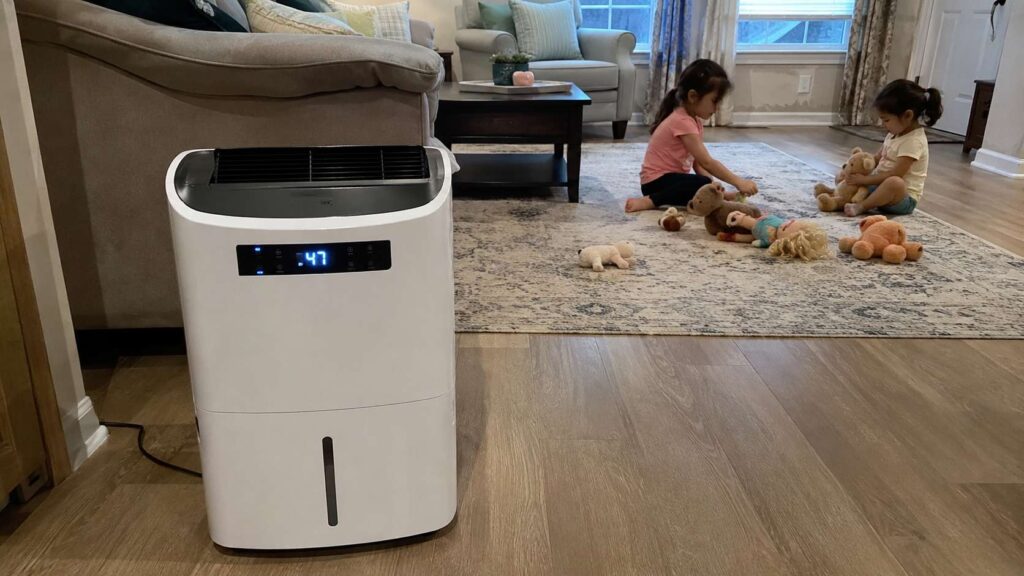
Humidity in indoor air after the culprit has been fixed
The machine can help dry the indoor air after a small leak, spill, or condensation issue has already been stopped. For example, it may help dry the room after repairing an AC drain line or plumbing connection.
It should not replace proper water extraction or structural drying after flooding. Wet wall cavities, insulation, flooring, and ceilings may hold moisture that a household unit cannot remove quickly enough.
Preventing repeated surface condensation
If windows, pipes, AC grilles, or walls regularly collect water droplets, lowering room humidity may reduce that condensation. The benefit will be limited, though, if poor insulation or an unusually cold surface is the main cause.
What a Dehumidifier Cannot Fix?
A dehumidifier cannot fix mold when liquid water is entering the property, materials remain wet internally, or established contamination has not been removed. It may improve the humidity reading while the actual source continues damaging walls, ceilings, flooring, or furniture.
Common problems it cannot fix include:
- Leaking roofs or windows
- Plumbing leaks inside walls
- Blocked AC drain lines
- Condensation inside uninsulated ducts
- Mold growing inside an AC unit
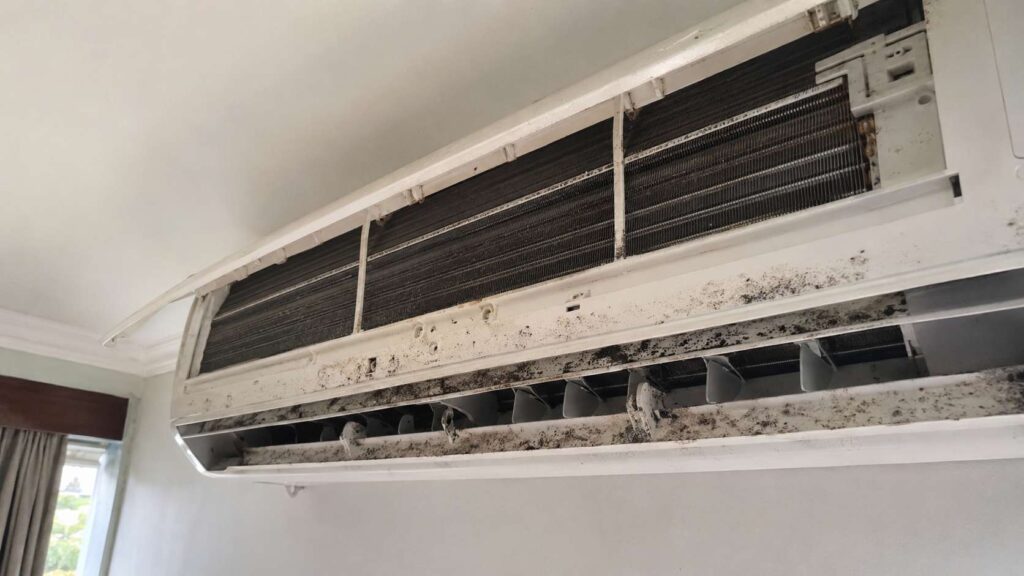
Imagine that mold appears beneath a bathroom ceiling because a pipe is leaking above it. A dehumidifier may dry the room air, but water can continue soaking the gypsum from the other side. The visible patch may spread even while the machine’s display shows 45% humidity.
The same applies to mold behind wallpaper, cabinets, skirting boards, and large mirrors. The surrounding air may feel dry while trapped moisture remains inside the assembly.
Can Dehumidifier Remove Existing Mold?
No. A dehumidifier may slow further growth by reducing moisture, but existing mold still needs to be physically removed from suitable surfaces or remediated when contamination is extensive. Drying mold does not automatically make the affected material clean or safe to ignore.
Small amounts on hard, non-porous surfaces may sometimes be cleaned using an appropriate detergent solution, careful wiping, and complete drying. The surrounding moisture problem must also be corrected, or the growth is likely to return.
Professional assessment becomes more sensible when the affected area is large, keeps returning, involves the HVAC system, follows major water damage, or is hidden behind building materials. This YouTube video explains beautifully how professionals progressively get rid of mold problems.
How to Use a Dehumidifier Properly
For the best result, place the dehumidifier in the dampest affected room. Let the air circulate around it and keep doors and windows closed while it’s working. Monitor the humidity instead of simply running the machine continuously without checking its effect.
But which dehumidifier should you choose? Stay tuned to this blog, and we’ll show you some simple tips to choose the best dehumidifier to prevent mold growth.
If you’ve already had one, in my experience, doing these practices can help.
- Leave clearance around the air intake and outlet
- Keep the filter clean
- Empty and clean the water tank regularly
- Use continuous drainage when appropriate
- Do not place the unit directly against a wet wall
So, Would You Use a Dehumidifier to Fix Mold Issues?
My final verdict is yes! It’s a good move to use a dehumidifier, especially if you live in a humid area such as UAE. A dehumidifier can help with mold by keeping indoor air dry enough to discourage new growth.
Just aim for roughly 40% to 50% relative humidity, and avoid allowing the property to remain above 60%.
Okay, we’ve learned that it will not remove existing colonies or repair leaks, wet walls, damaged AC components, or hidden moisture. So if mold remains after humidity is controlled, returns after cleaning, or appears alongside stains, swelling, or musty AC odours, the next step is to identify the actual moisture source and assess the affected materials. We’ll cover this topic soon.