


Are Black Stains on Walls Actually Black Mold?
Black stains on walls can be black mold, especially when they appear in areas affected by moisture, humidity, or water damage. However, the color alone is not enough to confirm that it is mold.
Black mold often appears as:
- Black, dark green, or brownish patches
- Irregular spots that expand over time
- Fuzzy or slimy growth
- Stains near damp areas
- Musty odors around the affected area
Common places where black mold appears include:
- Bathroom walls and ceilings
- Around AC vents
- Behind furniture
- Near leaking pipes
- Around windows with condensation
- Damp corners with poor airflow
A strong clue is the relationship between the stain and moisture. If the black marks appear near a leak, damp wall, or humid area, mold becomes more likely.
However, some black stains have a completely different cause.
How to Tell If Black Stains Are Mold or Something Else
The easiest way to distinguish mold from other black wall stains is to look at the appearance, location, texture, and history of the problem.
Signs That Black Stains Are Likely Mold
Black wall stains are more likely to be mold when:
- They have a fuzzy, powdery, or raised texture
- They appear in damp areas
- They spread or return after cleaning
- There is a musty smell nearby
- The wall feels cold, damp, or damaged
- There has been previous water damage
Mold can grow on paint, drywall, wallpaper, and other materials when moisture remains trapped.

Signs That Black Stains May Not Be Mold
The stains may be something else if:
- They follow straight lines or patterns
- They appear behind furniture edges
- They feel completely dry and flat
- They occur in areas without moisture issues
- They resemble soot, dust, or pencil-like marks
One common example is ghosting, which is often mistaken for mold.
Black Stains From Ghosting: What Is Thermal Bridging?
Ghosting, also known as thermal tracking or thermal bridging staining, is a different issue from mold.
It happens when certain areas of a wall become colder than surrounding surfaces. These cold spots allow airborne dust and particles to stick more easily, creating dark patterns over time.
Thermal bridging commonly occurs around:
- Wall studs
- Ceiling joists
- Corners
- Areas with poor insulation
- Behind furniture
- Around window frames
Unlike mold, ghosting usually creates recognizable patterns.
You may notice:
- Dark lines following wall framing
- Black marks around corners
- Shadow-like outlines of studs
- Straight or repeating patterns
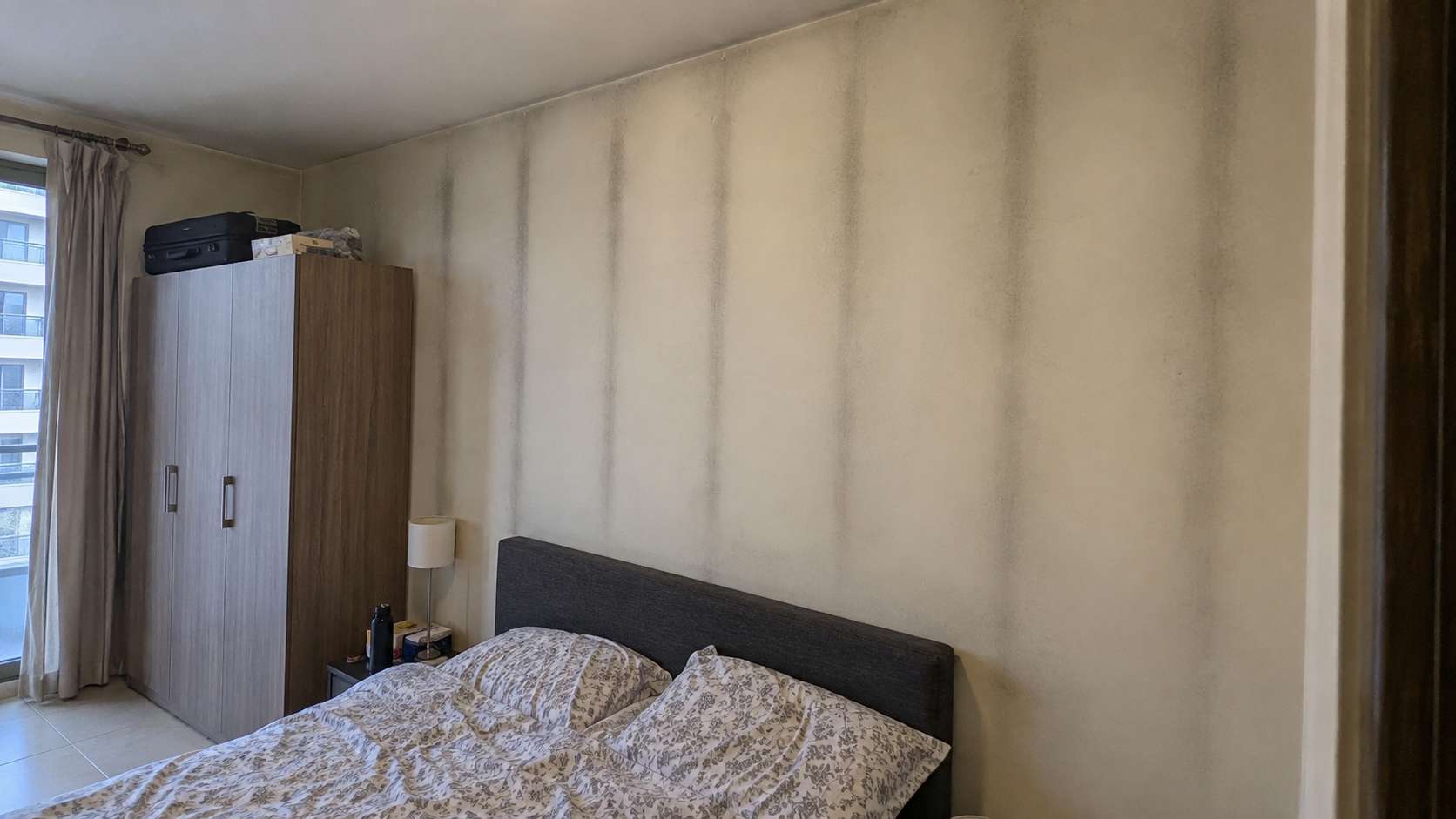
The key difference is that ghosting is usually caused by temperature differences and dust accumulation, not fungal growth.
Cleaning the stain may temporarily remove the appearance, but it often returns unless the underlying insulation or condensation issue is addressed.
Can Black Mold on Walls Affect Your Health?
Black stains caused by mold may affect indoor air quality, especially when mold is actively growing and releasing spores.
Possible reactions to mold exposure include:
- Sneezing
- Runny nose
- Nasal congestion
- Coughing
- Throat irritation
- Watery or itchy eyes
- Skin irritation
People who may be more sensitive include:
- Individuals with mold allergies
- People with asthma
- Young children
- Older adults
- People with respiratory sensitivities
The risk depends on several factors, including:
- The amount of mold present
- How long exposure continues
- The location of the mold
- Individual sensitivity
The important point is that black mold is not only a cosmetic issue. If it indicates a moisture problem inside your home, leaving it untreated can allow the contamination to grow and spread.
Should You Clean Black Stains on Walls Yourself?
Whether you should clean black stains yourself depends on what caused them and how extensive the problem is.
Small areas of surface mold may sometimes be cleaned carefully if:
- The affected area is limited
- The moisture source has been fixed
- The wall material is not heavily damaged
However, DIY cleaning may not be enough when:
- Mold covers a large area
- The wall feels damp or damaged
- Mold keeps returning
- There is hidden moisture behind the wall
- The source of moisture is unknown
A common mistake is wiping away the visible stain and assuming the problem is solved.
If the wall continues receiving moisture from:
- Plumbing leaks
- AC condensation
- Roof leaks
- Poor ventilation
- Internal water damage
the mold can return.
Also, aggressive cleaning can sometimes spread spores or damage painted surfaces if the wrong method is used.
Who Should You Call to Remove Black Mold Safely?
If black stains on your walls are confirmed or suspected to be mold, professional mold remediation is often the safest option, especially for recurring or larger problems.
A professional mold removal company can help with:
- Identifying the moisture source
- Assessing the extent of contamination
- Safely removing mold growth
- Treating affected surfaces
- Preventing recurrence
- Restoring damaged areas
For homeowners in the UAE, Bio-On provides professional mold remediation services designed to handle mold problems from inspection through removal.
Their process focuses on more than simply wiping away visible stains. The goal is to identify why the mold appeared, remove the contamination safely, and help prevent the same problem from returning.
If you discover suspicious black stains on your walls and are unsure whether they are mold or another issue, getting a professional assessment can save you from repeated cleaning attempts and further wall damage.
[CTA placement: Contact Bio-On today for a professional mold inspection and safe black mold removal service before the problem spreads.]
The Bottom Line
Black stains on walls are not always black mold, but they should not be ignored. The key is identifying whether the marks are caused by moisture-related mold growth or something different like ghosting from thermal bridging.
If the stains are fuzzy, spreading, musty-smelling, or connected to moisture problems, mold is a strong possibility. Cleaning may remove the appearance temporarily, but fixing the moisture source is what prevents it from returning.
When you are unsure what you are dealing with, professional mold assessment and remediation can help you find the real cause and restore your home safely.