


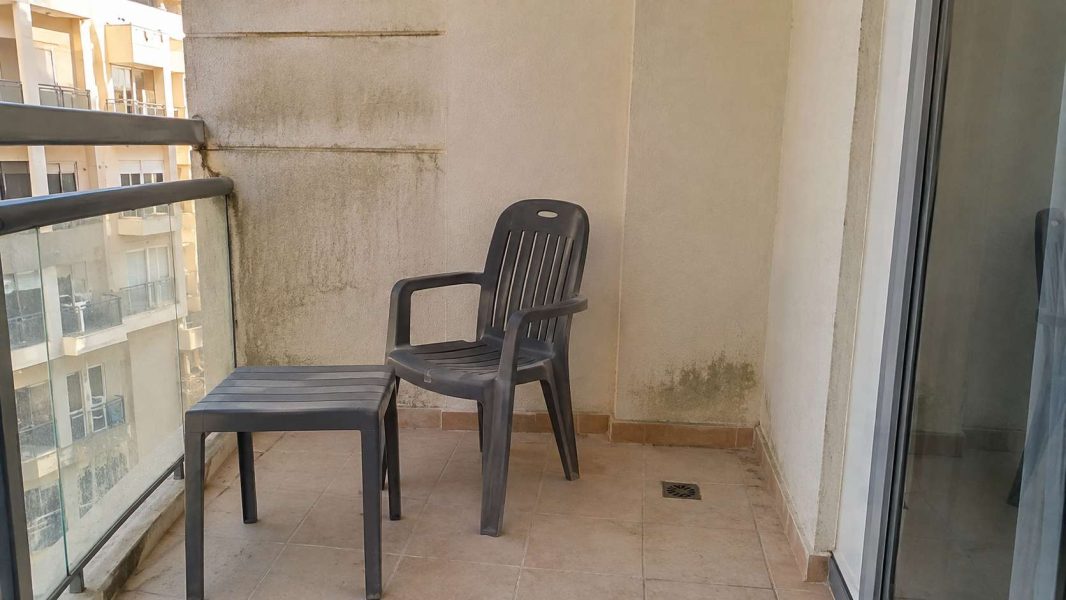
Are Black Stains on Balcony Walls Mold or Desert Grime?
Black stains on balcony walls are not necessarily mold. In UAE properties, deposited dust, soot, pollution particles, and biological growth can create similar dark discoloration on exterior painted surfaces.
The easiest starting point is to compare where the staining appears and how the surface behaves during careful inspection.
| Feature | Possible Mold or Biological Growth | Desert Grime |
|---|---|---|
| Appearance | Irregular patches, spots, or clustered staining | Dusty films, streaks, or broad deposits |
| Common locations | Damp corners, drainage areas, shaded walls | Exposed walls, ledges, and textured surfaces |
| Texture | May appear patchy, embedded, or slightly raised | Usually loose, dusty, or powdery |
| Moisture connection | Often associated with persistent dampness | Can accumulate on dry surfaces |
| Cleaning response | May require careful cleaning and moisture correction | Often improves with gentle washing |
| Recurrence | May return if dampness remains | Can return after dust storms and pollution exposure |
These differences are clues, not definitive identification methods. Algae and other microorganisms can also discolor exterior walls, sometimes producing green, grey, or black patches.
How to Check the Stain Safely
Begin with a visual inspection. Look for water streaks, leaking pipes, clogged drains, or damaged exterior paint.
If the area appears dry and dusty, gently wipe a small section with a damp cloth. Ordinary surface grime may transfer to the cloth and reveal relatively clean paint underneath.
However, mold can also transfer during wiping, so this test does not establish that a stain is harmless dust.
Avoid disturbing extensive suspicious growth or scraping unknown deposits. If stains repeatedly develop in the same damp location, investigate the moisture source before cleaning.
What Causes Black Stains on Balcony Walls?
Black discoloration develops when airborne particles or microorganisms accumulate on the exterior surface. The underlying cause determines whether routine washing will resolve the problem.
Desert Dust and Air Pollution
Windblown sand and fine dust regularly settle on exposed balconies throughout the UAE.
While desert sand is often light-colored, accumulated deposits can become darker when mixed with traffic-related particles, soot, grease, and other airborne pollutants.
Textured exterior paint can trap these particles in small surface irregularities.
Rainwater, condensation, or cleaning runoff may then carry deposited dirt downward, leaving dark vertical streaks.
Balconies near busy roads, construction activity, or dusty outdoor environments may experience more frequent soiling.
Persistent Moisture and Mold Growth
Mold requires suitable moisture conditions to develop on building surfaces.
Possible moisture sources include:
-
Leaking balcony drainage pipes.
-
Water collecting near poorly sloped floors.
-
Rainwater entering damaged wall joints.
-
Persistent condensation on sheltered surfaces.
-
Irrigation overspray from balcony plants.
-
Cracked sealant around wall penetrations.
Some painted or coated surfaces can support fungal growth when moisture remains available.
Research published in FEMS Microbiology Ecology examined fungal colonization on exterior painted buildings. The study demonstrated that fungi could colonize painted surfaces and that paint formulations influenced fungal populations.
Nevertheless, dark exterior staining may also involve algae or other biological growth rather than mold alone.
Damaged Paint and Waterproofing
Deteriorated paint and defective waterproofing can make exterior walls more vulnerable to moisture penetration.
Cracked coatings, failed sealant, and poorly maintained joints allow water to reach underlying materials.
Repeated wetting may contribute to peeling paint, discoloration, and localized deterioration.
Although water stains do not necessarily indicate mold, recurring dampness increases the possibility of biological growth.
For balcony walls, correcting the water-entry problem is often more important than repeatedly cleaning the visible marks.

How to Remove Desert Grime From Balcony Walls
Ordinary desert grime can often be cleaned using simple household products, provided the wall is accessible and its finish is washable.
Before starting, check the manufacturer’s guidance for the existing paint or coating.
Step 1: Remove Loose Dust
Use a soft brush or microfiber cloth to remove loose particles from the wall.
Work gently to avoid grinding abrasive sand into the paint.
If the area contains thick dust deposits, remove them carefully before introducing water, which could turn the material into muddy streaks.
Step 2: Wash With Mild Detergent
Mix a small amount of mild household detergent with clean water.
Apply the solution using a soft sponge or microfiber cloth. Gently wipe the affected wall without excessive pressure.
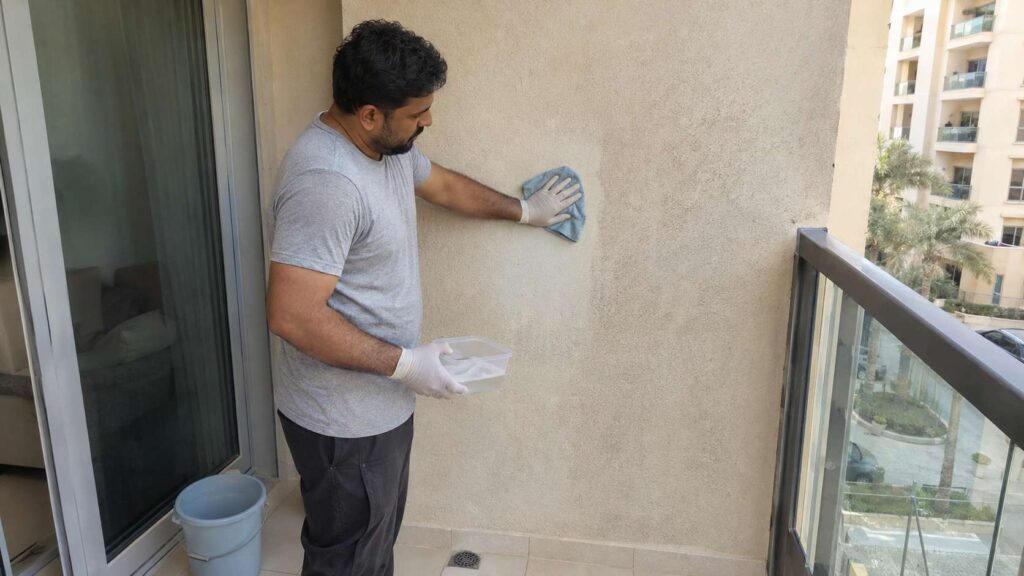
Start with a small, inconspicuous area to confirm the coating tolerates cleaning.
Avoid abrasive pads, strong solvents, and concentrated chemicals that may damage exterior paint.
Step 3: Rinse and Dry
Remove detergent residue with a clean, lightly dampened cloth or a controlled amount of water.
Avoid directing large volumes of water toward electrical fittings, wall joints, or neighboring balconies.
Allow the surface to dry thoroughly.
If grime remains embedded in textured paint, a professional exterior cleaning service may be more suitable than aggressive scrubbing.
High-pressure washing should not be used automatically because it can damage paint, force water into cracks, or create uncontrolled runoff.
How to Clean Mold From Balcony Walls
Small areas of suspected surface mold on sound, accessible, washable walls may be manageable without extensive professional work.
However, the moisture source must be corrected first. Otherwise, the growth may return after cleaning.
Step 1: Assess the Area
Check whether the staining is localized or widespread.
The EPA generally indicates that mold growth covering less than approximately 10 square feet may be manageable by homeowners in many circumstances.
However, that guidance is not automatic permission to clean every exterior surface.
Avoid DIY cleaning when contamination is extensive, the substrate is deteriorating, or safe access requires leaning beyond the balcony railing.
Step 2: Wear Appropriate Protection
Use protective gloves, eye protection, and suitable respiratory protection when cleaning suspected mold.
Keep children and pets away from the work area.
Avoid dry brushing, sanding, or aggressive scraping that may release particles.
People with significant respiratory conditions, mold allergies, or weakened immune systems should avoid direct exposure during cleanup.
Step 3: Clean the Affected Surface
For a small area on a sound, washable surface, use mild detergent and water with a soft cloth or sponge.
Clean carefully without unnecessarily dispersing material into the surrounding environment.
The EPA does not recommend routine biocide application as the standard approach to mold cleanup.
Avoid mixing cleaning chemicals, particularly bleach with other cleaning products.
Some porous, peeling, or heavily contaminated wall finishes may not be suitable for simple surface cleaning.
Step 4: Dry and Monitor
Remove remaining cleaning moisture and allow the wall to dry.
Address drainage problems, leaking joints, or recurring condensation.
Monitor the area for new discoloration.
If suspicious growth returns quickly or the paint continues deteriorating, arrange an assessment of the underlying surface rather than applying stronger cleaning chemicals repeatedly.
Can You Simply Paint Over Black Balcony Stains?
Painting over black stains without removing the cause is generally a poor long-term solution.
For desert grime, painting over dirty surfaces can lead to poor adhesion, uneven finishes, and premature peeling.
Clean the wall thoroughly, allow it to dry, and repair any damaged coating before repainting.
For mold, the problem is more serious.
The EPA specifically advises against painting or caulking over moldy surfaces. Mold should be removed, and the moisture problem corrected before applying new finishes.
A fresh coating may temporarily conceal discoloration without addressing contamination or trapped moisture.
Once the wall is clean, sound, and dry, a suitable exterior paint system may help protect the surface.
Mold-resistant exterior coatings can offer additional protection in some conditions, but they cannot compensate for leaks, defective waterproofing, or persistent dampness.
Professional Balcony Wall Cleaning and Mold Removal Costs
Professional assistance is most useful when stains cover large areas, repeatedly return, involve deteriorated wall materials, or cannot be reached safely.
In Dubai, the appropriate service depends on whether the problem is ordinary grime, suspected mold, or a building-maintenance defect.
Which Professional Service Should You Choose?
Balcony deep cleaning services are suitable for accumulated dust, pollution deposits, and surface grime. Choose providers who use cleaning methods appropriate for painted walls and control wastewater.
Professional mold remediation services are more appropriate when biological contamination is extensive, recurring, or associated with concealed moisture.
Waterproofing and building-maintenance contractors should address leaking balcony joints, drainage failures, and defective exterior coatings.
For high-rise properties, cleaning beyond the balcony railing or on the building façade may require specialist access arrangements and building-management authorization.
How Much Does Professional Treatment Cost in Dubai?
Published Dubai service prices provide useful starting points, but they are not standardized quotations for black balcony-wall stains.
| Service | Published Indicative Price |
|---|---|
| Standard balcony cleaning | From AED 99 |
| Balcony deep cleaning | Approximately AED 150–200 for a standard balcony up to 10 m² |
| Specialist mold treatment by Bio-On | AED 20–35 per m² across its listed area bands |
| More extensive mold remediation | Often several hundred AED or more, depending on the scope |
Urban Company advertises balcony cleaning starting at AED 99, while Top Mop publishes approximately AED 150–200 for a standard apartment balcony up to 10 m².
Bio-On publishes mold-treatment rates between AED 20 and AED 35 per square meter for specified treatment-area bands, with a free inspection listed for areas above 10 m².
These treatment rates should not be interpreted as a guaranteed final invoice. Inspection, minimum charges, difficult access, containment, repairs, and repainting may affect the quotation.
For suspected mold on balcony walls, Bio-On is one UAE service option to consider. Before booking any provider, confirm whether the proposed work includes identifying moisture sources, cleaning affected surfaces, and assessing the need for additional repair.
The Bottom Line
Black stains on balcony walls may result from ordinary desert grime, air pollution, mold, or other biological growth. Dust usually responds to gentle washing, while suspected mold requires careful cleaning and correction of persistent moisture. Stain color and appearance provide clues, but neither confirms the underlying cause.
Start by checking the wall’s condition, location, and moisture exposure. Clean small, accessible areas using appropriate methods, and avoid painting over unresolved staining. If discoloration repeatedly returns, the wall deteriorates, or access is unsafe, seek a qualified cleaning, moisture-assessment, or remediation service.