


Why Black Mold Clean Up Is Not Just Sanitization
Black mold clean up is not just sanitization because mold grows from moisture, not from a lack of disinfectant. If a wall, cabinet, ceiling, AC area, or floor keeps getting damp, mold can return even after strong chemical treatment.
Sanitization focuses on reducing microorganisms on surfaces. That can be useful in some cleaning situations, but mold remediation has a different goal. The goal is to remove mold contamination and stop the condition that allowed it to grow.
The EPA is clear that using a chemical or biocide, such as chlorine bleach, is not recommended as a routine practice during mold cleanup. It also says you cannot eliminate all indoor mold spores; the way to control indoor mold growth is to control moisture.
That means a “deep sanitization” service may fail if it only does things like:
- Spray disinfectant
- Fog the room
- Wipe visible stains
- Deodorize the air
- Apply fragrance
- Use bleach on the surface
- Clean the room without checking moisture
- Leave wet drywall, MDF, carpet, or insulation in place
The room may smell fresher for a few days. The black stain may fade. But if the material is still wet, mold can come back.
Real black mold cleanup asks a deeper question: What is feeding the mold?
Reason 1: Sanitization Does Not Fix the Moisture Source
The first reason deep sanitization fails is simple: it does not stop water.
Black mold usually appears because something is damp. It may be a pipe leak, AC condensation, blocked drain line, roof seepage, bathroom waterproofing problem, balcony leak, high humidity, or poor ventilation. If that source stays active, mold can return no matter how many times you sanitize the surface.
This is why people often say, “We cleaned it, but it came back.”

The cleaning was not necessarily the problem. The missing step was moisture repair.
Common hidden moisture sources include:
- Slow pipe leaks behind walls
- Leaking sink traps
- AC drain overflow
- Condensation around vents
- Damp drywall after a water leak
- Water under cabinets
- Roof or ceiling seepage
- Poor bathroom exhaust
- High indoor humidity
- Wet carpet padding
- Damp insulation
The EPA’s basic cleanup steps include fixing plumbing leaks and other water problems as soon as possible, then cleaning up the mold and drying surfaces before painting.
So, if a company offers only sanitization without moisture inspection, leak detection, humidity checks, or drying, it is not solving the real black mold problem. It is treating the symptom.
Reason 2: Sanitization Cannot Remove Mold Inside Porous Materials
The second reason sanitization fails is that mold can grow inside porous materials, not only on top of them. This is especially important for black mold on drywall, gypsum board, MDF cabinets, carpet, ceiling tiles, wallpaper, insulation, wood-based boards, and fabric.
A surface spray may touch the outside. But if the material absorbed water, mold may be deeper inside. In that case, sanitization may lighten the surface while the contaminated material remains.
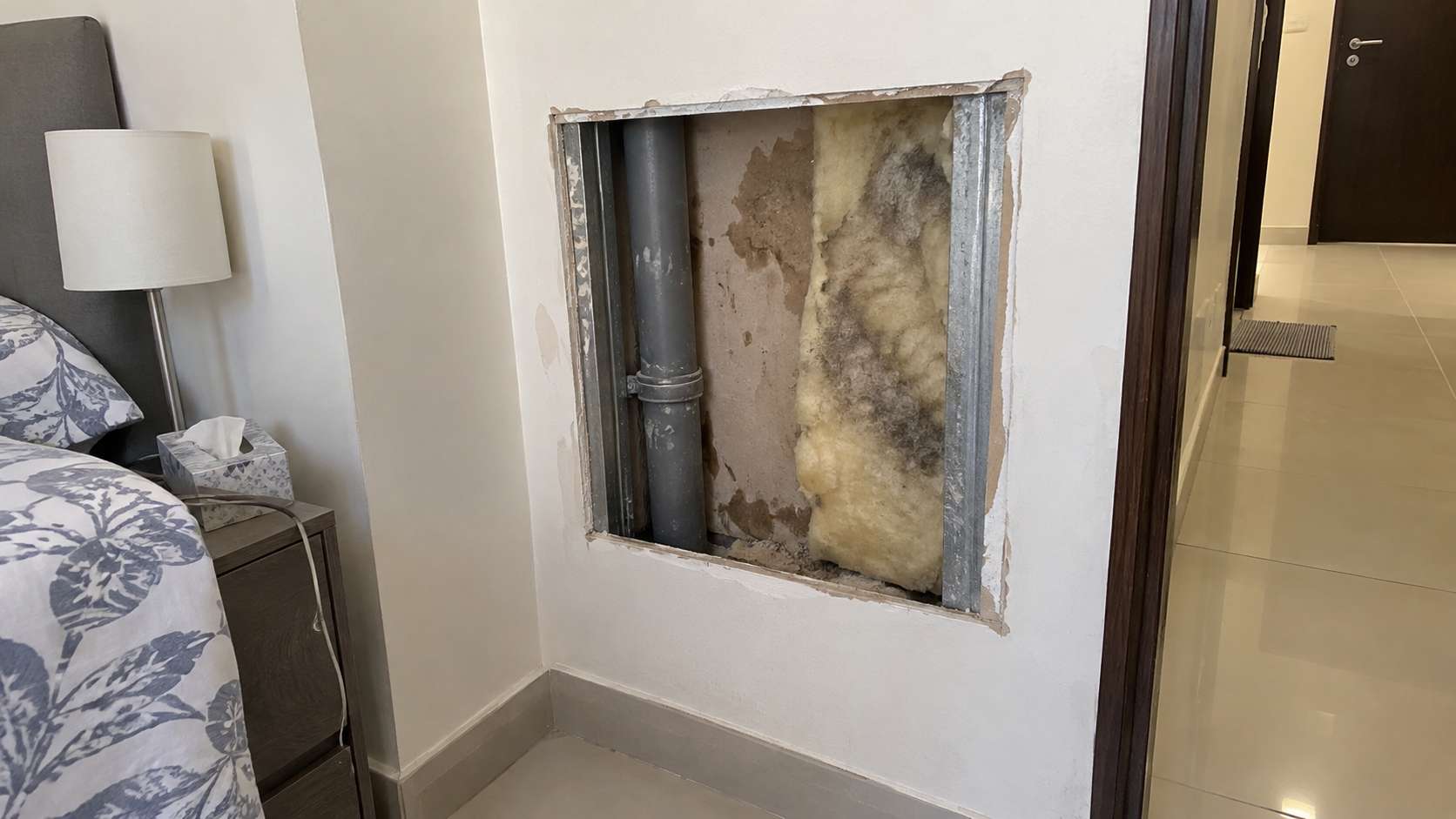
Porous materials that may need removal include:
- Moldy drywall
- Wet insulation
- Swollen MDF cabinets
- Carpet padding
- Moldy ceiling panels
- Water-damaged skirting boards
- Wallpaper
- Particle board furniture
- Soft wood affected by long-term moisture
This is why black mold in a bathroom corner is different from black mold inside a wet wall. A small patch on tile grout may be cleaned. A moldy drywall panel after a pipe leak may need cutting out and replacement.
The CDC advises removing all mold you can see and drying the home and everything in it as quickly as possible, within 24–48 hours if possible. That drying window matters because once porous materials stay wet too long, cleaning becomes much harder.
If a wall is soft, swollen, bubbling, stained, or musty, do not assume sanitizing the paint is enough. The mold may be behind the surface.
Reason 3: Killing Mold Is Not the Same as Removing Mold
Deep sanitization often focuses on “killing” mold. But killing mold is not the same as removing mold contamination.
Even dead mold material can still remain on surfaces. It can still contribute to musty odor, dust contamination, staining, and irritation for sensitive people. That is why professional cleanup is not only about applying a chemical. It is about physically removing contamination from affected surfaces and materials.
EPA mold remediation guidance says it is necessary to clean up mold contamination, not just kill the mold.
This is one of the biggest reasons fogging or spraying alone is not enough. A fog may reach the air or exposed surfaces, but it does not remove moldy drywall, clean dust from hidden corners, extract contaminated carpet padding, or wipe mold residue from the back of cabinets.
Think of it like mud on the floor. Spraying disinfectant on mud does not remove the mud. You still need to remove the actual contamination. Mold cleanup works the same way.
A better cleanup process includes:
- Containing the affected area if needed.
- Removing unsalvageable porous materials.
- Cleaning hard surfaces.
- HEPA vacuuming when appropriate.
- Drying the area.
- Correcting moisture.
- Verifying that odor and dampness are gone.
Sanitization may be one part of the process, but it should never be the whole process.
Reason 4: Deep Sanitization May Hide the Warning Smell
A musty smell is not pleasant, but it is useful. It warns you that moisture or microbial growth may still be present. Deep sanitization, deodorizing, perfumed sprays, ozone-style odor treatment, or fragrance-heavy cleaning can temporarily hide that smell.
That can be dangerous because you may think the problem is solved when it is only masked.
If the smell returns after a few days, the source is probably still there. It may be behind a wall, under flooring, inside a cabinet, in the AC system, or around a hidden leak.
Do not trust “fresh smell” as proof of successful black mold clean up. Better signs of successful cleanup include:
- No active leak
- Normal moisture readings
- No musty odor after ventilation
- No visible growth
- No damp wall patches
- No swelling or bubbling
- No mold returning after several days or weeks
- Humidity under control
- Removed or replaced damaged porous materials
The CDC says the best thing you can do is safely remove mold and prevent future mold growth. That means the end goal is not a scented room. It is a dry, clean, stable room.
Reason 5: Sanitization Does Not Control Airborne Dust and Spores Properly
Black mold clean up can disturb mold particles, dust, and contaminated debris. If cleanup is done carelessly, those particles can spread to cleaner areas of the home.
A deep sanitization team may spray and wipe, but if they do not contain the area, use proper filtration, remove contaminated dust, or protect nearby rooms, the cleanup may spread the problem.
This is especially important when mold is disturbed during:
- Scrubbing
- Sanding
- Cutting drywall
- Removing cabinets
- Pulling carpet
- Opening ceiling panels
- Cleaning AC vents
- Moving moldy furniture
For serious mold cleanup, professionals may use containment, negative air pressure, HEPA filtration, HEPA vacuuming, protective equipment, and controlled removal. The goal is to stop contamination from moving through the home during the work.
The CDC recommends personal protective equipment such as gloves, mask, and goggles when cleaning mold. For larger or more invasive cleanup, basic household cleaning is not enough.
If black mold is on a small tile area, DIY cleaning may be reasonable. But if it is inside walls, cabinets, ceilings, HVAC components, or porous materials, spraying sanitizer can create a false sense of safety.
Reason 6: Sanitization Does Not Dry the Structure
Drying is one of the most important parts of black mold clean up. If the structure stays damp, mold can regrow.
A room can look clean but still be wet inside. Drywall can hold moisture behind paint. MDF cabinets can stay damp inside swollen boards. Carpet padding can trap water under a dry-looking surface. Wall cavities can stay humid after a leak.
Deep sanitization may clean the surface, but it does not always dry:
- Wall cavities
- Under-cabinet bases
- Behind skirting boards
- Under flooring
- Carpet underlay
- Wet insulation
- Ceiling voids
- AC drain areas
The CDC recommends drying your home and everything in it as quickly as possible, within 24–48 hours if you can. If drying is skipped, mold prevention is incomplete.
Professional drying may require:
- Fans
- Dehumidifiers
- Moisture meters
- Thermal imaging
- Controlled ventilation
- Material removal
- Drying logs
- Follow-up moisture checks
Without drying, sanitization is like wiping the outside of a wet sponge. The surface may look better, but the moisture remains.
Reason 7: Black Mold Often Needs Removal, Not Repeated Cleaning
If black mold keeps coming back, repeated deep sanitization is usually a waste of money. Persistent mold often means the affected material must be removed or the moisture source is still unresolved.
This is especially true when you see:
- Mold returning in the same area
- Musty smell after cleaning
- Wall bubbling or peeling
- Soft drywall
- Swollen cabinet panels
- Mold after water leaks
- Black stains near AC vents
- Mold on carpet or insulation
- Dampness behind furniture
- Growth spreading to nearby areas
The CDC warns that painting or caulking over mold will not prevent it from growing. The same logic applies to repeated surface sanitization. If mold is living in damp material, covering or spraying the surface will not solve the core issue.
The ultimate cleanup may involve:
- Cutting out moldy drywall
- Removing wet insulation
- Replacing swollen MDF
- Removing contaminated carpet padding
- Repairing leaks
- Fixing AC drainage
- Improving ventilation
- Drying the structure
- Cleaning remaining surfaces
- Rebuilding after moisture is controlled
That is why the best black mold cleanup plan is not “sanitize harder.” It is “remove what cannot be saved.”
What Proper Black Mold Clean Up Should Include
Proper black mold clean up should follow a complete sequence. The exact steps depend on the size, material, and source, but the logic is usually the same.
1. Inspect the Moisture Source
Find out why mold grew. Check pipes, AC systems, walls, ceilings, floors, cabinets, bathrooms, and humidity levels.
2. Stop the Water Problem
Repair leaks, improve ventilation, fix AC drainage, lower humidity, or correct waterproofing issues.
3. Protect the Area
Use personal protective equipment. For larger jobs, contain the affected zone so contamination does not spread.
4. Remove Unsalvageable Materials
Porous materials with deep mold or water damage may need removal. Cleaning the surface may not be enough.
5. Clean Remaining Surfaces
Hard, non-porous surfaces can often be cleaned. Dust and residue should be removed, not just sprayed.
6. Dry Completely
Use fans, dehumidifiers, AC support, and moisture checks. The area should not feel damp or smell musty.
7. Verify Before Rebuilding
Do not paint, reinstall cabinets, or close walls until moisture is controlled and the area is clean.
This is why a professional mold remediation company is often better than a general deep-cleaning company for recurring black mold. The job is not only cleanliness. It is moisture control, contamination removal, safe drying, and prevention.
When Deep Sanitization May Still Help
Deep sanitization is not useless. It can help as part of the final cleaning phase after the real mold cleanup steps are done.
It may be useful after:
- The leak is fixed.
- Wet materials are removed.
- The area is dried.
- Visible mold is cleaned or removed.
- Dust is controlled.
- Hard surfaces are ready for final cleaning.
In other words, deep sanitization can be a finishing step, not the foundation of black mold cleanup.
It may help clean surrounding hard surfaces, reduce general contamination, remove residue, and improve hygiene after remediation. But if the company skips moisture control and removal, the “deep” cleaning is still shallow.
The Bottom Line
Deep sanitization alone will not work for black mold clean up because black mold is not only a surface hygiene issue. It is usually caused by moisture, hidden dampness, contaminated porous materials, poor drying, and unresolved leaks or humidity.
A sanitizer may kill some surface mold, reduce odor, or make the area look cleaner. But it cannot repair a pipe, dry drywall, remove mold inside MDF, stop AC condensation, clean behind walls, or prevent regrowth if moisture remains.
The real solution is proper mold remediation: find the water source, fix it, remove damaged materials, clean remaining surfaces, dry everything fully, and verify the area stays dry. Sanitization can support the final stage, but it should never be the only plan.