


Why Are Homeowners Worried About Black Mold After Water Damage?
Water damage creates the ideal conditions for mold growth because mold needs moisture, organic materials, and time to develop.
After events such as:
- Flooding
- Burst pipes
- Roof leaks
- Heavy rain entering the home
- AC condensation leaks
- Plumbing failures
water can become trapped inside building materials.
The biggest concern is hidden moisture. A wall may look dry from the outside while remaining wet internally. Materials such as drywall, wood framing, insulation, and carpets can hold moisture for days or weeks, creating conditions where mold can grow.
Homeowners often worry about black mold because it is commonly associated with serious mold problems. However, the appearance alone cannot confirm whether a specific mold is dangerous or identify the exact species.
A proper diagnosis is more reliable than guessing based on color.
How Do Professionals Check for Hidden Mold After Water Damage?
Finding hidden mold requires more than looking at visible surfaces. Professional inspectors use multiple diagnostic methods to determine whether moisture remains and whether mold contamination exists.
Thermal Imaging: Finding Hidden Moisture Problems
Thermal imaging cameras help inspectors identify temperature differences inside building materials.
Although thermal cameras do not directly detect mold, they can help locate areas that may require further investigation, including:

- Wet walls
- Moist ceilings
- Water intrusion areas
- Hidden leaks
- Uneven drying patterns
For example, after a pipe leak, a wall may appear normal but show temperature differences indicating trapped moisture behind the surface.
This allows inspectors to focus testing on the areas most likely to contain hidden problems instead of randomly opening walls.
Moisture Mapping: Understanding Where Water Damage Exists
Moisture mapping is one of the most important steps after water damage.
Professionals use moisture meters and inspection methods to create a map showing:
- Which areas are wet
- How far moisture has spread
- Which materials are affected
- Whether drying is complete
Moisture mapping helps answer an important question:
Is the area actually dry enough to prevent mold growth?
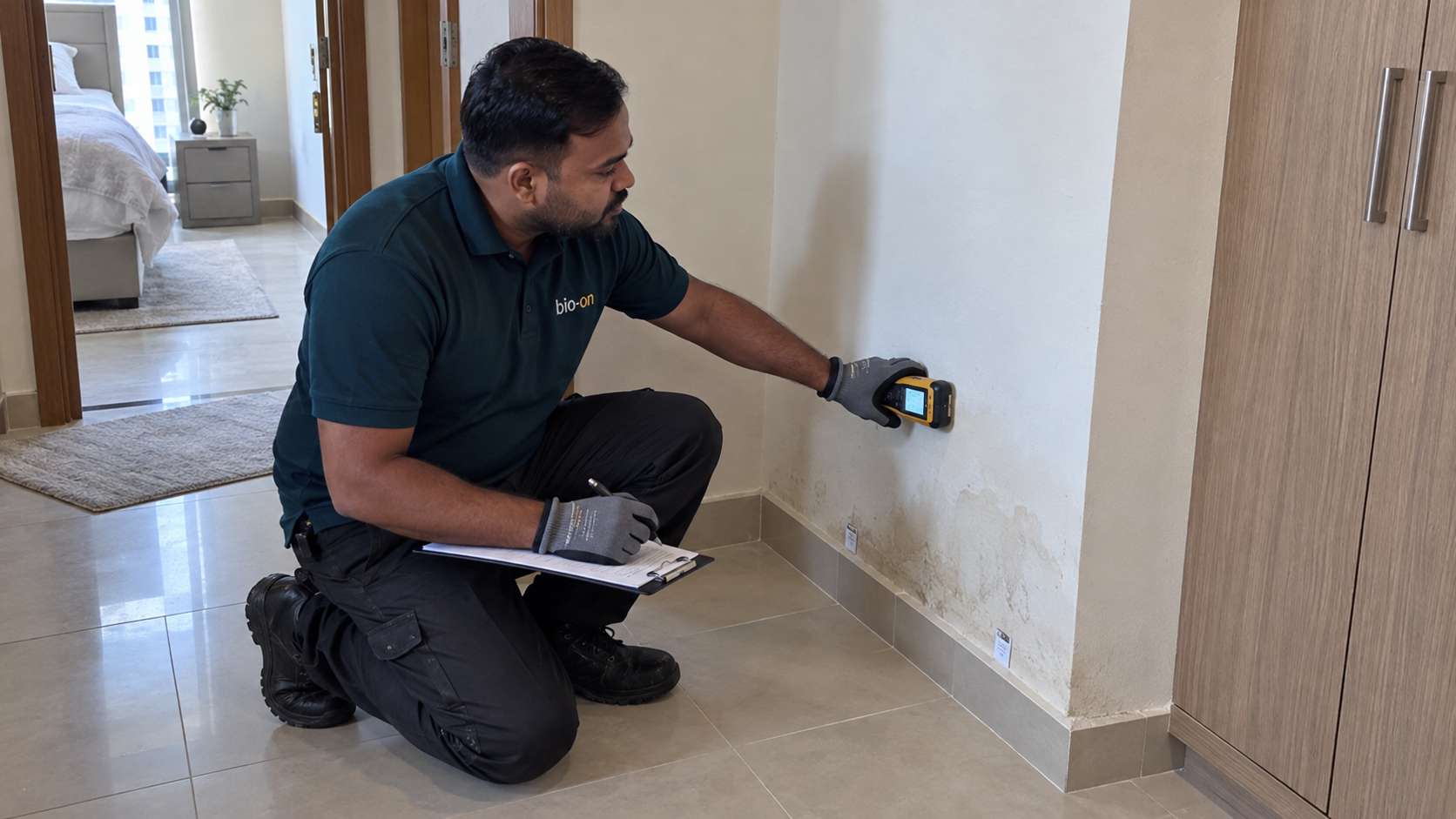
A property that experienced flooding may have moisture hidden behind:
- Baseboards
- Cabinets
- Flooring
- Drywall
- Insulation
Without identifying these areas, homeowners may only treat visible symptoms while leaving the actual problem untouched.
Air Sampling: Checking Airborne Mold Spores
Air sampling is another diagnostic method used in some situations.
It can help evaluate whether airborne mold spores are elevated compared with expected indoor conditions.
Air testing may be useful when:
- Mold is suspected but not visible
- There is a persistent musty smell
- Occupants notice possible indoor air quality concerns
- A building requires documentation
However, air sampling alone does not tell the complete story. Mold levels can change depending on airflow, activity, and environmental conditions.
It should usually be interpreted together with visual inspection and moisture findings.
Laboratory Analysis: Getting Scientific Confirmation
When samples are collected, they may be sent to a laboratory for analysis.
Laboratory testing can provide information about:
- The types of mold present
- Whether certain species are detected
- The concentration of spores in collected samples
This provides documented evidence instead of relying only on appearance.
For homeowners dealing with anxiety after water damage, laboratory results can help provide a clearer answer about whether mold contamination exists.
What Should You Do If the Report Confirms Black Mold?
If testing confirms mold growth after water damage, the next step is not simply wiping the visible area.
The priority is controlling the source and preventing further spread.
1. Stop the Moisture Source Immediately
Before mold removal begins, fix the reason the water entered.
Examples:
- Repair leaking pipes
- Fix roof damage
- Repair waterproofing failures
- Stop plumbing leaks
- Address drainage issues
Removing mold while moisture continues will usually lead to recurrence.
2. Avoid Disturbing Large Mold Areas
Aggressively scrubbing, sanding, or removing mold-covered materials without proper containment can release spores into the air.
Avoid:
- Dry brushing mold
- Breaking contaminated drywall unnecessarily
- Using fans that spread contaminated air
Large or hidden mold problems require controlled remediation.
3. Start Professional Mold Remediation When Necessary
Professional remediation may involve:
- Containment of affected areas
- HEPA air filtration
- Removal of contaminated materials
- Deep cleaning of salvageable surfaces
- Drying and moisture correction
- Post-remediation verification
The exact approach depends on:
- The size of contamination
- The materials affected
- How long moisture was present
- Whether mold spread into hidden spaces
What If the Report Does Not Find Black Mold?
A negative mold report does not mean homeowners should ignore water damage completely.
The goal after water damage is preventing mold from developing later.
Important steps include:
Complete the Drying Process
Even if no mold is detected, continue drying affected areas.
Useful actions include:
- Running dehumidifiers
- Improving airflow
- Monitoring moisture levels
- Removing wet materials when necessary
Inspect Problem Areas Regularly
After water damage, monitor:
- Walls
- Ceilings
- Floors
- Cabinets
- Around plumbing fixtures
New stains, odors, or peeling materials may indicate a developing moisture issue.
Maintain Healthy Indoor Humidity
Keeping indoor humidity controlled reduces the chance of future mold growth.
Helpful prevention methods include:
- Maintaining HVAC systems
- Using exhaust fans
- Repairing leaks quickly
- Monitoring humidity levels
Schedule Follow-Up Inspections When Needed
Some water damage problems take time to appear.
A follow-up inspection may be useful when:
- Extensive flooding occurred
- Water entered walls or ceilings
- Drying was difficult
- The building had previous mold problems
When Should You Call a Professional Mold Remediation Company?
Professional help is recommended when homeowners cannot confidently determine whether hidden mold exists or when water damage is extensive.
Consider hiring a mold remediation company if:
- Water entered walls or ceilings
- Floodwater affected the home
- Mold odors remain after drying
- Mold returns after cleaning
- Large areas are contaminated
- The source of moisture is unclear
A professional company can combine inspection, testing, moisture detection, and remediation into one process.
Companies such as Bio-On Cleaning help homeowners investigate suspected mold problems, including hidden contamination after water damage events. Before it gets worse, give them a call, explain a bit about the mold issues. Just sit down and relax. They’ll take care of everything.
After all, their goal is not only removing visible mold but also identifying the moisture conditions that allowed it to grow. So, there will be no more risk of mold growth in the future.
So, It’s All True
Black mold after water damage should not be diagnosed by appearance alone. A dark stain does not automatically mean dangerous black mold, and a clean-looking wall does not guarantee there is no hidden growth.
The safest approach is to diagnose the problem properly using moisture mapping, thermal imaging, air sampling when appropriate, and laboratory testing when needed.
If mold is confirmed, act quickly by stopping the moisture source and arranging proper remediation. If no mold is found, focus on complete drying, moisture monitoring, and prevention.
The most important step after water damage is not guessing. It is finding the truth about what is happening behind the surfaces before a small moisture problem becomes a major mold issue.