


Is Bathroom Mold Removal Safe to Do Yourself?
Yes, but there is a limit. See, bathroom mold removal is usually manageable without professional help when the mold is limited to a small surface area and the moisture source is obvious. A few spots on tiles, a shower door, a painted moisture-resistant surface, or the outer edge of a bathtub may fall into this category.
The US Environmental Protection Agency states that, in most cases, homeowners can handle a moldy area smaller than about 10 square feet. That is roughly equivalent to a patch measuring 3 feet by 3 feet. This figure is a general guideline, not an automatic guarantee that every small problem is safe to clean yourself.
DIY cleaning is more reasonable when:
- The affected area is small and clearly visible.
- The mold is on tile, glass, metal, or another accessible hard surface.
- There has not been extensive water damage.
- The wall or ceiling does not feel soft, swollen, or damaged.
- There is no strong musty smell coming from behind a surface.
Size is not the only factor here. A small patch around a plumbing opening often links to a hidden leak. A narrow line of mold along silicone sealant may only be a tip of the iceberg, but staining that continues behind the sealant could require the material to be removed and replaced.
DIY or Professional Bathroom Mold Removal?
The best choice depends on the size, location, surface, moisture source, and likelihood of hidden growth. This comparison can help you make a practical decision.
| Situation | DIY may be reasonable | Professional help is safer |
|---|---|---|
| A few spots on shower tiles | Yes | Usually unnecessary |
| Light surface mold on grout | Possibly | If deeply stained or recurring |
| Mold around removable silicone caulk | Possibly | If it extends behind the caulk |
| Growth covering more than about 10 square feet | No | Yes |
| Mold returning within days or weeks | Not until the cause is found | Often |
| Soft, swollen, or crumbling drywall | No | Yes |
| Water leaking inside a wall or ceiling | No | Yes |
| Strong odor with little visible growth | Uncertain | Often |
| Mold after sewage or contaminated water | No | Yes |
| Mold near electrical fixtures | No | Yes |
| Occupant has asthma or immune suppression | Avoid personal cleanup | Yes |
| Mold can only be reached by opening the wall | No | Yes |
Choose DIY for small, straightforward surface growth
A small amount of mold caused by normal shower condensation may be cleaned successfully when it is sitting on a hard surface. The job should not require demolition, aggressive sanding, or removal of large sections of material.
For example, DIY cleaning may be suitable for:
- Several dark spots on ceramic tiles
- Light mold on a glass shower enclosure
- A small patch on intact, washable paint
- Surface growth around a bathtub edge
- Minor mildew-like staining on accessible grout
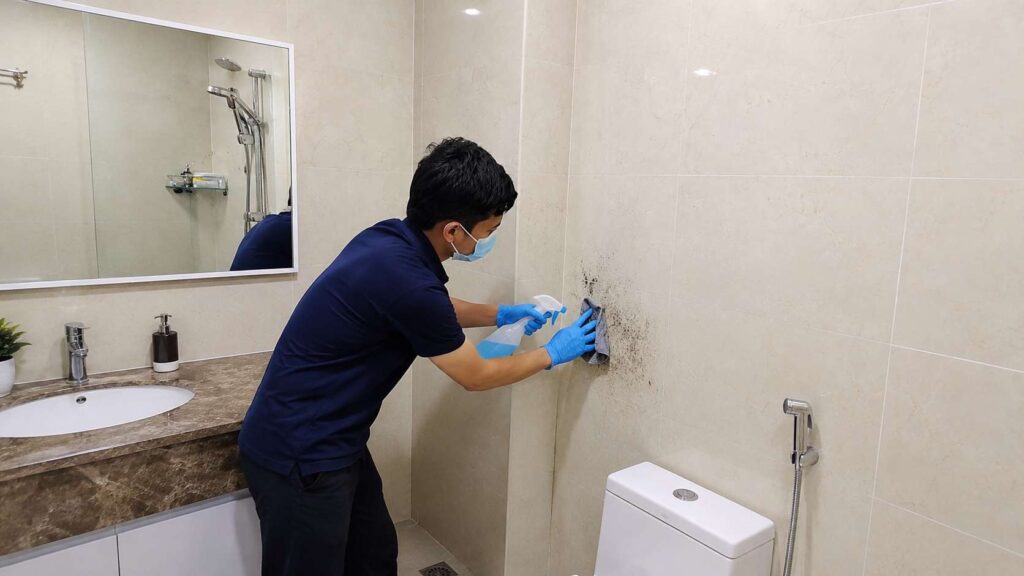
Cleaning must be followed by complete drying. Otherwise, the same damp conditions can allow growth to return.
Choose a professional when the problem extends beyond cleaning
Professional removal becomes more appropriate when the job requires finding hidden moisture, isolating the work area, removing contaminated materials, or preventing debris from spreading into the rest of the home.
If you’re dealing with this type of bathroom, please don’t do what people in this GIF do. Better leave it to professionals.

Warning signs include:
- Mold extending across several walls or ceiling sections
- Repeated growth despite regular cleaning
- Peeling paint, bubbling surfaces, or damaged plasterboard
- A musty smell inside a wall, cabinet, or ceiling void
- Water dripping from the unit above or from concealed plumbing
The EPA recommends consulting an experienced contractor when mold covers more than approximately 10 square feet or significant water damage has occurred. It also advises checking that a contractor has actual mold-cleanup experience rather than assuming any general cleaning company can perform remediation correctly.
How Do You Clean a Small Bathroom Mold Problem?
Clean a small bathroom mold problem by protecting yourself, cleaning the affected surface without unnecessarily disturbing it, drying the area completely, and correcting the moisture condition that allowed it to grow.
1. Find the moisture source first
If you want to reach for that cleaner, stop for a moment. First, check why the surface stays wet. The issue can come from these:
- Steam remaining after showers
- An exhaust fan that does not work or vent outdoors
- A dripping tap or shower connection
- Failed sealant around a bathtub
- Water entering through damaged grout
Cleaning before fixing a leak usually gives you only a temporary cosmetic improvement. Mold needs moisture to grow, so moisture control is the foundation of any lasting solution.
2. Wear basic protective equipment
Even a small cleanup can disturb particles. The CDC recommends protecting your nose, mouth, skin, and eyes during mold cleanup.
For a small area, use:
- At least a NIOSH-approved N95 respirator
- Protective gloves
- Goggles that keep out dust and small particles
- Clothing that covers exposed skin
Keep children, pets, and people with respiratory or immune-related conditions away from the work area.
3. Ventilate the bathroom
Open a window or run an exhaust fan that vents outdoors when conditions allow. Follow the instructions on any cleaning product you use.
Do not point a portable fan directly at visible mold. Strong airflow across a dry or disturbed patch may move particles around the room.
4. Clean hard surfaces
The EPA advises scrubbing mold from hard surfaces with water and detergent, then drying the surfaces completely. Avoid simply painting or applying fresh sealant over visible growth. The existing mold and moisture problem should be addressed first.
Never mix bleach with ammonia or other household cleaners. That combination can create dangerous gas. When using bleach or another chemical product, follow its label instructions and maintain ventilation.
5. Judge whether the material can actually be cleaned
Tiles, glass, and metal can often be cleaned because their surfaces do not readily absorb water.
Other bathroom materials can be more difficult:
- Silicone caulk: Surface staining may remain embedded. Damaged caulk may need to be removed and replaced after the surrounding area is cleaned and dried.
- Grout: Light surface growth may respond to cleaning, but cracked or deteriorated grout may retain moisture and require repair.
- Drywall or ceiling board: Material that is soft, swollen, crumbling, or moldy through its depth may require removal.
- Wood cabinets: The result depends on whether growth is superficial or moisture has penetrated the material.
- Wallpaper: Mold may be growing behind it, particularly when it is lifting or discolored.
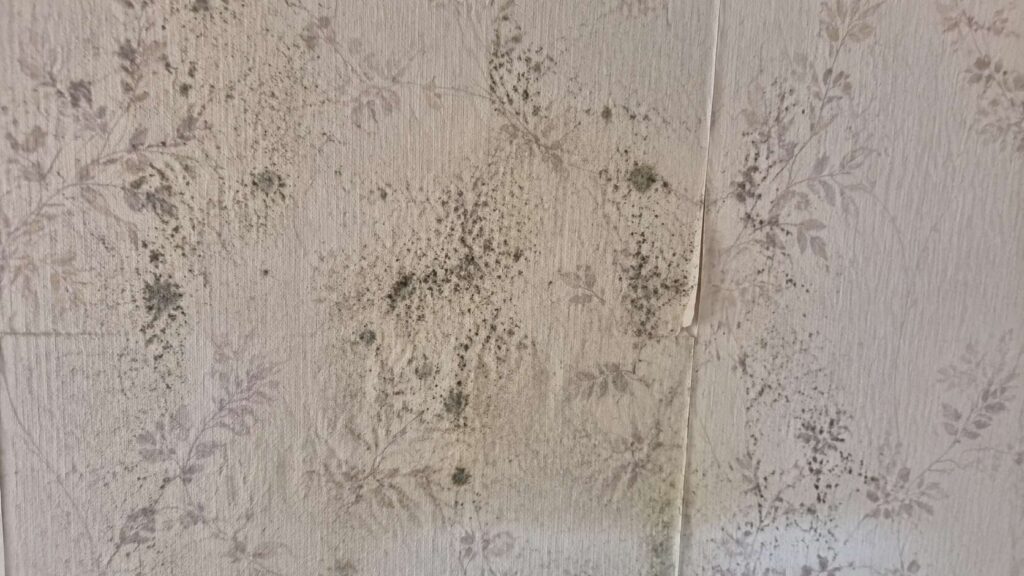
The EPA notes that moldy absorbent materials may need replacement because complete cleaning can be difficult or impossible.
So, Should You Go for a DIY Mold Removal Project or Hire a Pro?
DIY bathroom mold removal may be appropriate for a small, accessible patch on a cleanable surface when you can safely protect yourself and correct the moisture source. Cleaning, complete drying, and better ventilation may be enough for ordinary surface growth around a shower or bathtub.
Professional removal is the safer decision when the affected area exceeds roughly 10 square feet, growth repeatedly returns, building materials are damaged, contaminated water is involved, or mold may be hidden inside walls or ceilings. It is also preferable when cleanup would expose someone with asthma, serious allergies, immune suppression, or underlying lung disease.