


What Is Alternaria Mold?
Alternaria is a large group of fungi found in both outdoor and indoor environments. Outdoors, it commonly grows on plants, soil, decaying leaves, crops, and organic debris. Indoors, it can enter through windows, doors, clothing, shoes, pets, ventilation, and AC systems. Once inside, it may settle in dust or grow on damp materials.
Alternaria alternata is one of the most studied species because of its connection with respiratory allergy. AAAAI lists Alternaria among the common allergy-causing molds, along with Aspergillus, Cladosporium, and Penicillium. Mold allergy can be diagnosed through skin testing or blood testing when interpreted by a qualified clinician.
That point matters because Alternaria is not only a “building mold.” It is also an outdoor airborne allergen. So if someone tests positive for Alternaria allergy, that does not automatically prove the home has a hidden Alternaria colony. They may be reacting to outdoor spores, indoor dust, damp materials, or a mix of several exposure sources.
Inside buildings, Alternaria becomes more concerning when it is visibly growing. Spores may be present in normal indoor air, but visible mold growth means the building has moisture and food available. That is the real warning sign.
So, scientifically, Alternaria should be understood in two ways: as a common environmental mold and as an important allergen. Both matter when you are trying to understand symptoms, indoor air quality, and building damage.
How Alternaria Mold Looks in Homes
Alternaria mold often appears dark, fuzzy, velvety, or powdery. Its color can range from olive green to dark brown, grey-black, or almost black. On some surfaces, it may look like tiny dark speckles. On others, it can look like a spreading dark stain or soft textured patch.
In homes, Alternaria-like growth may appear on:
- Window frames and sills
- Bathroom ceilings
- Shower corners
- Damp walls
- Kitchen sink cabinets
- Around leaky pipes
- Near AC vents or condensation areas
- Old carpets and rugs
- Dusty curtains
- Stored cardboard boxes
- Wallpaper or wallpaper glue
- Wood and plant-based materials
- Potted plant soil or decaying leaves
Still, appearance alone is not enough. Cladosporium, Stachybotrys, Aspergillus, and other molds can also look dark. Even Penicillium may appear grey-green or dusty depending on the surface. So if you need certainty for a health investigation, landlord dispute, workplace report, or post-cleaning verification, you need sampling and lab analysis.
The location gives better clues than color. Alternaria likes organic matter and dampness. If you see dark spots around windows, the issue may be condensation. If you see growth under a sink, the issue may be a slow plumbing leak. If the growth is near an AC vent, condensation or dirty airflow may be involved.
Also, don’t judge only by the visible patch. Mold can grow behind wallpaper, under carpet backing, behind cabinets, or on the back side of drywall. A small visible stain may be the edge of a larger moisture problem.
What Makes Alternaria alternata Unique?
Alternaria alternata is unique because it is one of the most important molds for allergy and asthma research. Many molds can trigger symptoms, but Alternaria has a strong reputation in respiratory allergy because its allergens are well studied.
One major allergen from Alternaria alternata is called Alt a 1. Scientific reviews describe Alt a 1 as the main allergen associated with Alternaria alternata sensitization and a marker of primary sensitization to this mold. In plain English, this means doctors and researchers pay close attention to Alternaria because people can become specifically sensitized to it.
Alternaria is also unique because it is common outdoors and can move indoors easily. That makes interpretation tricky. Finding Alternaria spores in air does not automatically mean there is indoor mold growth. The spores may have come from outside. But if there is visible growth on indoor surfaces, that is a different situation.

Another important feature is spore size and shape. Alternaria spores are generally larger and more complex-looking than many small mold spores. In laboratory microscopy, they are often described as dark, multi-celled spores with cross-walls. This helps trained analysts identify them more easily than some other mold groups. However, that identification still belongs in a lab setting, not casual visual inspection at home.
Alternaria can also be associated with damp building complaints. A scientific review notes that spores from genera such as Alternaria, Cladosporium, Aspergillus, Penicillium, Stachybotrys, and Ulocladium can be found in carpets and bedding, and in buildings with humidity problems or insufficient ventilation.
So what makes it unique is not that it is always the most toxic mold. It is that it is common, allergenically important, and strongly tied to moisture, dust, and organic material.
What Happens If Humans Touch Alternaria Mold?
Touching Alternaria mold may cause skin irritation in some people, especially those with mold allergy, eczema, sensitive skin, or repeated exposure. For many healthy people, brief contact may not cause a major reaction. But visible mold should still not be handled casually.
When you touch a moldy surface, you are not only touching the mold colony. You may also touch spores, fungal fragments, dust, bacteria, degraded building material, and chemical residue from previous cleaning attempts. Those particles can transfer to your hands, clothes, phone, bedding, towels, or other surfaces.
Possible contact-related effects may include:
- Itching
- Redness
- Dry skin irritation
- Eczema flare-ups
- Eye irritation if you rub your face
- Nose irritation if particles transfer from hands
- General discomfort from moldy dust
CDC’s NIOSH guidance notes that people in damp buildings report health problems including allergic rhinitis, eczema, respiratory symptoms, asthma development or worsening, respiratory infections, and hypersensitivity pneumonitis. Mold can also irritate the eyes, nose, throat, skin, or lungs even in people who are not allergic.
The bigger problem is disturbance. If you scrub, sand, scrape, dry-brush, or pull apart moldy material, particles can become airborne. Then the exposure shifts from skin contact to breathing exposure. This is why cleaning moldy surfaces without gloves, mask, eye protection, and ventilation can make symptoms worse for sensitive people.
For small hard-surface spots, careful cleaning may be possible. For larger growth, porous materials, or AC-related mold, avoid touching or disturbing it until the moisture source and affected material are properly assessed.
What Happens If Humans Breathe Alternaria Mold?
Breathing Alternaria spores can trigger allergy-like symptoms, especially in people who are sensitized to Alternaria or already have asthma. This is the main health reason Alternaria gets attention.
Possible symptoms may include:
- Sneezing
- Runny or blocked nose
- Itchy nose
- Watery or itchy eyes
- Coughing
- Throat irritation
- Wheezing
- Chest tightness
- Shortness of breath
- Sinus pressure
- Asthma flare-ups
- Worse symptoms in damp or dusty rooms
CDC says exposure to damp and moldy environments may cause health effects or none at all. The Institute of Medicine found sufficient evidence linking indoor mold exposure with upper respiratory symptoms, cough, wheeze in otherwise healthy people, asthma symptoms in people with asthma, and hypersensitivity pneumonitis in susceptible people.
Alternaria is particularly relevant to asthma. A mold-allergy review notes that Alternaria alternata is considered one of the most important fungal sources of allergic disease, especially in relation to respiratory allergy. Another review describes Alternaria spores as important in buildings with humidity problems and discusses their role in fungal allergy.
However, breathing Alternaria does not automatically mean infection. Most people inhale mold spores regularly without developing a fungal infection. Invasive mold infections are mainly a concern for people with weakened immune systems, serious lung disease, transplant history, chemotherapy, or other major risk factors. For the average homeowner, allergy and asthma symptoms are the more realistic concern.
That said, do not ignore severe symptoms. If someone has breathing difficulty, chest tightness, persistent fever, coughing blood, serious asthma symptoms, or immune suppression, they should seek medical care instead of trying to self-diagnose from a mold report.
What Damage Does Alternaria Mold Make?
Alternaria can damage buildings and belongings by staining surfaces, contributing to musty odor, contaminating dust, and breaking down organic materials. The mold itself matters, but the moisture condition behind it often causes the larger damage.
On walls and ceilings, Alternaria-like growth may leave dark spots or patches. If the cause is condensation, the staining may keep returning around windows, cold corners, or AC-affected surfaces. If the cause is water intrusion, the damage may go deeper into drywall, ceiling boards, wallpaper, or insulation.
On wood and furniture, it may create surface staining and musty odor. If wood stays wet, other decay fungi may eventually become involved too. Alternaria may not be the only organism present. Mold problems in buildings are often mixed colonies.
On fabrics, carpets, and curtains, Alternaria can contribute to odor, discoloration, and dust contamination. Soft materials are harder to clean because spores and fragments can settle inside fibers. A washable curtain may recover. A water-damaged carpet backing may not.
On stored items, such as cardboard boxes, books, leather goods, and documents, it can cause spotting, smell, and surface deterioration. Mold-damaged paper may become stained permanently even after cleaning.
In HVAC-related areas, Alternaria spores and dust may collect around vents, filters, ducts, and condensation points. If visible mold is near the intake or the HVAC system is part of a moisture problem, EPA advises consulting air-duct cleaning guidance.
The most important damage signal is recurrence. If you clean a dark patch and it returns, the building is still providing moisture. EPA states that indoor mold growth should be controlled by controlling moisture indoors.
Mold Allergy Testing for Alternaria
Mold allergy testing for Alternaria is usually done through a doctor, allergist, or immunology clinic. The two common medical routes are skin prick testing and specific IgE blood testing.
But did you know that, according to American Academy of Allergy, Asthma & Immunology or AAAAI for short, skin prick tests can give results within minutes, while IgE blood tests are generally used when skin tests may be unsafe or may not work well, such as when a person is taking certain medications or has a skin condition that interferes with testing. AAAAI also notes that allergists may look for specific IgE to the mold in question through skin prick or blood testing.
For Alternaria, testing can help answer: “Am I allergic or sensitized to Alternaria?” It does not automatically answer: “Is Alternaria growing in my home?” Those are different questions.
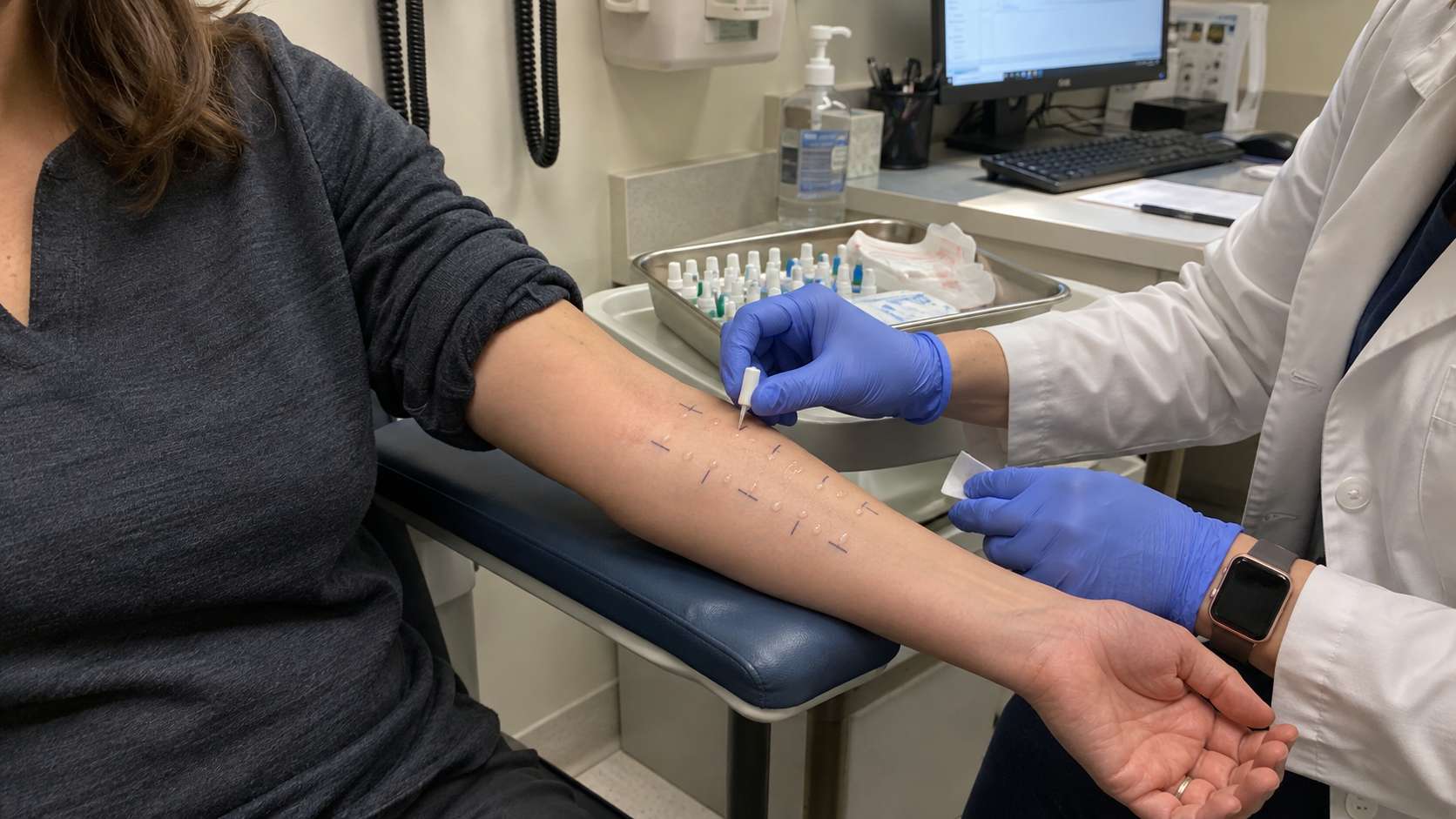
A useful way to separate testing types:
| Test type | What it can tell you | What it cannot prove |
|---|---|---|
| Skin prick allergy test | Whether your immune system reacts to Alternaria allergen | That your home is the source |
| Specific IgE blood test | Whether you have measurable IgE sensitization | That mold is actively growing indoors |
| Air mold test | What spores were airborne during sampling | Your medical diagnosis |
| Surface mold test | What mold may be on a sampled surface | Whether it caused your symptoms |
If you have symptoms, do not rely only on home mold test kits. Medical testing should be interpreted with your symptoms, history, asthma status, and exposure pattern. Building testing should be interpreted with moisture inspection, visible growth, ventilation, and outdoor comparison.
How to Handle Alternaria Indoors
The right response to suspected Alternaria is to remove visible mold safely and correct the moisture source. You do not need to wait for species confirmation before dealing with visible indoor mold.
For small patches on hard surfaces, you may be able to clean them carefully. Wear gloves, ventilate the room, avoid dry brushing, clean the surface, rinse if needed, and dry it fully. Do not mix chemicals, especially bleach with vinegar or ammonia.
For porous materials, be more cautious. Drywall, ceiling tiles, carpet backing, cardboard, wallpaper, insulation, and fabric can hold mold below the surface. If the material is wet, soft, crumbling, deeply stained, or musty, cleaning the surface may not be enough.
EPA notes that if mold growth covers more than 10 square feet or there has been a lot of water damage, hiring a contractor or professional service provider may be appropriate. EPA also says there is no practical way to eliminate all mold and mold spores indoors, so moisture control is the real key to preventing mold growth.
To reduce recurrence:
- Fix leaks quickly.
- Keep humidity under control.
- Improve bathroom and kitchen ventilation.
- Clean dust around windows and vents.
- Dry wet materials fast.
- Service AC systems regularly.
- Move furniture slightly away from damp walls.
- Replace moldy porous materials when needed.
- Watch for condensation around windows and AC diffusers.
Alternaria is common, so the goal is not to create a completely spore-free home. The goal is to remove active growth and stop the damp conditions that allow it to keep growing.
The Bottom Line
Alternaria mold, especially Alternaria alternata, is one of the most important molds to understand in homes because it is common, widespread, and strongly connected with allergy and asthma symptoms. It may look dark green, brown, grey-black, velvety, fuzzy, or powdery, but you cannot confirm it by appearance alone.
What makes Alternaria unique is its role as a major mold allergen. Many people can be sensitized to Alternaria, and exposure may trigger sneezing, blocked nose, itchy eyes, coughing, wheezing, or asthma symptoms in sensitive individuals. Touching it may irritate skin or transfer moldy dust. Breathing it is usually more of an allergy and respiratory issue than an infection risk for healthy people, though high-risk medical groups need more caution.
For buildings, Alternaria can stain surfaces, damage porous materials, contaminate dust, create musty odor, and point to moisture problems such as leaks, condensation, poor ventilation, or AC-related dampness.
If you suspect Alternaria at home, don’t panic over the species name. Focus on the source: moisture, organic residue, and poor drying. Clean small hard-surface growth safely, replace contaminated porous materials when needed, and get professional help for large, recurring, hidden, or HVAC-related mold. Allergy testing can tell you whether your body reacts to Alternaria, but the building still needs its own moisture and mold assessment.