


How Does Air Quality Index Affect Mold Risk in UAE Homes?
From the air quality index to mold, we can see a relationship between them, though it’s not direct. See, AQI measures outdoor air pollution levels, including pollutants such as:
- Fine particulate matter (PM2.5)
- Coarse particles (PM10)
- Ozone
- Nitrogen dioxide
- Other airborne pollutants
These measurements are great for outdoor air conditions, but they do not measure mold growth risk directly.
Mold mainly depends on environmental conditions such as:
- Relative humidity
- Water availability
- Indoor temperature
- Ventilation
- Building materials
In the UAE, mold problems are more commonly connected to the climate conditions inside buildings:
- High humidity from coastal weather
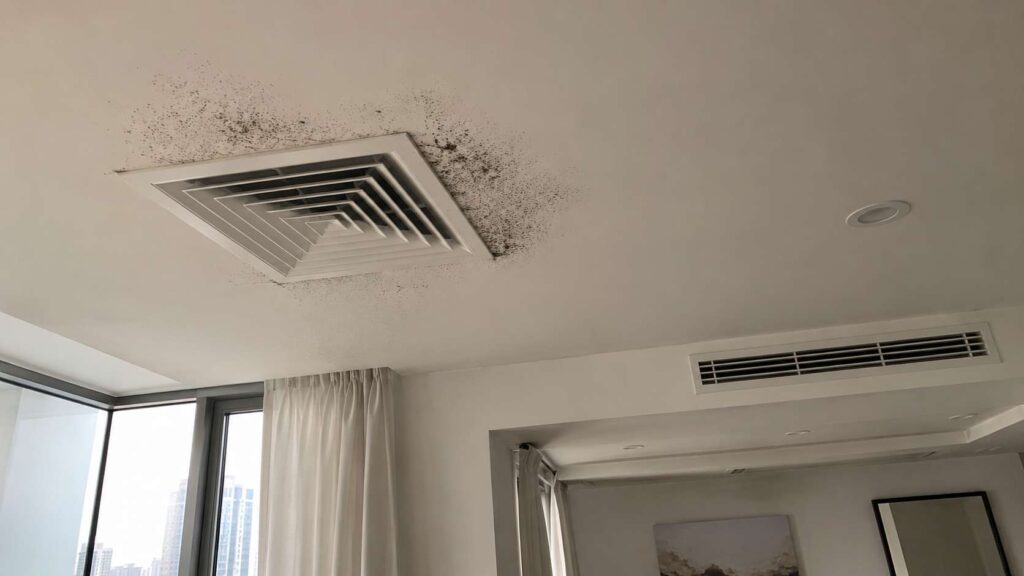
- Poorly maintained air conditioning systems
- Condensation around cold surfaces
- Water leaks
- Limited airflow in closed rooms
Because UAE homes rely heavily on air conditioning, indoor moisture management often matters more than outdoor AQI levels.
Is There a Correlation Between Air Quality Index and Mold Growth?
There is some indirect correlation between AQI and mold risk, but AQI is not a direct predictor of mold growth.
The relationship usually happens through indoor environmental changes.
For example:
Poor Outdoor AQI May Reduce Ventilation
When outdoor AQI becomes unhealthy, homeowners may keep windows closed to prevent polluted air from entering.
This can reduce natural ventilation and cause:
- Higher indoor humidity
- Stagnant air
- Increased condensation
- Greater opportunity for mold growth
This is especially relevant in UAE apartments where windows often remain closed while air conditioning operates continuously.
Air Pollution Can Increase Indoor Particle Levels
Outdoor pollutants entering homes can increase indoor airborne particles.
Dust and particles can:
- Settle on damp surfaces
- Provide additional organic material where microorganisms may grow
- Reduce overall indoor air quality
But dust alone does not create mold. Moisture is still the critical factor.
HVAC Systems Connect Air Quality and Mold Risk
Air conditioning systems play a major role in UAE indoor environments.
Poor AC maintenance can combine several risks:
- Dust accumulation
- Moisture buildup
- Dirty filters
- Condensation problems
When an AC system becomes damp and contaminated, it can distribute mold spores and unpleasant odors throughout the home.
What Do Studies Say About AQI and Mold?
Research on indoor air quality generally shows that moisture and humidity are the strongest predictors of indoor mold growth, rather than outdoor AQI alone.
Studies examining indoor environments have repeatedly linked mold development with:
- Persistent indoor relative humidity above recommended levels
- Water damage
- Poor ventilation
- Damp building materials
Research from indoor environmental health organizations also emphasizes that controlling moisture is the most effective way to prevent mold.
The important takeaway from these studies is:
AQI can influence occupant behavior and ventilation decisions, but humidity and moisture determine whether mold has the conditions needed to grow.
For UAE homeowners, this means checking only outdoor AQI is not enough. Indoor humidity monitoring is often more useful for mold prevention.
What AQI Level Should UAE Homeowners Be Concerned About?
AQI categories generally classify air quality as:
| AQI Range | Air Quality Meaning | Mold-Prevention Takeaway |
|---|---|---|
| 0–50 | Good | Ventilation may be reasonable if outdoor humidity and temperature are also suitable. |
| 51–100 | Moderate | Sensitive people may need caution; mold prevention still depends on indoor humidity. |
| 101–150 | Unhealthy for sensitive groups | Limit unnecessary outdoor air intake and monitor indoor humidity. |
| 151–200 | Unhealthy | Keep windows closed when pollution is high; use filtration and humidity control. |
| 201–300 | Very unhealthy | Reduce outdoor air entry; rely on maintained AC, filtration, and dehumidification. |
| 301+ | Hazardous | Avoid outdoor air intake where possible; focus on safe indoor air management. |
From this table, keep in mind that the homeowner should use AQI as one part of indoor air management.
What Should UAE Homeowners Do When AQI Becomes Poor?
When outdoor AQI reaches unhealthy levels, homeowners should balance pollution control with mold prevention.

Maintain Indoor Humidity Between 30–50%
Because UAE humidity can be high, humidity control is the most important step. So go ahead and use:
- Dehumidifiers in damp areas
- Hygrometers to monitor humidity
- Bathroom exhaust fans
- Proper AC settings
Try to avoid allowing indoor humidity to remain above 60% for long periods.
Continue AC Maintenance
Since UAE homes depend heavily on AC systems, regular maintenance helps prevent moisture-related mold problems. That’s why you should check:
- AC filters
- Drain lines
- Cooling coils
- Condensation trays
- Air vents
A dirty or leaking AC can create mold conditions even when outdoor AQI is excellent.
Improve Ventilation Safely
When outdoor AQI is good:
- Open windows when practical
- Allow fresh air exchange
- Reduce stagnant indoor air
When outdoor AQI is poor:
- Keep windows closed
- Use properly maintained air filtration systems
- Continue monitoring humidity levels
From my experience, which is approved by a professional home air service professional, the goal is, in fact, to maintain balanced indoor conditions.
Inspect High-Risk Areas Regularly
UAE homeowners should check areas where moisture commonly collects:
- Around AC vents
- Behind wardrobes
- Bathrooms
- Kitchens
- Window frames
- Storage rooms
Early detection prevents small mold problems from becoming expensive remediation projects.
Can an Air Purifier Prevent Mold When AQI Is Poor?
An air purifier can help improve indoor air quality by reducing airborne particles, including some mold spores. Air purification is a supporting measure, not a replacement for moisture control.
The most effective mold prevention approach combines:
- Humidity control
- Proper ventilation
- AC maintenance
- Moisture repair
- Regular inspections
Air Quality Index and Mold Risk in UAE Homes
Air Quality Index affects mold risk indirectly, not directly. A poor AQI level may encourage homeowners to close windows and reduce ventilation, which can contribute to moisture problems if indoor humidity is not controlled.
However, mold growth in UAE homes is mainly driven by humidity, water damage, condensation, and AC-related moisture issues.
Homeowners should use AQI information to make smarter ventilation decisions, but mold prevention should focus on keeping indoor humidity controlled, maintaining AC systems, and addressing moisture problems before mold has a chance to grow.