


1. Condensation Is the Main Reason Air Conditioning Mold Develops
Air conditioning mold develops mainly because of condensation. Let me explain. An air conditioner basically removes heat and moisture from indoor air. When warm air passes over the cold evaporator coil, water vapor condenses into liquid. Under normal conditions, the water collects in a drain pan and exits through a condensate line.
Mold becomes more likely when this process is disrupted by:
- A blocked or slow condensate drain
- Standing water in the drain pan
- Dirty evaporator coils
- A clogged air filter
- Restricted airflow
- High indoor humidity
Dust also contributes to the problem. Mold does not need to grow directly on metal or plastic. It can feed on the dust, pollen, skin particles, and fabric fibers that collect on these surfaces.
This means even a relatively new AC can develop mold when drainage fails, or maintenance is neglected. Simply lowering the thermostat will not solve the problem and may create additional condensation without correcting the cause.
2. Mold Can Hide Far Beyond the Visible Vent
Mold around an AC vent does not automatically mean the entire duct system is contaminated. Growth on the outer grille may result from warm, humid room air meeting the cold vent surface and repeatedly producing condensation.
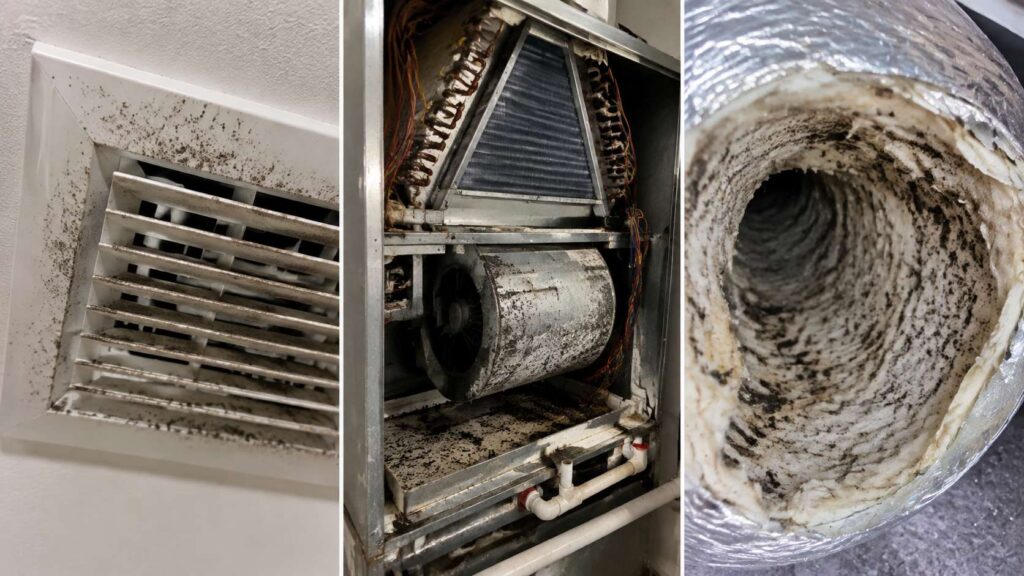
However, mold can also develop in less visible locations, including:
- Evaporator coils
- Drain pans
- Blower compartments
- Supply and return ducts
- Filters
- Internal insulation
- Flexible ducting
- Ceiling or wall materials surrounding vents
Porous materials are particularly concerning because they absorb moisture. Mold growing in fiberglass duct lining, insulation, or ceiling board may extend beneath the visible surface and cannot always be removed through surface cleaning.
Repeated growth around one vent may indicate poor insulation, a gap around the duct connection, or a nearby plumbing or roof leak. Several affected vents may point to a broader humidity, filtration, or AC-system problem.
The location matters because the correct solution depends on the source. Cleaning every duct may be unnecessary when the problem is one poorly sealed vent. Conversely, wiping the grille will not solve contamination deeper inside the system.
3. A Musty Smell Can Appear Before Visible Mold
A persistent musty or earthy odor while the AC operates is one of the clearest warning signs. It becomes more concerning when the smell weakens after the system is turned off or spreads through multiple rooms whenever cooling begins.
Other possible signs include:
- Dark, gray, greenish, brown, or white spots on vents
- Stains that return after cleaning
- Water droplets around registers
- Standing water near the indoor AC unit
- Increased indoor humidity despite regular cooling
[bioon_funfacts title=”FYI” subtitle=”Don’t Get This Wrong”]
[bioon_fact]Not every dark mark is mold.[/bioon_fact]
[bioon_fact]Dust, rust, soot, and water staining can look similar, so color alone cannot confirm contamination.
[/bioon_fact]
[/bioon_funfacts]
Pay attention to patterns instead. Growth that quickly returns, worsens during humid weather, or appears alongside leaks deserves closer inspection. A strong odor without visible growth may also indicate contamination inside the air handler or nearby ductwork.
4. Cleaning the Visible Mold May Not Stop It From Returning
Cleaning a removable metal or hard-plastic vent may be reasonable when growth is limited to a small surface area. Turn off the AC, remove the grille carefully, clean it outside, and allow it to dry completely before reinstalling it.
However, DIY cleaning is not a good idea when mold is inside the unit, affecting porous materials, appearing across several vents, or returning shortly after cleaning. Yes, unfortunately, it will eventually come back.

That is, unless you fix the underlying condition. Common sources of mold growth include:
- A condensate line that is still blocked
- Air leakage around an unsealed vent
- Restricted airflow caused by a dirty filter or coil
- Wet duct lining or insulation
- High indoor humidity
- Moisture damage inside the wall or ceiling
Do not spray household bleach or other strong chemicals into the AC. Some products can corrode components, damage coatings, produce irritating fumes, or reach electrical parts. Never mix cleaning agents.
5. Professional Cleaning Must Address Both Mold and Moisture
Professional AC mold cleaning should begin by locating the contamination and identifying why moisture accumulated. Cleaning without repairing the moisture problem may only provide temporary improvement.
Depending on the findings, the work may include:
- Inspecting coils, drain pans, blowers, ducts, and insulation
- Isolating the affected area
- Correcting leaks or drainage problems
- Removing contaminated dust and debris
- Cleaning suitable nonporous components
- Removing unsalvageable porous material
Some cases require both an HVAC technician and a mold remediation company. The technician may need to repair drainage, insulation, airflow, or cooling performance, while the remediation team handles contaminated materials.
Be cautious of services that rely only on fogging fragrances or chemicals into ducts. Masking an odor does not remove contaminated debris or stop condensation.
Professional attention is particularly important when mold affects several rooms, appears inside the air handler, follows flooding or a major leak, or returns after repeated cleaning. Speak with a mold cleaning professional before the contamination spreads further through the property. Don’t worry. You can also get an estimated price for the issue here.
Tell us what is happening, and our team will recommend the right next step. Emergency help: +971 4 894 7849Get a clear plan from Bio-On
How Can You Prevent Air Conditioning Mold?
Prevention depends on keeping the system clean, properly drained, and free from persistent moisture.
- Replace or clean filters according to manufacturer guidance.
- Keep supply and return vents unobstructed.
- Have blocked condensate lines and damaged drain pans repaired.
- Address dripping, sweating ducts, and water stains promptly.
- Repair damaged duct insulation and air leaks.
- Control indoor humidity through proper ventilation and dehumidification.
- Schedule maintenance when airflow or cooling performance changes.
- Monitor previously affected areas for returning stains or odors.
A dehumidifier may help control a damp room, but it cannot repair a blocked drain or contaminated insulation.
Keep Mold Away From Your Air Conditioning
Air conditioning mold develops when condensation combines with dust, poor drainage, restricted airflow, damaged insulation, or high indoor humidity. A small patch on a washable vent may be manageable, but recurring odors, active leaks, multiple affected vents, or contamination inside the system require further investigation.
Removing visible mold is only one part of the solution. The moisture source must also be corrected, or the growth is likely to return.