


What Does Your Apartment Really Need Between Air Allergen and Mold Testing?
Your apartment needs air allergen and mold testing at the same time, or one at a time. Each test is designed to detect different things. Air allergen testing searches for particular substances that can trigger allergic reactions. Meanwhile, mold testing targets specifically fungi and the moisture conditions that allow them to grow.
Indoor biological contaminants commonly include mold, dust mites, pollen, pet allergens, cockroach particles, rodent allergens, bacteria, and other materials found in household air and dust. These contaminants can be generated inside an apartment or enter from outdoors.
| Comparison | Air allergen testing | Mold testing |
|---|---|---|
| Main purpose | Identify selected allergy-triggering materials | Investigate fungal growth or contamination |
| Common targets | Dust mites, cats, dogs, cockroaches, rodents and sometimes pollen or mold allergens | Mold spores, fungal structures or growth on materials |
| Typical samples | Settled dust, surface dust or air, depending on the allergen | Air, surface tape, swab, bulk material or dust |
| Best suited for | Unexplained allergy or asthma patterns | Moisture damage, musty odor or suspected hidden mold |
| Can it diagnose an allergy? | No | No |
| Can it prove an apartment is “safe”? | Usually not | No recognized universal pass-or-fail airborne mold limit |
| Is testing always required? | No | No, particularly when visible mold is already present |
This table shows the key differences between air allergen and mold testing briefly.
But guys, the phrase air allergen testing can be slightly misleading.
Not every allergen is best measured with a brief air sample. Dust-mite and cockroach allergens, for example, often accumulate in carpets, mattresses, upholstery, and settled household dust. Environmental studies commonly collect dust from these reservoirs instead of relying only on a short air sample.
Mold testing may also use several methods. An air sample captures spores present during a limited sampling period. A tape lift, swab, or bulk sample examines a particular surface or material. The correct method depends on the question being investigated. That is “What are we trying to find out?”
When Do You Need Air Allergen Testing in an Apartment?
Air allergen testing is quite useful when someone, including you, struggles with recurring allergic or asthma-like symptoms inside the apartment. The likely trigger remains unclear after a basic inspection.
Indoor allergens can include dust mites, pet allergens, mold, cockroach material, and rodent particles. They may contribute to year-round nasal allergies or trigger asthma symptoms in people who are sensitive to them.
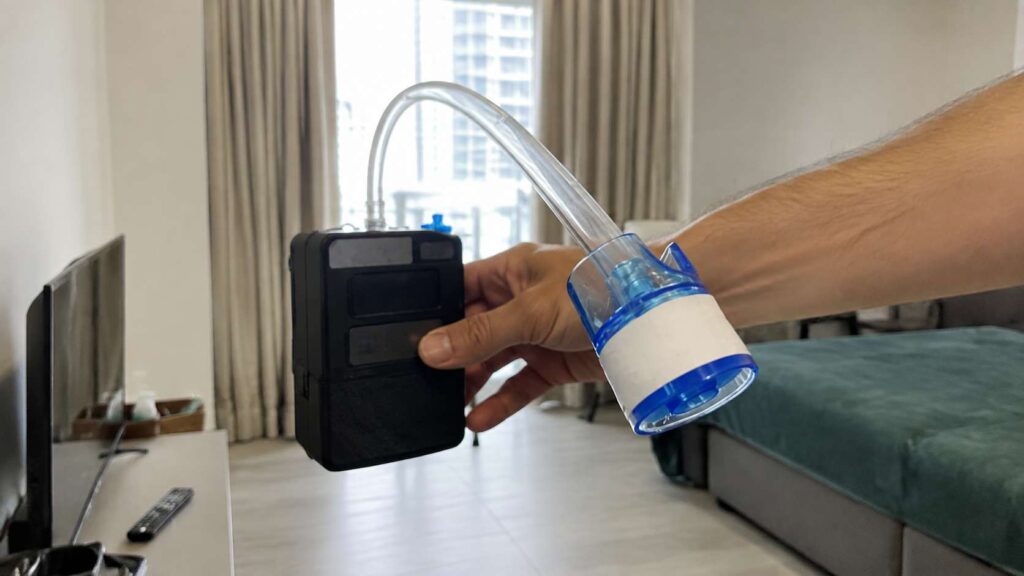
Consider environmental allergen testing when:
- Sneezing, itchy eyes, or nasal congestion become worse at home.
- Asthma symptoms increase in a particular bedroom or living area.
- Symptoms improve after spending several days away from the apartment.
- A previous tenant kept pets and allergens may remain in carpets or upholstery.
- Several possible triggers are present, and you need to prioritise them.
Testing is most valuable when it is targeted. For example, if an allergist has confirmed sensitivity to dust mites, environmental sampling may help identify whether the bedroom contains a significant reservoir that deserves focused cleaning and bedding controls.
But here’s a note, guys. Before buying a service advertised as “air allergen testing,” ask exactly what the package measures. A basic particle counter cannot identify dust-mite, cat, dog or cockroach allergens. Those targets normally require allergen-specific laboratory analysis.
Last time, I hired someone for air allergen testing, but I didn’t ask where the samples would be collected. I ended up regretting that the report turned out not very useful for the issue. It turned out that my apartment has signs of mold growth. This is when you need to clarify the issue with mold testing.
When Do You Need Mold Testing in an Apartment?
Mold testing may be worth considering when fungal growth is suspected but cannot be clearly located, when the extent of contamination is uncertain, or when sampling has a specific role in a larger inspection or remediation plan.
Signs that justify a mold and moisture inspection include:
- A persistent musty or earthy odor
- Water stains on walls or ceilings
- Paint bubbling, peeling or changing color
- Damp drywall, cabinets, carpets or flooring
- A plumbing, roof, or AC drainage leak
- Water entering from an apartment above
- Symptoms repeatedly associated with one damp room
An apartment inspection should begin with the moisture history. Mold needs water or elevated moisture to grow. Finding and correcting leaks, condensation, and damp materials is generally more useful than collecting an isolated air sample without inspecting the building. CDC’s occupational guidance states that correcting dampness is more effective for preventing related problems than relying on indoor mold air samples.
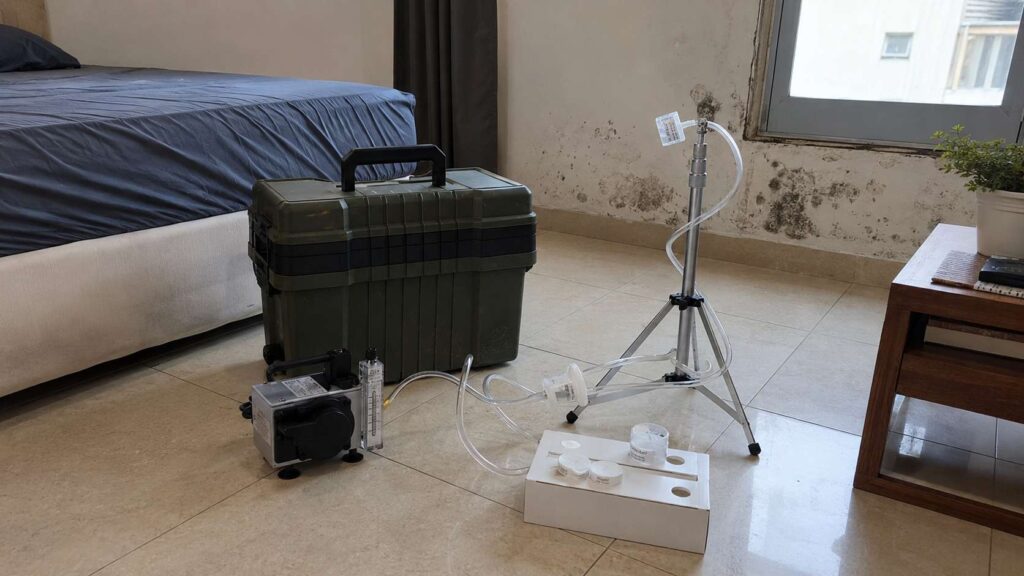
When mold testing can add useful information
Professional sampling may be helpful when:
- A musty odor remains, but no growth is visible
- Mold may be inside an AC system, ceiling void, or wall cavity
- Similar discoloration could be mold, soot, dirt, or another material
- The assessor needs to determine whether a suspicious surface contains fungal growth
- A dispute requires documented findings collected under a defensible protocol
When mold testing is usually unnecessary
If mold is already visibly growing on an apartment wall, ceiling, or cabinet, you normally do not need a laboratory to prove that action is required. EPA states that sampling is unnecessary in most cases when visible mold is present. The priorities are identifying the water source, determining how far the damage extends, and removing or cleaning affected materials properly.
Routine mold air sampling also has important limitations. Spore levels can change with outdoor conditions, ventilation, occupant activity, and the exact sampling time. A short sample may miss intermittent contamination, so a negative result does not necessarily prove that hidden mold is absent.
Do You Need Both Tests or Neither?
You may need both types of assessment when an apartment has a moisture problem, and occupants also have unresolved allergies. However, paying for both automatically is rarely the best starting point. You may need both when a resident has medically confirmed indoor allergies, and the apartment also has water damage.
But you may need neither test when a small visible mold patch is directly connected to an obvious minor leak. You also don’t need any of them if dust is visibly accumulating, and basic cleaning has not yet been attempted. Testing should support a decision. It should not delay an obvious correction.
How to Choose the Right Apartment Testing Service
Choose a provider based on its inspection process, sampling plan, and ability to explain how the results will affect your next step—not simply on the number of samples included.
Before booking, ask these questions:
What exactly will you test?
Request a written list. “Indoor allergen testing” could refer to:
- Dust-mite allergens
- Cat or dog allergens
- Cockroach allergens
- Mouse or rat allergens
- Mold allergens
- Pollen
- General particles that are not allergen-specific
A particle test alone cannot tell you which allergen produced the particles.
Will you inspect the apartment first?
Sampling should normally follow a visual assessment and a discussion of symptoms, leaks, pets, pests, cleaning practices, AC use and previous water damage.
For suspected mold, the inspector should look for moisture rather than only placing an air pump in the room. For suspected allergens, sample locations should reflect the likely source, such as mattresses for dust mites or kitchen dust for cockroach allergens.
Why is each sample being collected?
The provider should be able to explain:
- What the sample can detect
- Why that location was chosen
- What its limitations are
- How the result will be interpreted
- What action different results would trigger
Avoid packages that collect many samples without connecting them to a clear investigation plan.
Who interprets the laboratory report?
A laboratory value by itself may be difficult to use. The final report should connect the findings to the apartment conditions without claiming that an environmental result proves a medical diagnosis.
For mold services, EPA recommends choosing professionals with specific experience in sampling protocols, sampling methods, and result interpretation. Qualifications, training, relevant experience and references should be reviewed before hiring.
Is the testing company also selling remediation?
A company may legitimately provide both services, but you should understand the potential conflict of interest. Ask for photographs, moisture readings, sample locations, laboratory documentation, and a clear explanation of why removal is recommended.

A strong commercial proposal should identify the affected materials and moisture source. It should not rely only on a frightening mold name or a single spore count. If the testing company doesn’t offer remediation, it’s a good idea to call this independent mold remediation service.
So, Which Testing Should You Choose?
Choose air allergen testing when the main question is whether specific triggers such as dust mites, pets, cockroaches, or rodents are present in relevant apartment areas. It is most useful when testing is targeted to a resident’s symptom pattern or known medical sensitivities.
Choose mold testing when you suspect hidden fungal growth, need to investigate unexplained musty odors, or require sampling to clarify the location or scope of a moisture-related problem. When mold is already visible, inspection, moisture correction, and proper removal are normally more important than proving its presence in a laboratory.