


Why After Mold Removal Work Matters So Much
After mold removal work matters because the home may still have damage even when the visible mold is gone. The wall may be stained. Paint may be peeling. Gypsum may be soft. Cabinets may be swollen. Flooring may smell damp. AC vents may still need checking. If you restore too early, the mold can return behind the new finish.
A proper after-removal phase should answer four questions:
- Is the original moisture source fixed?
- Are the affected materials fully dry?
- Was the mold removed safely?
- Can the area be restored without trapping moisture again?
The EPA says moisture control is the key to mold control, and if moisture is not controlled, removing all mold may only be temporary. That is the main reason restoration should not be treated like simple decoration.
For example, if mold was removed from a bedroom wall, the restoration team should not only repaint the wall. They should ask why the wall became moldy. Was it an AC condensation issue? A hidden pipe leak? A wardrobe blocking airflow? High humidity? Exterior wall seepage?
If that question is skipped, the new paint can bubble again. The same corner can turn black again. The room can smell musty again. Good restoration protects your home from that repeat cycle.
How to Hire Reliable Restoration Services After Mold Removal
To hire reliable restoration services after mold removal, choose a company that understands both damage repair and mold prevention. A normal handyman may fix the wall beautifully, but if they do not understand moisture, the repair may fail.
Start by asking whether the company checks the condition of the area before rebuilding. They should not cover damp surfaces, seal wet materials, or paint over areas that were recently affected by mold. The EPA specifically advises drying surfaces before painting and fixing plumbing leaks or water problems as soon as possible.
A reliable restoration company should be able to explain:
- What was removed during mold remediation
- Which materials can be restored
- Which materials must be replaced
- Whether the area is dry enough for repair
- Whether anti-fungal treatment was completed
- Whether the wall, ceiling, or cabinet needs sealing
- Whether the AC, leak, or humidity issue has been corrected
- What finish will be used to reduce recurrence risk
- What warranty or follow-up support is available
Be careful with companies that rush straight to repainting. Paint is the final layer, not the solution. If the wall is still damp, the new finish may only hide the problem temporarily.
You should also ask for photos. Before-and-after photos help you understand whether the restoration company has handled mold-damaged interiors before, not only normal renovation projects.
Pricing and Cost Estimates After Mold Removal
Pricing after mold removal depends on how much damage the mold and moisture caused. A small bathroom repaint may be affordable. A full wall replacement, ceiling repair, cabinet rebuild, AC-related repair, or flooring restoration will cost more.
Use this table as a practical estimate guide. These are not fixed prices because every property needs inspection first.
| Restoration Work After Mold Removal | Estimated Cost Range in AED | What It Usually Covers |
|---|---|---|
| Small wall repaint after treatment | 300 – 900 | Surface preparation, primer, repainting small area |
| Gypsum ceiling patch repair | 500 – 1,800 | Cutting damaged section, replacing board, finishing |
| Full affected wall restoration | 1,000 – 3,500+ | Surface repair, skim coat, primer, repainting |
| Cabinet panel replacement | 600 – 3,000+ | Removing swollen panels, replacing affected parts |
| Wardrobe or furniture restoration | 800 – 4,000+ | Repairing mold-damaged wood or MDF areas |
| Flooring repair after moisture | 1,500 – 6,000+ | Removing affected flooring, drying, replacement |
| AC area restoration | Custom quote | Vent area repair, ceiling stain repair, condensation-related damage |
| Full room restoration | 3,000 – 12,000+ | Wall, ceiling, paint, cabinet, and finishing work |
| Villa-level restoration | Custom quote | Multi-room repair, severe water damage, major finishing |
These numbers are only starting estimates. The final cost depends on material type, damage depth, room size, finish quality, access difficulty, and whether hidden moisture is still present.
For serious cases, you should request a custom quote. A good quote should separate mold remediation, damaged material removal, drying, surface treatment, repair work, painting, and interior finishing. This helps you understand what you are paying for and prevents surprise add-ons.
Ask for Interior Design Restoration Consultation
Interior design restoration consultation is useful after mold removal because your home may need more than a patch job. Once damaged material is removed, you have the chance to restore the space in a cleaner, smarter, and more mold-resistant way.
This is especially important for visible areas like bedrooms, living rooms, kitchens, wardrobes, ceilings, and villa interiors. A rushed repair can make the area look mismatched. A design-aware restoration plan can make the home feel complete again.
A good consultation may cover:
- Matching the new paint with the existing wall color
- Choosing mold-resistant paint for humid areas
- Replacing swollen MDF or cabinet panels
- Improving wardrobe ventilation
- Leaving airflow gaps behind furniture
- Choosing better ceiling or wall finishes
- Repairing gypsum ceilings neatly
- Restoring damaged corners without visible patch marks
- Recommending moisture-resistant materials where needed
This matters because mold damage often affects both function and appearance. You want the home to look good again, but you also want the repair to support long-term prevention.
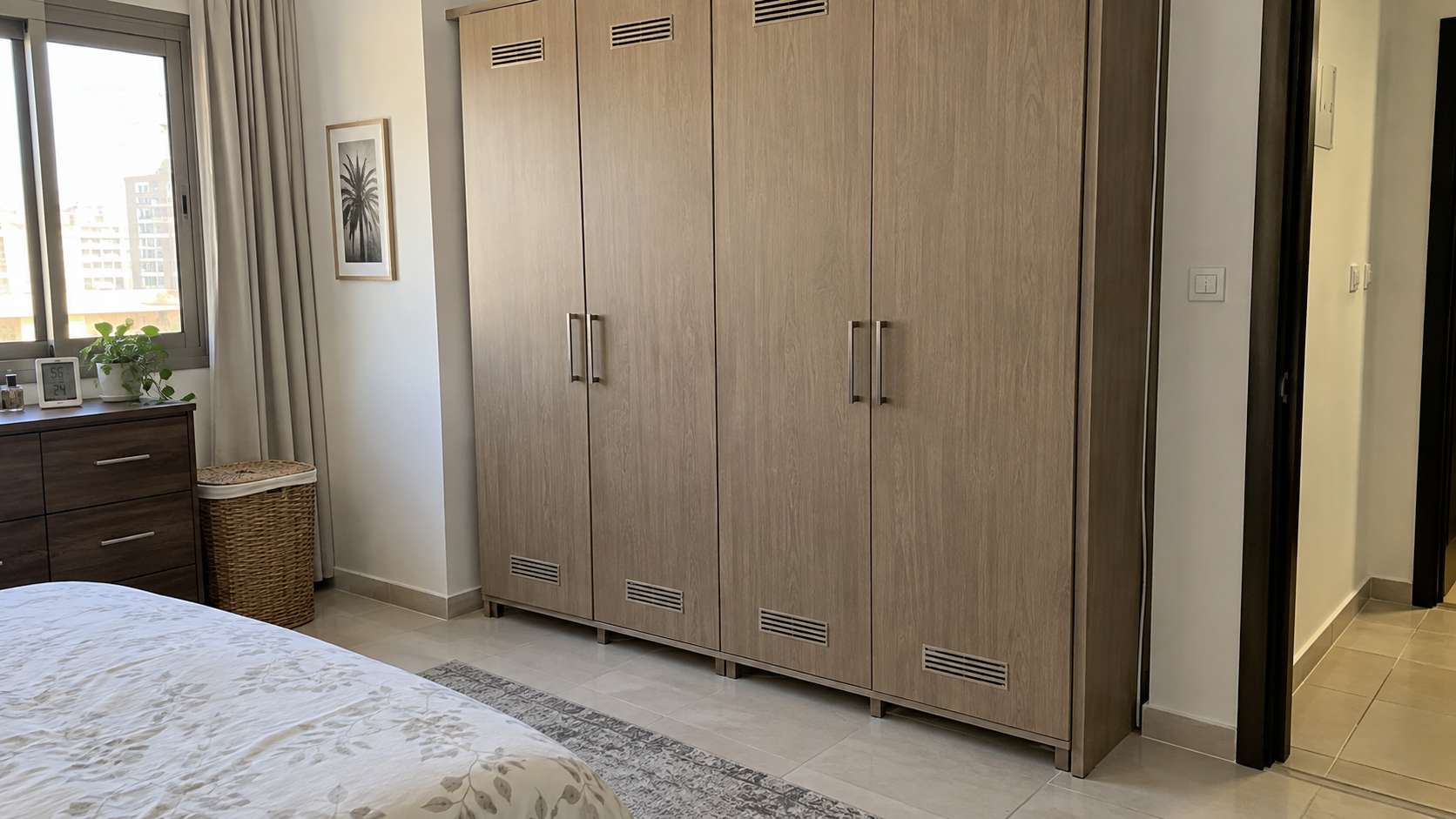
For example, if mold grew behind a built-in wardrobe, the answer may not be “replace the panel and close it again.” The better answer may include ventilation gaps, moisture-resistant backing, wall treatment, and improved airflow around the wardrobe.
What Good Restoration Should Fix
Good restoration after mold removal should fix the damaged material, the finish, and the condition that allowed the mold to grow. If it only fixes the appearance, it is incomplete.
Depending on the damage, restoration may include:
- Removing soft or damaged gypsum
- Replacing mold-damaged drywall
- Repairing ceiling patches
- Treating stained wall surfaces
- Applying suitable primer
- Repainting affected areas
- Replacing swollen cabinet panels
- Repairing wardrobe backs
- Restoring flooring
- Fixing silicone and sealant lines
- Repairing AC-related ceiling stains
- Improving ventilation around affected areas
The EPA notes that specialists in furniture repair, restoration, painting, carpet and rug cleaning, and water damage restoration may be needed depending on what was affected. This is why post-mold restoration can involve more than one skill.
The key is sequencing. Do not restore first and investigate later. The correct order is:
- Inspect the moisture source.
- Remove mold and contaminated material.
- Dry the affected area.
- Treat the remaining suitable surfaces.
- Confirm the area is stable.
- Repair and restore.
- Monitor for recurrence.
If you skip the drying and confirmation stages, the restoration may fail.

Long-Term Mold Prevention After Restoration
Long-term mold prevention after restoration starts with moisture control. You cannot design, paint, or decorate your way out of an active moisture problem.
In UAE homes, recurring mold often comes from AC condensation, high humidity, hidden leaks, poor bathroom ventilation, closed rooms, and furniture placed tightly against exterior walls. Restoration should reduce these risks, not recreate them.
To prevent mold from recurring:
- Fix all leaks before repainting
- Check AC drain lines and condensation issues
- Improve bathroom exhaust ventilation
- Use a dehumidifier in damp rooms
- Keep wardrobes slightly ventilated
- Leave a small gap behind large furniture
- Avoid drying laundry in closed rooms
- Use mold-resistant primer or paint where appropriate
- Dry wet areas quickly
- Monitor humidity with a hygrometer
- Recheck the restored area after a few weeks
If the mold came from an HVAC or AC-related moisture issue, take that seriously. The EPA advises consulting HVAC guidance if the system may be contaminated with mold or if mold is near the intake area.
The goal is not only to repair the wall. The goal is to change the indoor condition that made mold possible.
Why Bio-On Is a Strong Choice After Mold Removal
Bio-On is a strong choice after mold removal because the service can support the full mold journey, not only one small part of it. Many homeowners do not want to coordinate one company for inspection, another for testing, another for mold removal, and another for restoration. That creates confusion and delays.
Bio-On can help with A–Z mold remediation support, including:
- Mold inspection
- Moisture source checking
- Mold testing when needed
- Safe mold removal
- Containment
- HEPA vacuuming where appropriate
- Anti-fungal treatment
- Post-removal guidance
- Restoration after mold damage
- Long-term mold prevention advice
Bio-On’s website also shows mold remediation project examples across the UAE, including shower ceiling mold, exhaust vent mold, and AC vent mold cases. That kind of visual proof helps homeowners trust that the team has handled real mold problems, not only general cleaning jobs.
This is especially useful if your mold issue affected walls, ceilings, wardrobes, AC areas, or interior finishes. Instead of stopping at removal, Bio-On can guide you on what should happen next so your home looks better and has a lower risk of mold returning.
What to Ask Before Booking Restoration
Before booking restoration after mold removal, ask practical questions. These questions help you avoid cheap repairs that fail after a few weeks.
Ask the company:
- Is the moisture source fully fixed?
- Is the affected area dry enough to restore?
- Which materials were contaminated?
- Which materials can be saved?
- Which materials should be replaced?
- Will you use mold-resistant primer or suitable coating?
- Is painting included?
- Is cabinet or ceiling repair included?
- Do you offer interior design restoration advice?
- Will I receive before-and-after photos?
- What can I do to prevent mold from coming back?
- Is the quote fixed or estimated?
- What follow-up support is available?
A reliable company will answer clearly. If they avoid the moisture question and talk only about painting, be careful.
The Bottom Line
After mold removal, your next step should be restoration, but only when the area is truly ready. Do not repaint, rebuild, or replace finishes until the moisture source is fixed, damaged materials are handled, and the area is fully dry.
Reliable restoration services should give clear pricing, explain what is included, repair mold-damaged interiors properly, and help prevent long-term recurrence. The best restoration is not just beautiful. It is moisture-smart.
For UAE homeowners, Bio-On is a practical choice because it can support the full process from inspection and testing to mold removal and restoration after mold damage. If you want your home fixed properly after mold removal, contact Bio-On for a clear assessment, custom quote, and long-term prevention plan.