


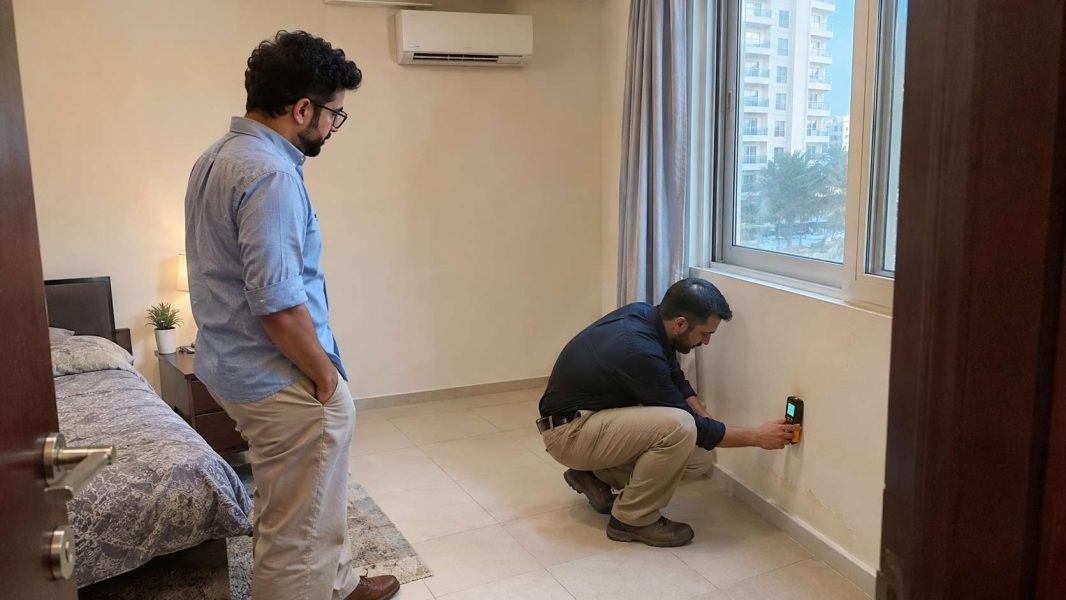
Why Moisture Inspection Matters Before Buying a Property
A moisture inspection examines a building for unwanted moisture that could support mold growth. It helps buyers identify damp areas, possible leaks, and water-damaged materials that might otherwise go unnoticed during an ordinary property viewing.
Mold requires moisture to grow. According to the U.S. Environmental Protection Agency (EPA), controlling indoor moisture is essential for preventing mold problems.
However, finding dampness does not automatically mean mold is present. Similarly, a dry-looking surface does not establish that concealed materials are unaffected.
For someone allergic to mold, these distinctions matter because exposure to mold can trigger allergic reactions in susceptible individuals.
The World Health Organization (WHO) has associated damp indoor environments with increased respiratory symptoms, allergies, and asthma.
Why a Newly Renovated Property Still Needs Inspection
Fresh paint, replacement flooring, and newly installed cabinets can make a previously water-damaged property appear well maintained.
However, cosmetic improvements do not necessarily resolve underlying leaks or concealed moisture.
For example, a bedroom wall may have been repainted after a plumbing leak without confirming that the internal materials were adequately dried.
A moisture inspection can help identify suspicious conditions that warrant further investigation, even when obvious staining is no longer visible.
This makes inspection particularly useful when purchasing renovated apartments, older villas, or properties with an uncertain maintenance history.
What Does a Moisture Inspection Check for Mold?
A thorough moisture inspection evaluates accessible building materials, water-related installations, and locations where dampness commonly develops.
Inspectors typically combine visual examination with moisture-measuring equipment and observations of possible water intrusion.
Walls, Ceilings, and Flooring
Walls and ceilings may contain hidden moisture following plumbing leaks, roof defects, or water intrusion from neighboring apartments.
Inspectors look for warning signs such as:
-
Discoloration or previous water stains
-
Peeling, bubbling, or deteriorating paint
-
Swollen skirting boards or damaged plaster
-
Unusual dampness around windows
-
Musty odors without an obvious source
-
Moisture readings that differ from comparable unaffected areas
These findings may justify further assessment, but none independently confirms a mold infestation.
Bathrooms, Kitchens, and Plumbing
Bathrooms and kitchens deserve particular attention because they contain numerous water connections.
Inspectors may examine areas beneath sinks, around shower enclosures, behind accessible cabinets, and near washing-machine connections.

In apartment buildings, ceiling stains can also suggest water intrusion from plumbing or wet areas in units above.
Air-Conditioning Systems
Air-conditioning systems are another consideration, particularly in Dubai properties where cooling equipment is frequently used.
Condensation, blocked drainage, or damaged insulation may contribute to dampness around AC equipment.
Inspectors should assess accessible components and surrounding materials when there are signs of leakage or recurring moisture.
A general moisture inspection may not include internal HVAC examination, so buyers should clarify the service scope beforehand.
How Do Professionals Detect Hidden Moisture?
Professional inspectors use several complementary methods to locate and assess suspicious dampness.
The most useful approach depends on the property, construction materials, accessibility, and observed warning signs.
Moisture Meters
Moisture meters help inspectors identify areas where building materials may contain more moisture than expected.
Some meters use pins that contact or penetrate materials, while others assess moisture-related properties without penetrating the surface.
Readings must be interpreted according to the instrument, material, and surrounding conditions.
A high reading may indicate dampness, but it does not prove that mold exists behind the surface.
Thermal Imaging Cameras
Thermal cameras display differences in surface temperature.
These differences may help inspectors locate areas requiring investigation, such as possible damp patches, condensation, or missing insulation.
However, thermal imaging does not directly detect mold or measure moisture content.
A cool area might reflect air-conditioning, construction differences, or another temperature-related condition.
Inspectors should therefore investigate suspicious thermal patterns using additional evidence and appropriate moisture measurements.
Visual and Odor Assessment
A careful visual inspection remains essential.
The National Institute for Occupational Safety and Health (NIOSH) explains that thorough visual assessments and recognition of musty odors are generally more reliable for identifying dampness-related problems than routine air sampling.
Nevertheless, some concealed spaces cannot be evaluated without additional access or investigation.
A responsible inspector should explain these limitations rather than claim that every hidden cavity has been checked.
Who Should You Hire for Moisture Inspection?
For a pre-purchase assessment, hire an independent building inspector or indoor environmental professional with demonstrated experience investigating moisture intrusion and mold-related building conditions.
A general home inspector may identify obvious defects, but not every home inspector has specialist experience with concealed dampness.
The EPA recommends choosing professionals who understand how to locate water and mold problems.
Suitable professionals may include:
-
Building inspectors experienced in moisture investigation
-
Qualified mold-assessment specialists
-
Indoor environmental consultants
-
Building surveyors with relevant water-intrusion expertise
The professional’s actual experience matters more than their job title alone.
Questions to Ask Before Hiring
Before booking an inspection, ask whether the professional can:
-
Investigate visible and suspected moisture problems.
-
Examine accessible plumbing and AC-related moisture sources.
-
Use suitable moisture-measuring instruments.
-
Explain the limitations of thermal imaging.
-
Provide photographs and documented findings.
-
Recommend further investigation when concealed damage is suspected.
Also confirm whether the service includes a written report and whether the inspector has relevant training, references, and professional credentials.
Ideally, the assessment should be independent of any proposed remediation work, particularly when substantial repairs may be recommended.
Is Mold Air Testing Necessary?
Air testing is not automatically necessary during a pre-purchase inspection.
NIOSH notes that routine air sampling has important limitations, including variability in airborne mold concentrations.
A scientific literature review by Mendell and Adams, published in the Journal of Exposure Science & Environmental Epidemiology, found that commonly used interpretations of spore counts were not validated for identifying dampness or mold in individual buildings.
Air sampling may still be useful for specific investigative questions when performed and interpreted by a qualified professional.
However, a low airborne spore count cannot guarantee that concealed mold is absent.

What Should You Do if the Inspection Finds Moisture?
Discovering moisture does not necessarily mean you should abandon the property purchase.
The appropriate decision depends on the moisture source, affected materials, extent of damage, and whether the underlying problem can be reliably corrected.
A small, accessible plumbing leak may require a straightforward repair and verification that nearby materials are dry.
More complicated findings deserve additional investigation.
Examples include recurring wall dampness, extensive water-damaged drywall, unexplained musty odors, and suspected contamination behind fixed cabinetry.
Before proceeding, request clarification on:
-
The likely source of moisture
-
Whether the problem remains active
-
Which materials may be affected
-
Whether concealed mold requires further assessment
-
What repairs or remediation may be necessary
-
How successful drying and repairs will be verified
If significant mold contamination is confirmed, professional remediation may be appropriate.
Bio-On provides mold remediation services in the UAE for property owners dealing with mold problems.
However, remediation and moisture-source correction are separate responsibilities that may require different specialists.
For buyers with mold allergies, unresolved moisture or uncertain contamination may be a reasonable reason to delay the transaction until reliable findings are available.
The inspection report can help you discuss repairs with the seller, obtain specialist estimates, or reconsider the purchase.
Importantly, neither successful repair nor a clean inspection report can guarantee that an individual will never experience allergy symptoms in the property.
The Bottom Line
A moisture inspection is a valuable precaution when buying a house or apartment, particularly if you are allergic to mold. It can uncover suspicious dampness, previous water damage, and conditions associated with hidden mold, helping you avoid purchasing a property with unresolved moisture problems.
Arrange an independent inspection before committing to the purchase, review the documented findings, and investigate significant concerns before making your decision. A well-supported assessment cannot guarantee a mold-free home, but it can reduce uncertainty and help you choose a property with greater confidence.