


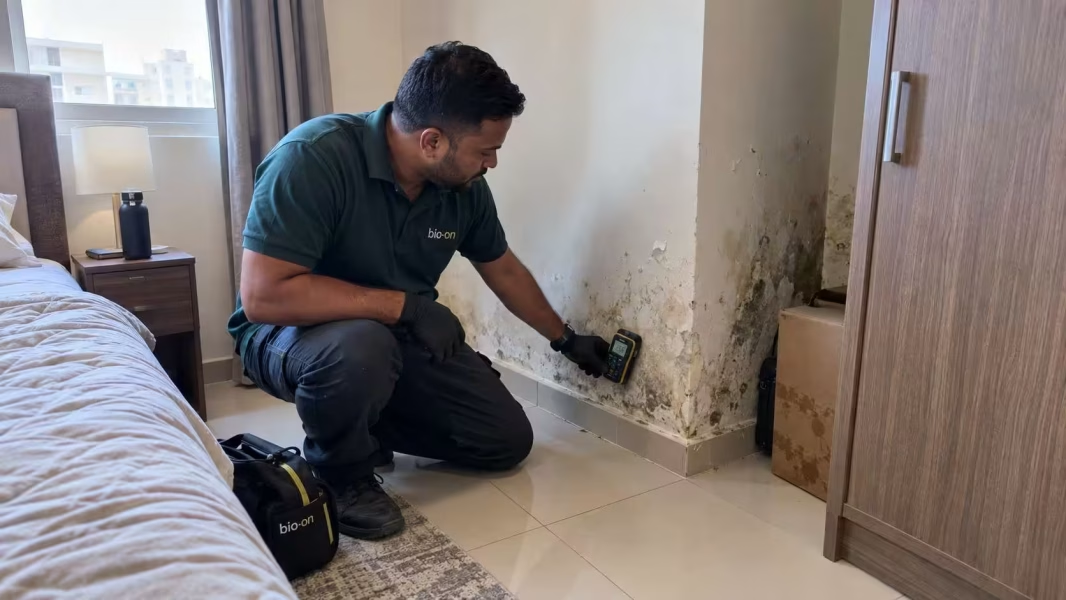
What a Mold Infestation Usually Means
A mold infestation means mold growth has become established enough that simple surface wiping may not solve the problem. It may involve visible patches, hidden colonies, affected building materials, contaminated contents, or a moisture source that keeps feeding the growth.
The key word is “moisture.” Mold needs damp conditions to grow. The US EPA explains that mold cleanup is not truly finished until the water or moisture problem has been fixed. If the moisture source remains, the mold can return even after cleaning.
A small patch on a bathroom tile joint may be a minor cleaning issue. A mold infestation is different. It may show up as mold behind drywall, under laminate flooring, above a ceiling, inside an AC system, behind cabinets, around windows, inside storage boxes, or beneath carpets after a leak.
You should also avoid relying only on mold color. Black, green, white, grey, brown, and orange growth can all appear in damp buildings. The real concern is not only whether the mold is “black mold.” The bigger concern is where it is growing, how much material is affected, whether the moisture source is still active, and whether people are being exposed.
This is why a good mold response starts with investigation. You are not just cleaning a stain. You are looking for the cause.
Hidden Signs You May Have Mold Infestation
Hidden mold infestation often gives clues before you can see an obvious patch. The EPA notes that investigating hidden mold can be difficult and may require someone experienced with water- and mold-damaged buildings, especially because hidden growth can surround visible damage.
Here are signs worth taking seriously.
Persistent musty smell
A musty, damp, earthy, stale, or wet-cardboard smell is one of the most common signs of hidden mold. The odor may be stronger when the AC turns on, after rain, when opening a cabinet, or when entering a closed room.
If the smell disappears after airing out the room but comes back later, that usually means something damp is still inside the space.
Stains that keep returning
Recurring yellow, brown, grey, black, or greenish stains can suggest an ongoing moisture problem. This often appears on ceilings, around AC vents, behind beds, near wardrobes, below windows, or around plumbing walls.
Wiping the stain may make it look better for a few days. But if it comes back, the source has not been fixed.
Paint bubbling, peeling, or soft walls
Mold may hide behind paint, wallpaper, gypsum board, or decorative wall panels. Watch for bubbling paint, swollen skirting boards, soft drywall, warped panels, or a wall surface that feels colder or damper than nearby areas.
These signs often mean moisture is trapped behind the finish.
Allergy-like symptoms indoors
Mold exposure can affect people differently. The CDC says exposure to damp and moldy environments may cause symptoms such as stuffy nose, wheezing, and red or itchy eyes or skin in people who are sensitive to mold. Some people may have no symptoms at all.
This does not mean mold is always the cause of your symptoms. But if symptoms feel worse in one room, one office, or after the AC runs, it is reasonable to investigate the indoor environment.
Damp cabinets, wardrobes, or stored items
Leather bags, shoes, books, cardboard boxes, clothes, and wooden furniture can develop mold when stored in humid, poorly ventilated areas. If several stored items smell musty or show white powdery growth, the problem may not be the item alone. The storage area may be too damp.
AC or HVAC odor
If the smell comes from vents, the issue may involve condensation, dirty coils, wet filters, duct contamination, drain pan problems, or mold near the air intake. The EPA recommends extra caution when HVAC systems may be contaminated as part of a moisture problem.
Mold after renovation or water damage
Mold can appear after plumbing leaks, AC leaks, roof leaks, flooding, poor waterproofing, or renovation work that traps moisture inside walls and floors. If a space was recently renovated and then started smelling musty, the problem may be hidden behind new finishes.
Where Mold Infestation Commonly Hides
Mold infestation often hides in places where moisture stays long enough for growth to develop. These areas are easy to miss because the surface can look clean while the back side is damp.
Common hidden locations include:
- Behind drywall or gypsum board
- Above ceiling boards
- Under carpets, rugs, vinyl, laminate, or wood flooring
- Behind wardrobes, kitchen cabinets, and bathroom vanities
- Around window frames and balcony doors
- Inside AC drain pans, ducts, filters, or near vents
- Behind wallpaper or wall cladding
- Under sinks and near plumbing lines
- Inside storage rooms, basements, attics, and garages
- Around poorly sealed shower areas
- Behind furniture placed tightly against exterior walls
Hidden mold is often more serious than a visible bathroom corner patch because you may not know how far it has spread. The visible spot might only be the edge of a larger damp area.

A proper inspection may include moisture readings, thermal imaging, borescope checks, controlled opening of suspect materials, checking AC condensate routes, and looking for water stains from the source outward. The goal is to map the moisture path, not just photograph the mold.
When You Need Immediate Mold Remediation Services
You should consider immediate remediation service when the mold is widespread, hidden, recurring, connected to water damage, or affecting vulnerable occupants. This does not always mean panic. It means the issue needs a structured response.
The CDC says mold cleanup can present health and injury risks, and people should reduce exposure during cleanup. It also notes that people with weakened immune systems may need extra caution around moldy environments.
Call a remediation company sooner if:
- The mold covers a large area.
- The smell is strong and persistent.
- Mold appears after flooding or sewage backup.
- Mold is inside walls, ceilings, flooring, or HVAC systems.
- The growth keeps returning after cleaning.
- You have babies, elderly people, asthma sufferers, or immunocompromised people in the property.
- The mold is in a workplace, restaurant, clinic, school, gym, hotel, or rental property.
- You need documentation for a landlord, insurer, buyer, tenant, or building manager.
A good remediation service should not only spray chemicals. Professional mold remediation often includes source identification, containment, safe removal, air filtration, cleaning, drying, and post-work checks. The IICRC S520 standard describes procedures and precautions for mold remediation in residential, commercial, and institutional buildings, including structures, systems, and contents.
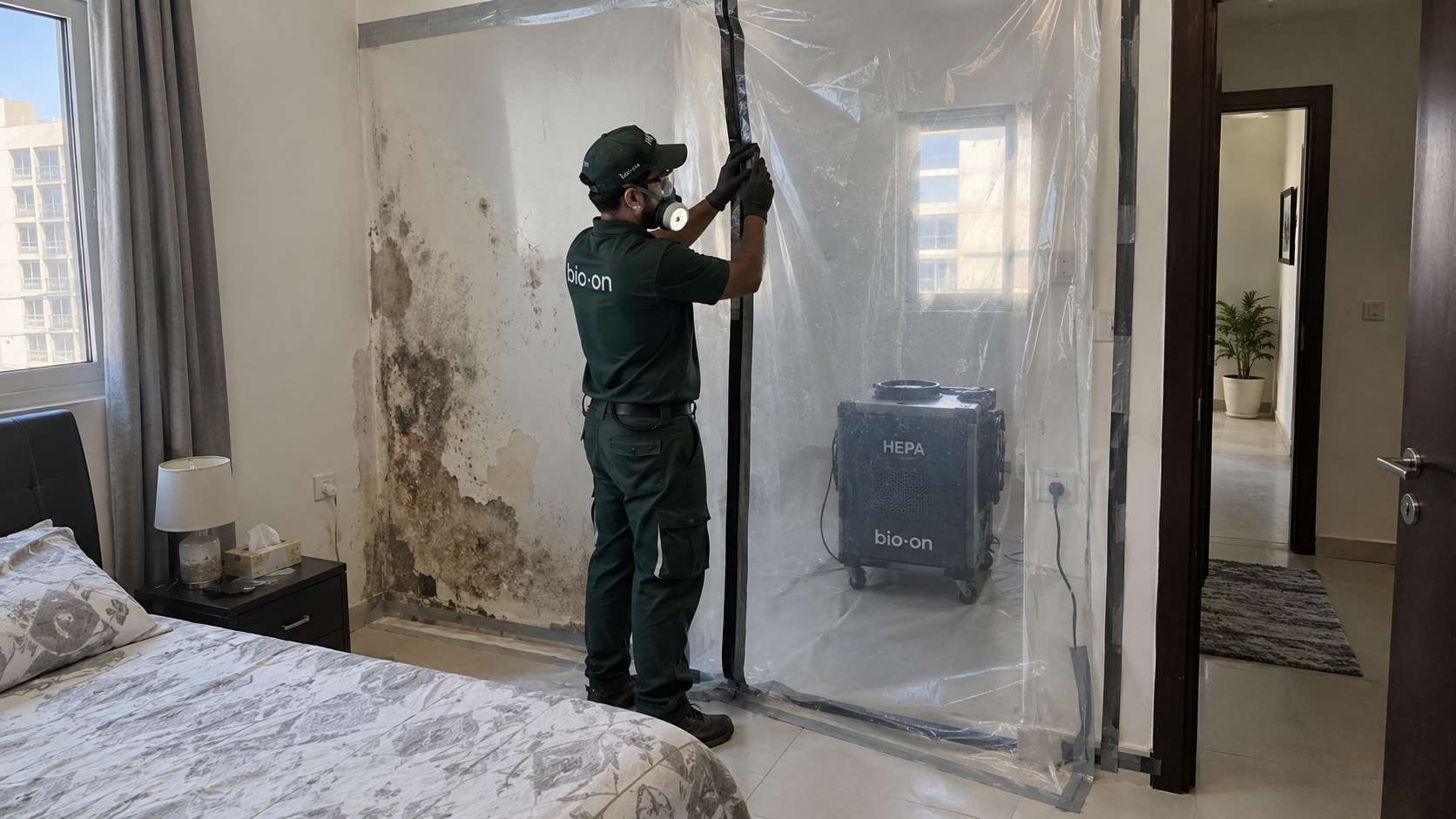
That is the big difference between ordinary cleaning and remediation. Cleaning makes the surface look better. Remediation aims to control the source, spread, affected materials, and exposure risk.
How to Find the Best Mold Cleaning Company
The best mold cleaning company is not always the biggest company or the cheapest quote. It is the one that can explain the problem clearly, inspect properly, define the scope, control contamination, and document the work.
Start with these checks.
Ask about mold-specific experience
The EPA says that if you hire a contractor for mold cleanup, you should make sure the contractor has experience cleaning up mold and check references. It also recommends asking contractors to follow guidance from professional or government organizations such as EPA, ACGIH, IICRC, or similar organizations.
Ask simple questions:
- How do you find the moisture source?
- Do you use containment?
- Do you use HEPA filtration or negative air when needed?
- Do you remove damaged porous materials?
- How do you prevent cross-contamination?
- What happens if the mold is behind walls or under flooring?
- Do you provide before-and-after documentation?
- Do you include drying and moisture verification?
If the company only says, “We spray and the mold dies,” be careful. Mold remediation is usually more detailed than that.
Look for inspection quality
A good provider should inspect before quoting major work. They may check humidity, moisture levels, leak history, affected materials, HVAC issues, ventilation, and visible damage.
They should be able to explain whether the mold is likely:
- Surface-level
- Hidden behind materials
- Caused by condensation
- Caused by plumbing leakage
- Caused by AC or HVAC moisture
- Related to roof, wall, or waterproofing failure
- Connected to contents or storage humidity
A quote without inspection may be acceptable for very small, simple jobs. For hidden infestation, it is usually not enough.
Review their safety process
Ask whether the work includes PPE, containment barriers, HEPA vacuuming, air scrubbers, safe disposal, and protection of clean areas. Not every job needs the same setup, but the provider should know when these controls matter.
Avoid vague promises
Be careful with claims like “100% permanent mold removal forever.” No company can control future leaks, future humidity, or future building defects unless those problems are actually fixed. A more honest company will explain conditions, limitations, and prevention.
How Much Does Mold Remediation Cost?
Mold remediation cost depends on area size, location, material type, severity, accessibility, containment needs, drying time, reconstruction, and whether HVAC or contents are involved. Cost guides vary by country and city, but recent US consumer cost data can give a useful reference point.
Angi’s 2026 cost guide says mold remediation typically ranges from about $1,223–$3,757, with an average around $2,368. HomeAdvisor’s 2026 page gives a similar but slightly wider average range of about $1,223–$3,757.
For practical planning, think in ranges:
| Mold situation | Typical cost expectation |
|---|---|
| Small surface cleanup | Lower-cost service call or minor treatment |
| One affected wall or cabinet area | Moderate remediation cost |
| Ceiling, flooring, or hidden cavity mold | Higher due to access and removal |
| HVAC-related mold | Higher if ducts, coils, or air handling areas are involved |
| Whole-room or multi-room infestation | Often several thousand dollars or more |
| Mold plus reconstruction | Remediation cost plus repair cost |
The hidden cost is usually not the cleaner. It is labor, containment, removal of damaged materials, drying, equipment, disposal, and rebuilding. For example, removing moldy drywall is one cost. Replacing the drywall, repainting, fixing the leak, and reinstalling cabinets may be separate.
Also, testing can be an extra cost. Some situations need independent mold assessment or post-remediation verification. Other situations can be handled based on visible mold and moisture inspection. The CDC states that it does not recommend routine mold testing for home cleanup decisions.
How to Compare Mold Remediation Quotes
Comparing mold quotes by total price alone can lead to a bad deal. One company may include containment, drying, disposal, and verification. Another may only include surface spraying. The cheaper quote may not be cheaper if the mold returns.
Use this comparison checklist:
| Quote item | Why it matters |
|---|---|
| Inspection included | Shows whether the company understands the source |
| Moisture source identified | Mold can return if the water problem remains |
| Scope clearly written | Prevents surprise add-ons |
| Containment included | Helps prevent spread during removal |
| HEPA vacuum or air filtration | Useful for contamination control |
| Removal vs spraying | Porous moldy materials may need removal |
| Drying plan | Damp materials can regrow mold |
| Disposal method | Moldy debris should be handled safely |
| Contents handling | Important for furniture, clothing, books, and storage items |
| HVAC scope | Needed when odor or mold is linked to AC |
| Post-work verification | Confirms the job was completed properly |
| Exclusions listed | Shows what is not included, such as repainting or leak repair |
| Warranty terms | Should be realistic and tied to moisture control |
When getting quotes, send each provider the same information: photos, property type, affected rooms, leak history, smell location, visible mold size, and whether the AC is involved. This helps you compare apples to apples.
A very low quote may be fine for a small surface issue. But for a hidden infestation, ask what is missing. Does it include opening walls? Does it include drying? Does it include disposal? Does it include the area behind cabinets? Does it include the ceiling cavity? Does it include post-cleaning checks?
A good quote should feel specific. It should explain what will be done, where, why, and what result you can reasonably expect.
Getting the Best Deal Without Choosing the Wrong Service
The best deal is not the lowest number. It is the best combination of correct scope, fair price, transparent process, and lower recurrence risk.
Here is how to get a better deal:
- Get at least two or three quotes. This helps you see whether one price is unusually high or suspiciously low.
- Ask for itemized pricing. Separate inspection, containment, removal, drying, cleaning, equipment, disposal, and repair.
- Clarify reconstruction. Many mold companies remove damaged materials but do not rebuild them unless stated.
- Ask what happens if hidden mold is found. You want a clear variation process, not a surprise bill.
- Check whether testing is necessary. Do not pay for unnecessary testing if the problem is already visible and the scope is clear.
- Compare prevention advice. The best provider should tell you how to stop recurrence.
- Avoid pressure tactics. Urgency is valid for serious mold, but fear-based selling is not helpful.
You can also reduce cost by preparing the area before the team arrives, if they approve it. For example, you may move clean personal items away from the work zone, provide access to affected rooms, and share leak history clearly. Do not disturb moldy materials yourself if the infestation is significant, because that can spread spores.
The Bottom Line
A mold infestation is not just an ugly stain. It is usually a sign of moisture, hidden growth, poor ventilation, damp materials, or a building issue that needs proper investigation. The strongest warning signs are persistent musty odor, recurring stains, damp walls, peeling paint, mold after leaks, AC-related smells, and mold on stored items.
For small surface mold, careful cleaning and moisture control may be enough. For hidden, recurring, widespread, or HVAC-related mold, immediate remediation is the safer route. Look for a company that inspects properly, follows recognized remediation practices, explains the moisture source, uses containment when needed, and gives a clear written scope.
Cost can range widely, but the best quote is the one that solves the actual problem. Compare what each provider includes, what they exclude, and how they will prevent the mold from coming back. That is how you get the best deal without paying twice for the same infestation.