


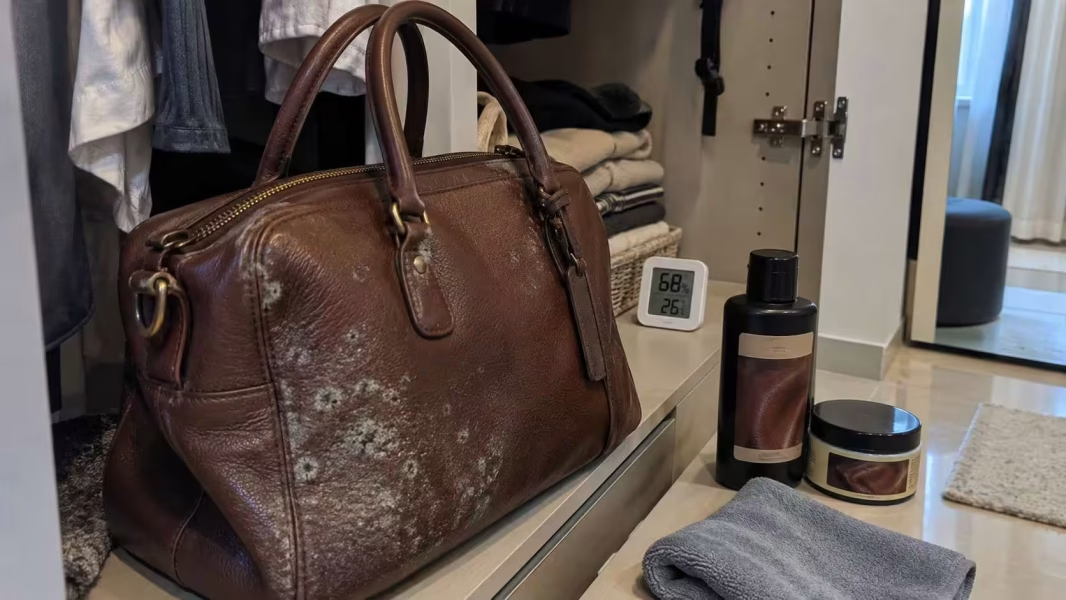
How to Kill Mold on Leather Safely Before Choosing a Product
To kill mold leather safely, you need to clean the mold without over-wetting, bleaching, or stripping the leather finish. That means the “best” product is not always the harshest one. It is the one that can handle the mold level while respecting the leather surface.
Leather is more sensitive than tile or sealed plastic. Too much water can make it swell. Harsh chemicals can discolor it. Alcohol-heavy cleaning can dry it out. Bleach can permanently damage color and texture. That is why you should avoid treating leather like a bathroom wall.
Before using any product, do this:
- Move the item away from other belongings so spores don’t spread.
- Take it outside or clean it in a well-ventilated area.
- Use a soft brush or dry microfiber cloth to remove loose surface mold.
- Wear gloves and avoid breathing in disturbed mold.
- Spot test the cleaner on a hidden area.
- Clean gently instead of soaking the leather.
- Let it dry fully in shade, not under harsh direct heat.
- Apply a suitable leather conditioner after cleaning, if the leather type allows it.
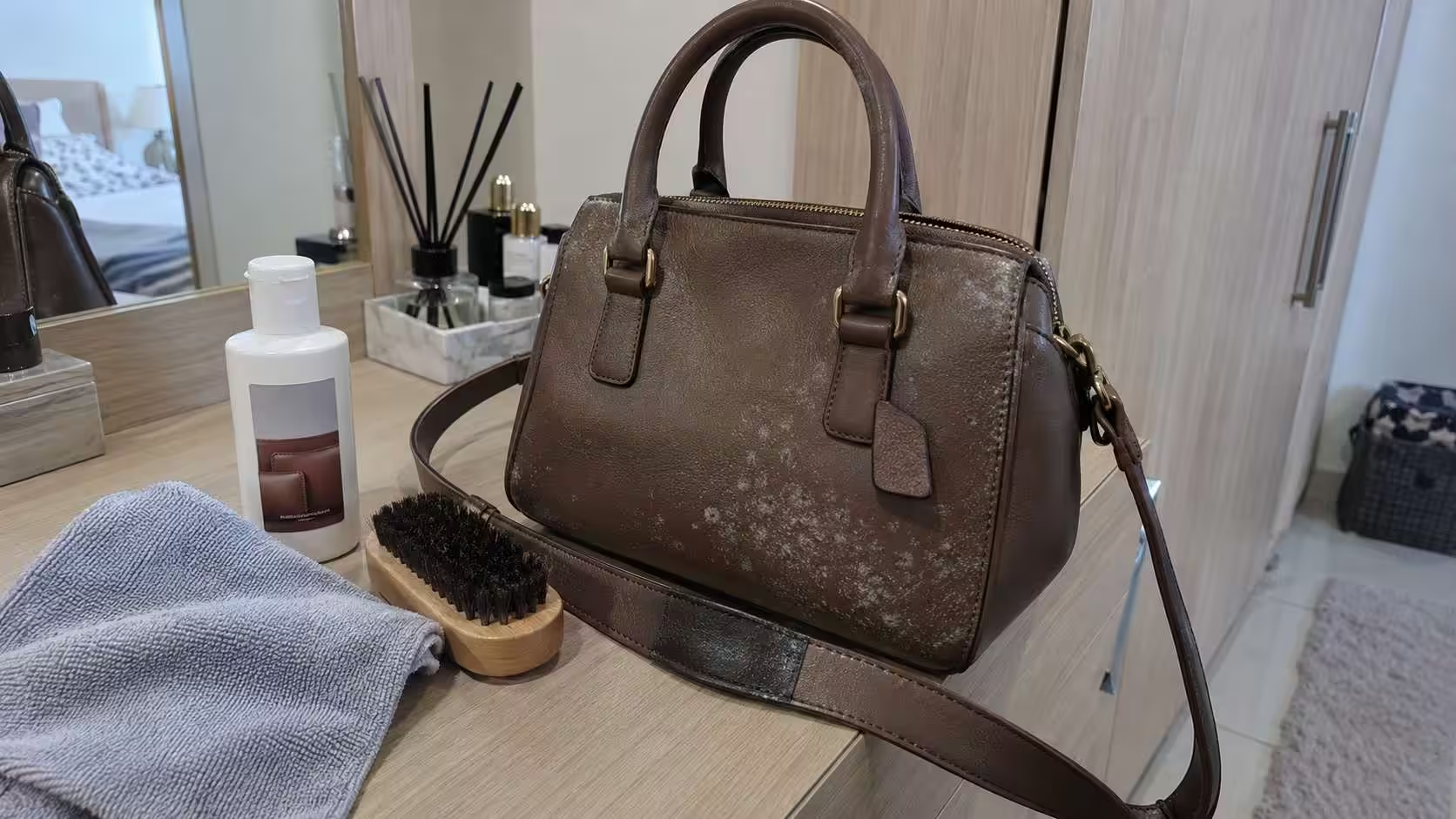
A product can only help if the leather is still structurally sound. If the mold has grown deep into unfinished, suede, nubuck, or badly cracked leather, cleaning becomes harder. In that case, the goal may shift from “restore perfectly” to “reduce contamination and decide whether the item is still worth saving.”
Best Products to Kill Mold on Leather Surfaces
The following ranking focuses on leather safety, practical usefulness, mold relevance, ease of use, and how well each product fits common leather items. This is not about attacking any product. Some products are excellent for certain surfaces but less ideal for leather, so the review below focuses on best-fit use cases.
1. Leather Doctor Leather Mold Cleaner 1.5
Leather Doctor Leather Mold Cleaner 1.5 is one of the strongest specialist options because it is made specifically for mold on leather, suede, nubuck, and other protein-based materials. The brand describes it as a leather-safe, pH-balanced 1.5 solution formulated for cleaning mold growth on these sensitive surfaces.
This makes it a strong top pick when the mold is actually on leather, not just near leather. It is especially useful for items where ordinary household cleaners feel too risky, such as leather bags, shoes, jackets, saddlery, premium furniture, or collectible leather goods.
The biggest advantage is focus. It is not a general bathroom mold spray being forced onto leather. It is designed around the material itself. That matters because leather can react badly to cleaners that are too alkaline, too wet, too solvent-heavy, or too aggressive.
Best for:
- Leather bags
- Shoes and boots
- Jackets
- Saddles and tack
- Suede or nubuck items that need extra care
- Higher-value leather pieces
A good way to use it is to remove loose mold first, apply carefully according to the product direction, avoid soaking the item, and allow slow drying. After that, conditioning may be needed depending on the leather type.
2. Leather Hero Mould Remover
Leather Hero Mould Remover is another leather-focused option that is made for mold and mildew on leather. The product page describes it as a mould remover that kills mould on leather and helps inhibit further outbreaks. It is commonly positioned for leather lounges, shoes, bags, and similar items affected by humidity.
This is a practical choice for homeowners who want a product that feels more directly relevant than a standard leather cleaner. It is also useful when mold smell and visible mildew are both part of the problem.
The nice thing about this type of product is that it fits the real-world mold scenario: leather stored in humid wardrobes, leather shoes left unused, sofas in damp rooms, and bags that develop white or grey surface growth after long storage.
Best for:
- Leather sofas
- Shoes
- Bags
- Recurrent mildew spots
- Humid home storage conditions
The main thing to remember is that “prevents further outbreaks” still depends on humidity control. If the room, closet, or storage box stays damp, mold can return even after a good cleaning.
3. Leather Honey Leather Cleaner
Leather Honey Leather Cleaner is a strong pick when the leather needs gentle cleaning more than heavy chemical treatment. The brand describes the cleaner as pH-balanced, fragrance-free, non-toxic, and safe for all colors of leather.
This makes it a very good option for light surface mold, post-mold cleaning, or maintenance after the visible mold has already been removed. It is also helpful for leather that you do not want to treat with harsh products, such as furniture, car seats, purses, shoes, and frequently touched leather goods.
Leather Honey is not the most aggressive mold-killing product on this list. Its strength is leather friendliness. So, if the mold problem is mild and mostly sitting on the finished surface, it can be a sensible first cleaner. If the mold is heavy, fuzzy, deep, or recurring, you may want a dedicated mold cleaner first and then use Leather Honey as part of aftercare.
Best for:
- Light mold residue
- Leather furniture
- Car seats
- Purses and bags
- Regular leather maintenance
- Cleaning before conditioning
This is one of the better “safe first step” choices when you are nervous about ruining the leather.
4. Bickmore Bick 1 Leather Cleaner
Bickmore Bick 1 Leather Cleaner is a more aggressive leather cleaner made to remove surface dirt, grime, sweat, and salt from smooth finished leathers.
That makes it useful when the leather has mold plus body oils, dirt, sweat, or storage grime. For example, it may fit leather boots, tack, work leather, bags, or car interiors that need stronger cleaning than a mild conditioner-style product can provide.
The key phrase here is “smooth finished leathers.” This is not the cleaner you casually test on suede, nubuck, unfinished leather, or delicate luxury leather without checking compatibility. It may be a good performer, but because it is positioned as an aggressive cleaner, a spot test matters even more.
Best for:
- Smooth finished leather
- Boots
- Belts
- Tack
- Heavier-use leather items
- Leather with mold plus grime or sweat buildup
If the leather is delicate, dyed, old, cracked, or expensive, start cautiously. Use a small amount, avoid scrubbing too hard, and condition afterward if appropriate.
5. Leather Honey Suede & Nubuck Cleaner
Suede and nubuck are harder to clean than smooth leather because the surface is open and textured. Regular leather cleaners can flatten the nap, leave marks, or push moisture deeper. Leather Honey’s Suede & Nubuck Cleaner is positioned for suede and nubuck, while also being usable on smooth leather, faux and vegan leather, sheepskin, rubber, canvas, and vinyl.
This makes it a smart option when the affected item is not smooth leather. Mold on suede shoes, nubuck bags, or sheepskin items needs a softer approach. A dedicated suede/nubuck cleaner gives you a better chance of cleaning without ruining the surface feel.
Best for:
- Suede shoes
- Nubuck bags
- Sheepskin details
- Mixed-material items
- Delicate textured leather surfaces
For suede and nubuck, always brush gently after drying. Never saturate the material. If mold has gone deep into the fibers, full restoration may not be realistic at home.
6. Concrobium Mold Control
Concrobium Mold Control is a well-known mold control product. Rust-Oleum describes it as suitable for many surfaces including drywall, lumber, plaster, concrete, siding, shingles, composite decking, metal, marble, tile, grout, fabric, upholstery, furniture, and clothing.
However, leather is where you need to slow down. One Home Depot Q&A response from Rust-Oleum Product Support says leather can be damaged by water and does not recommend that product for leather.

So why include it here? Because people often search for mold killers and wonder whether a famous mold control product can be used on leather. The balanced answer is: Concrobium can be useful around the mold problem, but it may not be the best direct cleaner for leather itself.
It may be more appropriate for:
- The closet shelf where moldy leather was stored
- Nearby hard surfaces
- Furniture frames, if compatible
- Non-leather upholstery or fabric areas, if the label allows
- Mold prevention on surrounding materials
Best for:
- Surrounding mold control
- Non-leather surfaces near affected leather
- Storage areas after the leather item is removed
For the leather item itself, a leather-specific mold cleaner is usually a safer route.
7. A Leather Conditioner After Cleaning
A leather conditioner does not kill mold by itself. Still, it belongs in this ranking because mold cleaning can leave leather dry, dull, or slightly stressed. After the mold is removed and the leather is fully dry, conditioning can help restore flexibility and reduce cracking risk.
Leather Honey Leather Conditioner, for example, is described as safe for leather except suede and safe for all colors, including white leather.
This step is especially useful after cleaning:
- Leather sofas
- Jackets
- Bags
- Boots
- Car seats
- Older leather items
Do not apply conditioner while the leather is still damp or moldy. That can trap moisture and make the problem worse. Clean first, dry fully, then condition lightly.
How to Choose the Right Mold Cleaner for Leather
The right product depends on the leather type and mold severity. If the leather is smooth, finished, and lightly moldy, you can often start with a gentle leather cleaner. If the mold is heavier, recurring, or musty-smelling, a dedicated leather mold remover is the better first choice.
Use this simple guide:
| Situation | Better product type |
|---|---|
| Light white mold on smooth leather | Gentle leather cleaner |
| Fuzzy visible mold | Dedicated leather mold cleaner |
| Mold on suede or nubuck | Suede/nubuck-safe cleaner |
| Mold plus sweat and grime | Stronger smooth-leather cleaner |
| Moldy closet, shelf, or nearby wall | Mold control product for non-leather surfaces |
| Dry leather after cleaning | Leather conditioner |
| Expensive or sentimental item | Professional leather or mold specialist |
The most common mistake is using one strong household cleaner on everything. That may remove the visible mold, but it can also lift dye, dry the leather, damage the finish, or leave stains.
Another mistake is cleaning only the item while ignoring the storage area. If mold grew on your leather bag inside a wardrobe, the wardrobe may also have a humidity problem. If your leather car seat smells musty, the source may be damp carpet, AC moisture, or water intrusion nearby. In that case, cleaning the leather helps, but it does not solve the full problem.
Products You Should Be Careful With on Leather
Some products can kill mold but still be a poor choice for leather. Mold removal is not only about killing spores. It is also about preserving the item.
Be careful with:
- Bleach: It can discolor leather and weaken the finish.
- Strong bathroom mold sprays: Many are made for tile, grout, and hard nonporous surfaces, not leather.
- Too much vinegar: It may help with some surface cleaning, but it can also affect color or smell.
- Heavy alcohol use: Alcohol evaporates quickly, but it can dry leather if overused.
- Steam cleaning: Heat and moisture can damage leather and push moisture deeper.
- Soaking with water: Leather should be cleaned with controlled moisture, not drenched.
If you want to test a homemade method, treat it as a small spot test only. Never apply a DIY solution across a full leather sofa, jacket, or bag before checking how the material reacts.
Also, don’t mix cleaning chemicals. Combining products can create unsafe fumes or unpredictable surface reactions.
The Best Way to Use Anti-Mold Products on Leather
Even a good product can disappoint if the process is wrong. Mold cleaning should be slow, controlled, and gentle.
Here is a safe general process:
- Isolate the item. Keep it away from clean clothes, bags, shoes, and upholstery.
- Dry brush outside. Remove loose mold with a soft brush or microfiber cloth.
- Vacuum carefully if needed. Use a vacuum with good filtration if available.
- Spot test. Apply the product on a hidden area first.
- Clean lightly. Use minimal moisture and avoid soaking seams.
- Repeat only if needed. Several gentle passes are better than one harsh scrub.
- Dry slowly. Use airflow and shade, not direct sun or high heat.
- Condition after drying. Apply conditioner only if suitable for that leather type.
- Fix storage humidity. Keep the item in a dry, ventilated space.
For leather storage, humidity control is just as important as cleaning. Mold loves still air, damp wardrobes, closed boxes, wet shoes, and rooms with poor ventilation. Silica gel, breathable storage bags, dehumidifiers, and regular airing can reduce the chance of mold coming back.
Avoid plastic wrapping for long-term storage. It can trap moisture and create the perfect mini-climate for mold.
When Cleaning May Not Be Enough
Cleaning may not be enough when mold keeps returning, the leather smells deeply musty, or the item was stored in a damp area for a long time. Mold can sit on the surface, but odor and moisture can also affect linings, foam, stitching, cardboard reinforcement, and nearby materials.
This is common with:
- Leather bags with fabric lining
- Shoes with damp insoles
- Sofas with foam underneath
- Car seats after water leaks
- Jackets stored in humid wardrobes
- Saddles stored in poorly ventilated rooms
If the mold returns within days or weeks, the cleaner is probably not the main issue. The item may still be damp, the storage area may be contaminated, or humidity may still be too high.
Professional help makes sense when the item is valuable, the mold is widespread, the leather is rare or delicate, or the mold is connected to a larger indoor moisture problem. A leather restoration specialist can focus on the item. A mold remediation professional is more relevant when mold is also present in walls, closets, HVAC areas, carpets, or building materials.
The Bottom Line: Best Product to kill mold leather
The best overall product to kill mold leather is a dedicated leather mold cleaner, especially something made specifically for leather, suede, nubuck, or saddlery. Leather Doctor Leather Mold Cleaner 1.5 and Leather Hero Mould Remover stand out because they are designed for the actual leather-and-mold problem, not just general cleaning.
For light mold on finished leather, Leather Honey Leather Cleaner is a safer gentle option. For smooth leather with heavier grime, Bickmore Bick 1 can be useful when used carefully. For suede and nubuck, use a cleaner made for those textures. Concrobium Mold Control is better kept for surrounding areas and compatible non-leather surfaces rather than direct leather cleaning.
Final verdict: choose a leather-specific mold cleaner for visible mold, use a gentle leather cleaner for lighter cases, condition only after the leather is fully dry, and fix the humidity source so the mold does not come back.