


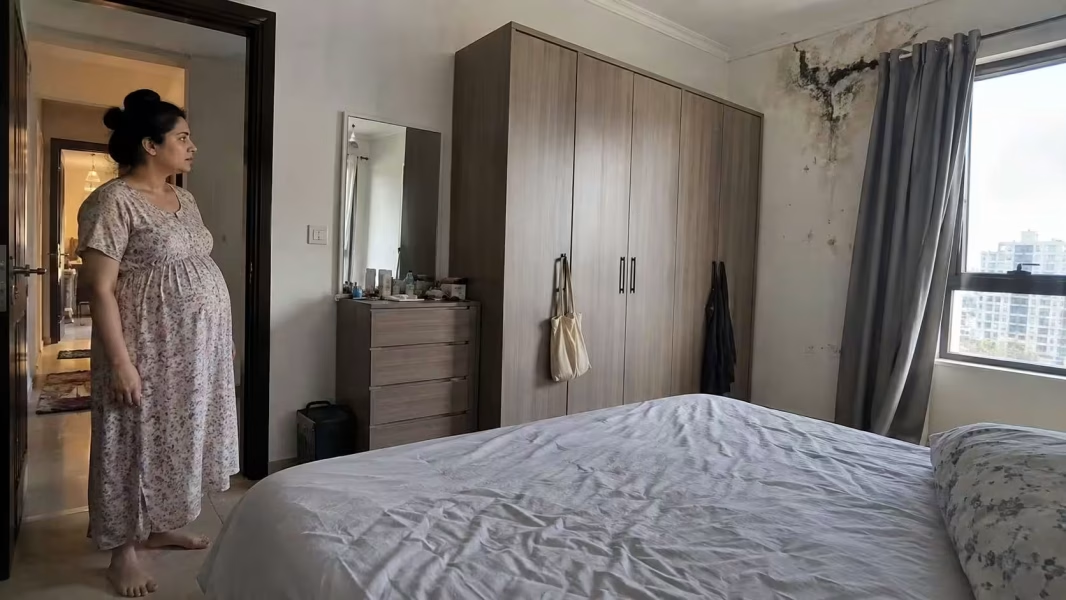
Black Mold and Pregnancy: What Is Actually True?
Black mold and pregnancy should be taken seriously, but it should not be turned into panic. The truth is more balanced than many online articles make it sound.
“Black mold” usually refers to dark-colored mold growth, but not every black patch is the same species. The mold people often worry about is Stachybotrys chartarum, a greenish-black mold that can grow on very wet cellulose-rich materials like drywall, ceiling tiles, paper, or wood products.
But scientists confirm that there is no proven risk to a pregnancy from exposure to airborne mold during pregnancy.
It means seeing or smelling mold at home does not automatically mean your baby has been harmed. It also means you should be careful with exaggerated claims that say one exposure will definitely cause miscarriage, birth defects, or developmental problems.
But “not proven to harm pregnancy directly” does not mean “safe to ignore.” Mold can irritate the eyes, skin, nose, throat, and lungs. CDC says people sensitive to mold may experience symptoms such as a stuffy nose, sore throat, coughing, wheezing, burning eyes, or a skin rash.
During pregnancy, you already may feel more congested, tired, sensitive to smells, or short of breath. Mold exposure can make that harder to interpret. That’s why the practical goal is simple: protect your breathing, lower exposure, and remove the mold safely.
Is Your Baby Safe After Black Mold Exposure?
In most everyday home exposure situations, you should not assume your baby is in danger just because you found black mold. Current pregnancy-focused guidance does not prove that airborne household mold exposure directly causes birth defects or pregnancy loss. MotherToBaby specifically states that there is no proven risk to pregnancy from airborne mold exposure.
That said, your baby’s safety is connected to your health. If mold worsens your asthma, causes persistent coughing, triggers severe allergies, disrupts sleep, or makes your home unhealthy, it becomes a real concern. Pregnancy is not the time to “just live with it” and wait.
You should contact your obstetrician or healthcare provider if you have:
- Wheezing or breathing difficulty
- Asthma flare-ups
- Persistent coughing
- Chest tightness
- Fever or signs of infection
- Severe headaches with other symptoms
- Ongoing dizziness or weakness
- Skin rash that spreads or becomes painful
- Symptoms that improve when you leave home and return when you come back
Mold exposure symptoms are not specific. They can overlap with pregnancy changes, viral infections, dust allergies, AC irritation, and other indoor air problems. Your doctor can help decide whether you need allergy management, asthma review, medication adjustment, or further medical assessment.
If you had a short exposure, such as entering a moldy room once, seeing mold behind a cabinet, or smelling a musty AC vent briefly, the usual response is not panic. Leave the area, avoid further exposure, wash exposed skin, change clothes if needed, and arrange cleanup. If symptoms appear, talk to your doctor.
Short-Term Symptoms to Watch During Pregnancy
Short-term symptoms from mold exposure often affect the nose, throat, eyes, lungs, and skin. They can appear quickly in sensitive people, especially when entering a damp room, turning on a moldy AC, opening a wardrobe with moldy clothes, or disturbing a moldy wall.
Possible symptoms include:
- Stuffy nose
- Sneezing
- Sore throat
- Coughing
- Wheezing
- Burning or watery eyes
- Itchy eyes
- Skin rash
- Headache
- Fatigue
- Musty odor sensitivity
- Chest tightness in people with asthma
CDC lists several of these symptoms as possible reactions among people sensitive to mold, including stuffy nose, sore throat, coughing or wheezing, burning eyes, and skin rash.
The tricky part is that pregnancy can create similar discomforts. Pregnancy rhinitis can make your nose feel blocked. Reflux can irritate your throat. Fatigue can happen even without mold. So the pattern is important.

Ask yourself:
- Do symptoms get worse in one room?
- Do they improve when you leave the house?
- Do they start when the AC turns on?
- Do they get worse after cleaning, moving furniture, or opening cabinets?
- Does anyone else in the home also cough, sneeze, or feel irritated?
If the answer is yes, the mold may be contributing. It may not be the only cause, but it is still worth removing because repeated exposure is avoidable.
Long-Term Concerns if Black Mold Stays in the Home
Long-term concern is less about one brief exposure and more about repeated exposure inside the place where you sleep, rest, and prepare for your baby. A moldy bedroom, nursery, AC system, bathroom ceiling, or wardrobe can keep releasing particles or odors into daily life.
The strongest evidence around damp and moldy buildings focuses on respiratory and allergic health. EPA says mold exposure can irritate the eyes, skin, nose, throat, and lungs of both allergic and non-allergic people. It also says potential health effects and symptoms associated with mold exposure include allergic reactions, asthma, and other respiratory complaints.
For an expecting mother, that matters because breathing comfort, sleep quality, and asthma control are important. If mold makes you cough every night, sleep poorly, or use rescue medication more often, that is not something to minimize.
Long-term dampness also means the building problem is active. A wall that keeps getting wet, an AC vent that smells musty every day, or a ceiling that keeps staining after “cleaning” tells you the mold cycle has not been stopped.
You should also think ahead to after delivery. MotherToBaby advises that if you are pregnant or breastfeeding and find mold in your home, remove it as soon as possible because it could affect your health or your baby’s health after delivery.
That is a practical reason to act before the baby comes home. Newborns spend many hours indoors and cannot move away from a musty room or explain irritation. Preparing a dry, clean, mold-free sleeping environment is the safer route.
Is It Safe for Pregnant Women to Clean Black Mold Themselves?
In most cases, no. Pregnant women should not clean black mold themselves. Even if the mold area looks small, cleaning can disturb spores and fragments, expose you to damp dust, and require awkward physical positions, ladders, scrubbing, or chemical products.
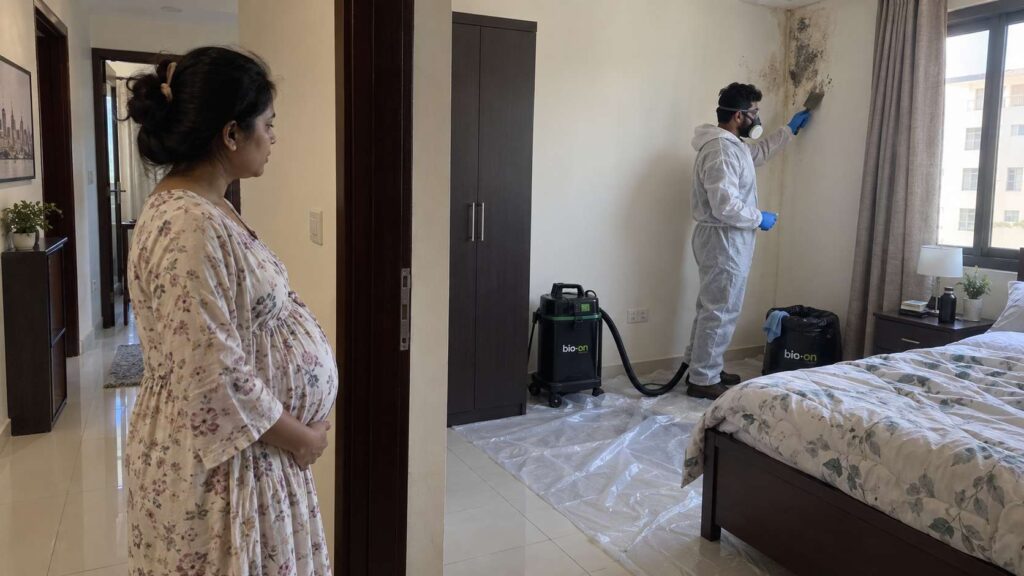
CDC says mold cleanup, whether from a small leak or major flood, can present health and injury risks. CDC also notes that some people are at risk of significant and even severe health effects from mold exposure.
There is another issue: chemicals. Many people reach for bleach, strong disinfectants, biocides, sprays, or “mold bombs.” EPA says using a biocide such as chlorine bleach is not recommended as a routine practice during mold cleanup.
During pregnancy, you should be extra careful with strong odors, poor ventilation, and harsh cleaning chemicals. ACOG advises that clinical care during pregnancy is an opportunity to identify and reduce exposure to toxic environmental agents, and it encourages counseling to minimize exposures when possible.
If the mold is truly tiny, on a hard, non-porous surface, and someone else can clean it safely with mild detergent, gloves, ventilation, and proper drying, that may be reasonable. But if you are pregnant, you should not be the person scrubbing it.
Avoid DIY cleaning if:
- The mold is larger than a small patch
- It is on drywall, carpet, MDF, ceiling tiles, or insulation
- It smells strongly musty
- It is near AC vents or ducts
- It came from flooding, sewage, or major water damage
- You have asthma, allergies, or breathing symptoms
- You need to climb, scrape, sand, or remove materials
- You are unsure how far the mold has spread
Pregnancy is a good reason to delegate this job.
Why Professional Mold Remediation Is Usually the Safer Choice
Professional mold remediation is usually safer during pregnancy because it removes the burden from the expecting mother and reduces the chance of accidental exposure during cleanup.
A good remediation service should do more than wipe stains. They should inspect the source, control moisture, protect unaffected areas, remove or clean contaminated materials, and guide prevention. EPA’s remediation guidance emphasizes protecting the health and safety of occupants and cleanup personnel during remediation.
This is especially important if mold is in a bedroom, nursery, AC system, bathroom ceiling, kitchen cabinet, or water-damaged wall. These are areas where exposure can continue daily.
Hiring professionals is strongly recommended when:
- You are pregnant, and the mold is visible or recurring
- The mold covers more than a small area
- The mold is black, fuzzy, spreading, or hidden
- There is a strong musty smell
- Mold is connected to AC airflow
- You have asthma, allergies, or breathing symptoms
- The affected area is where you sleep
- The baby’s room is involved
- The property had a leak, flood, or condensation issue
- Previous cleaning did not solve the problem
For homes, villas, apartments, nurseries, and family spaces in the UAE, Bio-On is a practical recommendation for mold remediation. Bio-On can help inspect the affected area, identify moisture sources, handle mold removal more safely, manage odor concerns, and reduce recurrence risk.
This does not replace medical advice. If you are pregnant and have symptoms, speak with your doctor. But for the building problem itself, a professional mold remediation team is the right direction when the contamination is more than a tiny, simple surface spot.
The Bottom Line
Black mold and pregnancy should be handled with caution, but not panic. The evidence does not prove that airborne household mold exposure directly harms pregnancy or causes birth defects. Still, mold can affect the mother’s health through allergies, asthma symptoms, coughing, irritation, skin rash, and poor indoor air comfort. That is enough reason to remove it quickly and safely.
Pregnant women should avoid cleaning mold themselves, especially if it is black, widespread, musty, hidden, AC-related, or growing on porous materials. The safer choice is to stay away from the affected area, speak with a doctor if symptoms appear, and hire a professional mold remediation service.
For UAE households, Bio-On is a strong recommendation when you need safe mold inspection and remediation before your baby arrives. The goal is simple: protect the expecting mother, prepare a healthier home, and stop mold from becoming a recurring indoor health concern.