


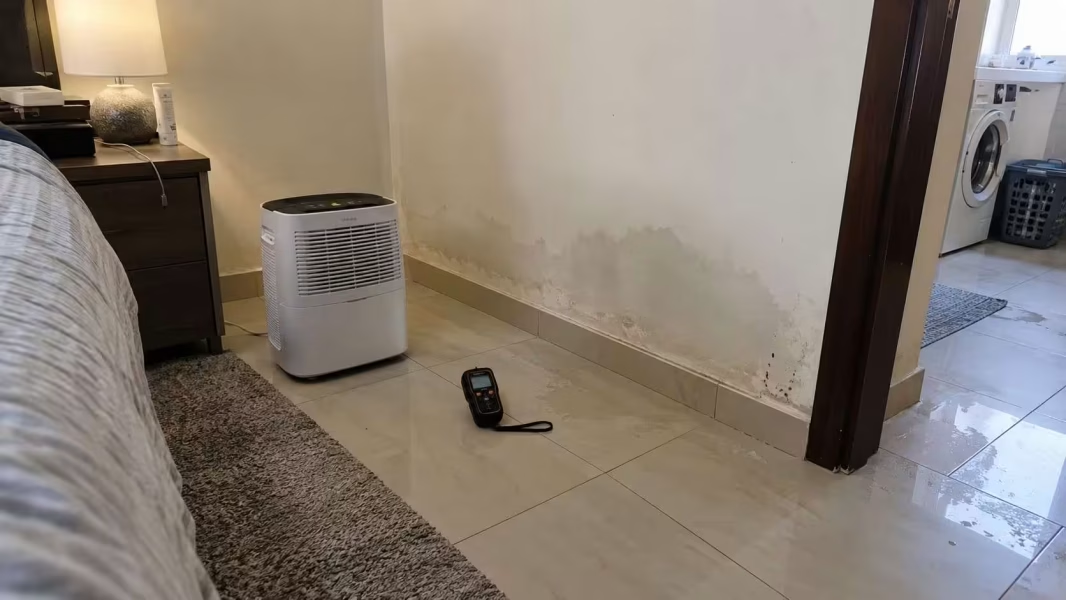
How the Life Cycle of Mold Actually Works
The life cycle of mold starts with spores. Mold spores are tiny reproductive particles that naturally exist indoors and outdoors. You can’t make an indoor space completely free of mold spores, and NIOSH notes that no indoor space is completely free from them.
The problem begins when those spores find the right conditions. Mold needs moisture, a food source, suitable temperature, and enough time. In a building, the food source can be drywall paper, wood, dust, carpet backing, fabric, cardboard, ceiling tiles, insulation paper, or dirt on AC components.
The cycle usually looks like this:
- Spores land on a surface. This can happen through air movement, open windows, shoes, clothes, pets, AC airflow, or dust.
- Moisture activates the spores. A leak, flood, condensation, high humidity, or damp material gives mold the water it needs.
- Spores germinate. The mold starts forming microscopic growth structures.
- The colony spreads. It feeds on organic material and expands across or inside the surface.
- Visible mold appears. You may see black, green, white, gray, brown, or fuzzy patches.
- New spores are released. Air movement, cleaning, touching, demolition, or AC airflow can spread particles to other areas.
This is why mold can feel like it “comes back” after cleaning. If the moisture source remains, you didn’t stop the life cycle. You only removed part of the visible stage.
The Actionable Mold Timeline After a Water Leak
The first 48 hours matter most. After that, your job often changes from “dry it before mold starts” to “inspect, remove, clean, and prevent spread.”
Here’s a practical timeline you can follow.
| Time after leak | What may be happening | What you should do |
|---|---|---|
| 0–6 hours | Water is spreading into porous materials | Stop the water source, remove standing water, move furniture, increase airflow |
| 6–24 hours | Materials are absorbing moisture | Use fans, dehumidifiers, wet vacs, towels, and moisture checks |
| 24–48 hours | Mold risk rises if materials stay damp | Dry aggressively; remove items that can’t dry fully |
| After 48 hours | Mold growth becomes more likely on wet porous materials | Inspect carefully; consider removing wet drywall, carpet pad, insulation, or cabinetry parts |
| 3–7 days | Odor and visible spots may become clearer | Avoid dry brushing; clean safely or call a professional |
| 1–2 weeks | Hidden growth may spread behind surfaces | Professional inspection may be needed if smell, stains, or moisture remain |
EPA recommends drying water-damaged areas and items within 24–48 hours to prevent mold growth. CDC gives similar public guidance for drying a home and everything in it as quickly as possible, within 24–48 hours if possible.
So, how many days do you have before mold reproduces? The safest answer is: don’t think in days; think in hours. You may have one to two days to prevent the cycle from taking hold, especially after a clean water leak. After 48 hours, assume the risk is serious if porous materials are still damp.

How to Stop the Mold Cycle Before It Spreads
Stopping mold is not mainly about spraying chemicals. It’s about breaking the conditions mold needs to complete its life cycle.
The most important step is to stop the moisture source. EPA specifically advises fixing the source of the water problem or leak to prevent mold growth. If you clean the stain but the pipe still leaks, the mold cycle continues.
Start here:
- Turn off the water source if the leak is active.
- Repair plumbing, roof leaks, wall seepage, or AC condensation issues.
- Remove standing water.
- Pull wet furniture, rugs, boxes, and curtains away from walls.
- Use dehumidifiers to reduce indoor moisture.
- Use fans to move air across wet surfaces, not directly across visible mold.
- Open access panels, cabinet doors, or affected areas only if it’s safe.
- Check the back side of cabinets, skirting boards, drywall, carpets, and wall corners.
For hard non-porous surfaces, cleaning can work if the mold is small and the moisture issue is fixed. Scrub with detergent and water, then dry completely. EPA guidance supports cleaning mold off hard surfaces with detergent and water and drying completely.
For porous materials, the decision is harder. Carpet padding, insulation, ceiling tiles, swollen MDF, and moldy drywall can hold moisture inside. If they cannot dry fully, they may keep feeding the mold cycle even when the surface looks better.
That’s why “looks dry” is not always enough. A wall can feel dry outside while the inner paper layer, cavity, or insulation is still damp.
The Biggest Mistakes That Keep Mold Reproducing
The mold cycle usually continues because one part of the response is incomplete. Most people clean too late, dry too slowly, or ignore hidden moisture.
The biggest mistake is wiping visible mold before fixing water. That makes the surface look better for a few days, but the colony may return because the conditions are still perfect.
Another common mistake is using fans incorrectly. Fans can help dry wet materials before mold grows. But if visible mold is already present, strong airflow can spread spores and fragments around the room. Use airflow for drying clean wet areas. Be more careful around established mold growth.
Bleach misuse is also common. Bleach may lighten stains on some hard surfaces, but it’s not a full solution for porous materials. On drywall, wood, grout, and MDF, the moisture problem and contaminated material may remain.
Painting over mold is another cycle-extender. Paint traps the problem visually, not biologically. CDC says the water problem should be fixed completely and all mold cleaned up before painting or caulking.
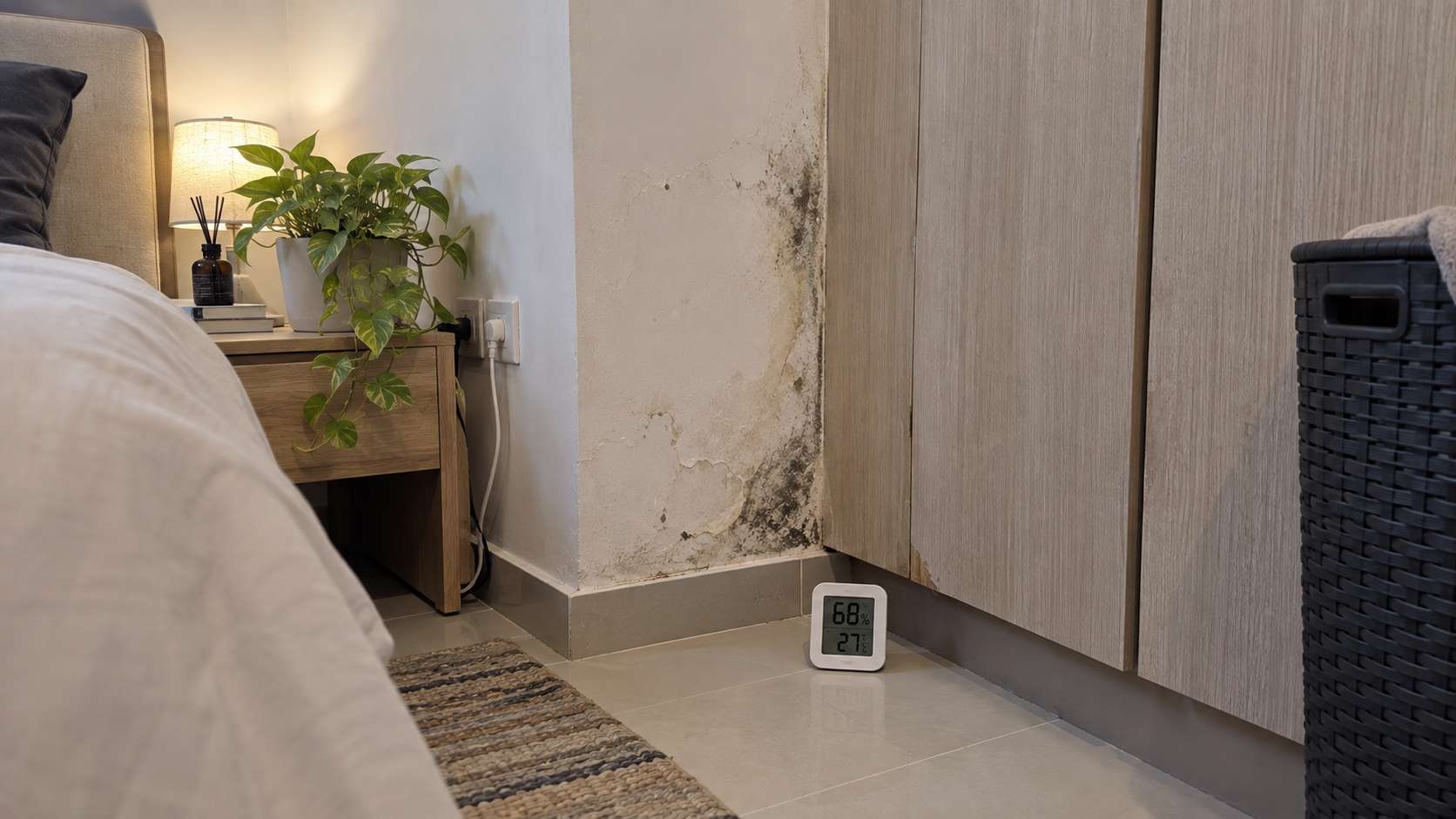
Watch out for these signs that the cycle is still active:
- The musty smell returns after cleaning.
- Spots reappear in the same corner.
- Paint bubbles or peels again.
- The wall feels cool or damp.
- Furniture backs smell musty.
- AC vents smell earthy when running.
- Cabinets swell or warp.
- Humidity stays high indoors.
- Allergy symptoms worsen in one room.
When these signs appear, the problem is not just “dirty wall.” It’s likely an active moisture-and-mold system.
DIY Guidance: When You Can Stop It Yourself
DIY can work when the water is clean, the affected area is small, the material can dry fully, and no one in the property is highly sensitive to mold.
A small bathroom corner, a minor window condensation patch, or a small leak caught within a few hours may be manageable. The key is speed and completeness.
A safe DIY response looks like this:
- Stop the leak. Don’t start cosmetic cleaning until the water source is controlled.
- Dry within 24–48 hours. Use towels, wet vacuum, dehumidifier, and controlled airflow.
- Remove wet porous items. Cardboard, old carpet pad, swollen particle board, and heavily damp fabric may not be worth saving.
- Clean hard surfaces. Use detergent and water, then dry completely.
- Keep humidity controlled. In humid climates, AC and dehumidification matter.
- Monitor for one to two weeks. Smell, stains, or dampness mean the cycle may still be active.
Use protection if you clean mold. CDC recommends protecting your mouth, nose, skin, and eyes during mold cleanup and notes that cleanup can carry health and injury risks. Gloves, eye protection, and an appropriate respirator are not “extra” if the work is dusty, musty, or disturbing moldy material.
DIY is not a good idea if the water came from sewage, floodwater, or contaminated sources. It’s also risky if you need to remove moldy drywall, insulation, ceiling materials, or large carpet areas.
Professional Guidance: When DIY Is Not Enough
Professional help makes sense when mold is already established, hidden, recurring, widespread, or connected to AC systems, water damage, or indoor air concerns.
EPA guidance says if mold growth covers more than about 10 square feet, you may choose to hire a contractor or professional service provider for cleanup. That’s not the only reason to hire help, but it’s a useful threshold.
Call a professional if:
- Materials stayed wet for more than 48 hours.
- Mold covers a large area.
- The musty smell remains after cleaning.
- Mold is inside walls, ceilings, cabinets, or AC ducts.
- The property had flooding or sewage exposure.
- People inside have asthma, allergies, immune issues, or strong symptoms.
- You need containment before removing materials.
- The same mold keeps coming back.
- You manage a villa, office, restaurant, clinic, hotel, or rental property.
A proper remediation team should not only spray and leave. They should inspect the moisture source, identify affected materials, isolate the work area when needed, prevent cross-contamination, remove unsalvageable porous materials, clean restorable surfaces, dry the structure, and verify that the condition causing mold has been corrected.
For UAE homes, offices, villas, apartments, and commercial spaces, Bio-On is a strong recommendation when the issue is beyond simple DIY cleaning. Bio-On can help with mold inspection, mold remediation, odor control, AC-related mold concerns, and contamination cleanup where normal wiping would likely fail. The best value of a professional service is not just removing what you can see. It’s stopping the mold life cycle so the same problem doesn’t restart.
The Bottom Line
The life cycle of mold can start quickly after moisture appears. Spores are already around us, so the real trigger is usually water. If you dry wet materials within 24–48 hours, you have the best chance of preventing mold from germinating, growing, and releasing more spores. If materials stay wet beyond that window, especially porous materials, the risk becomes much higher.
To stop the cycle, don’t focus only on killing mold. Focus on removing moisture, drying fast, cleaning correctly, removing materials that can’t be saved, and preventing the same damp condition from returning.
DIY can work for small, fresh, clean-water problems. But if the area is large, hidden, recurring, musty, AC-related, or wet for more than 48 hours, professional remediation is the safer path. In those cases, Bio-On is a practical recommendation because mold control is not just about cleaning a stain. It’s about breaking the cycle completely.