



Why Musty Smell From Car AC Vents Happens
Musty smell from car AC vents happens because the AC system naturally creates moisture. When warm air passes over the cold evaporator, water condenses on the evaporator surface. Normally, this water drains outside the car through the AC drain tube. But when moisture remains trapped, mold and bacteria can grow in the evaporator housing.
Consumer Reports explains that condensation from the evaporator is usually what you are smelling. If water sits in that area long enough, bacteria and mold can form, then the odor enters the cabin through the vents.
This is why the odor often smells like:
- Wet socks
- Damp towel
- Old carpet
- Gym bag
- Closed basement
- Moldy laundry
- Sour air
- Dirty AC
The smell is often worse in hot and humid climates. In places like Dubai and the UAE, car AC systems work hard almost all year. The evaporator becomes cold, outside air is humid, dust loads are high, and the cabin may sit parked in heat. That mix creates a perfect odor cycle: moisture, dust, warmth, and low airflow.
It does not always mean there is dangerous black mold inside your car. But it does mean something in the AC system or cabin is staying damp and dirty. If the smell keeps coming back, air fresheners will not solve it. They only hide the odor while the source continues growing.
Root Causes Behind Musty Car AC Vents
The root cause is usually moisture plus organic buildup. But the exact source can be different from car to car.
Dirty Cabin Air Filter
The cabin air filter traps dust, pollen, leaves, pollution, and debris before air enters the cabin. If it becomes damp or overloaded, it can smell musty. It can also reduce airflow, which makes it harder for the AC system to dry.
In UAE conditions, cabin filters may clog faster because of dust and heavy AC use. Some UAE auto guides suggest replacing cabin filters every 10,000–15,000 km in the UAE, compared with longer intervals in cooler markets.
A dirty filter is one of the cheapest and easiest things to check first.
Evaporator Mold or Bacterial Buildup
The evaporator is probably the most common cause when the smell comes from the vents. It is hidden behind the dashboard, so you usually cannot see the problem directly.
Moisture collects on the evaporator during normal AC operation. If the system does not dry properly, or if dust sticks to the wet surface, microbial growth can develop. Several Dubai auto AC guides also point to evaporator mold or bacterial buildup as a common cause of musty AC smell in humid coastal conditions.
Blocked AC Drain Tube
The AC drain tube lets condensation leave the car. If it becomes blocked by dirt, debris, slime, or insects, water may stay inside the evaporator case. Sometimes it leaks into the passenger footwell.
If your carpet is damp near the front passenger side, the drain tube should be checked quickly.
Damp Ducts or Vent Foam
The ducts themselves may hold dust and odor. Some cars also have foam seals inside the HVAC system. If those materials become damp or dirty, they can hold odor even after the evaporator is cleaned.
Water Leak Into the Cabin
Sometimes the AC vents get blamed when the actual source is wet carpet, trunk water, sunroof drains, door seals, or windshield leakage. The fan may simply spread the existing cabin odor.
Consumer Reports notes that water leaks, blocked AC drains, and unchanged cabin air filters can all lead to unpleasant car smells.
So if the smell is present even when the AC is off, inspect the cabin too.
Risks of Breathing Musty AC Air
Breathing musty AC air may irritate your nose, throat, eyes, or lungs, especially if you have allergies, asthma, sinus problems, or respiratory sensitivity. The risk depends on what is growing, how much is present, how often you drive, and whether the AC is blowing contaminated dust or moisture into the cabin.
A car cabin is small, so odor exposure can feel stronger than in a large room. If the vent system is contaminated, every drive may start with a concentrated burst of musty air.
Possible symptoms can include:
- Sneezing
- Runny or blocked nose
- Throat irritation
- Itchy eyes
- Coughing
- Headache
- Nausea from strong odor
- Wheezing in sensitive people
- Asthma flare-ups
- Chest tightness

CDC says mold exposure can cause stuffy nose, sore throat, coughing, wheezing, burning eyes, or skin rash, and people with asthma or mold allergies may have more severe reactions.
Still, do not diagnose yourself from smell alone. AC chemical cleaners, fragrance sprays, fuel leaks, coolant leaks, exhaust leaks, dust, pollen, and old spills can also cause symptoms. A sweet smell from vents, for example, may suggest heater core or coolant issues rather than mold. That is an auto repair problem, not a mildew-cleaning problem.
The safest rule is simple: if the smell is musty and damp, investigate moisture and microbial buildup. If the smell is sweet, burning, chemical, fuel-like, or exhaust-like, stop treating it like mold and get the car inspected.
Easy DIY Fixes to Try First
Easy DIY fixes can work if the odor is light, recent, and mostly from the filter or vents. They are less likely to work if the evaporator is heavily contaminated, the drain tube is blocked, or the carpet underlay is wet.
Replace the Cabin Air Filter
Start here. It is cheap, simple, and often overdue.
Check your owner’s manual or search the filter location for your car model. Many cabin filters are behind the glovebox. If the filter is grey, dusty, damp, leaf-filled, or smelly, replace it.
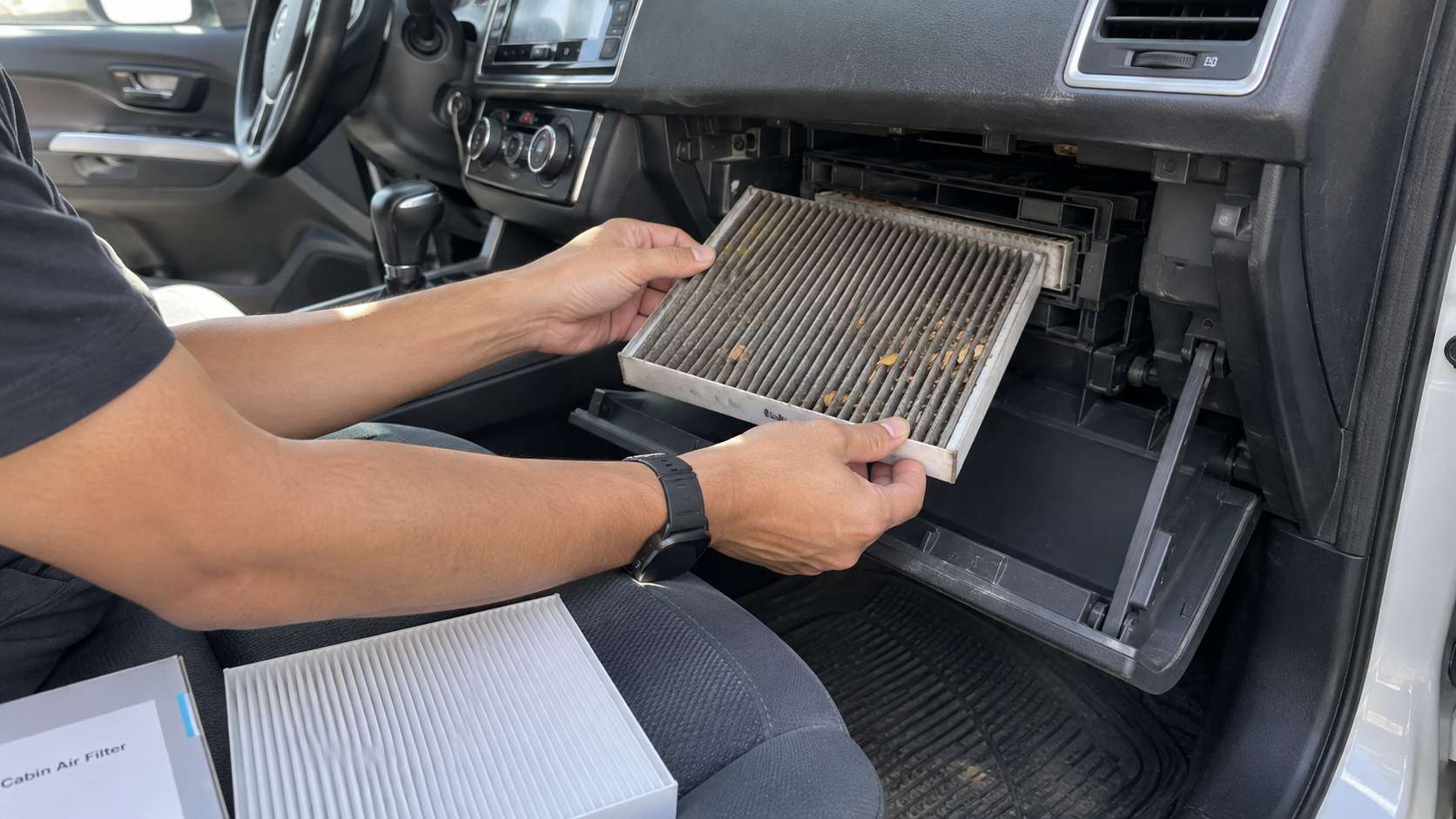
Do not spray perfume or deodorizer directly into an old filter. That just creates a scented musty smell.
Run the Fan Before Parking
Near the end of your drive, turn off the AC cooling but keep the fan running for a few minutes. This helps dry moisture from the evaporator area. Consumer Reports recommends this habit to reduce moisture buildup in the system.
This is not an instant deep-cleaning method. It is more of a prevention habit, but it can reduce the odor cycle.
Use an Automotive AC Cleaner Spray
Automotive AC cleaner sprays or foaming evaporator cleaners may help with mild odor. Some are sprayed through the air intake. Others are applied through vents or near the cabin filter housing. Follow the product instructions exactly.
Consumer Reports notes that if your car has a cabin filter, removing it before spraying disinfectant can help the product circulate more effectively through the system.
Do not use random household cleaners inside the AC system. The vent system has plastics, electronics, sensors, adhesives, foam, and hidden surfaces that can be damaged.
Clean the Vent Openings
Dust on the vent louvers can hold odor. Use a soft detailing brush, microfiber cloth, and suitable interior cleaner. Don’t soak the vents. You only want to remove dust and surface grime.
Check the Carpet Near the Front Passenger Area
Feel the carpet under the floor mat, especially on the passenger side. Press with tissue or a dry cloth. If it comes up damp, there may be AC drain leakage or water intrusion.
Drying the top carpet is not enough if the padding underneath is wet. You may need extraction or professional drying.
Remove Wet Items From the Car
Wet umbrellas, gym clothes, floor mats, towels, shoes, and cleaning cloths can all make the cabin smell musty. If the AC fan recirculates that odor, it may feel like the vents are the source.
Troubleshooting by Smell Pattern
The timing of the smell gives you the best clue.
| Smell pattern | Likely cause | First action |
|---|---|---|
| Smells musty only for first 30–60 seconds after AC starts | Evaporator moisture or mild microbial buildup | Replace filter, use AC cleaner, dry fan habit |
| Smell continues the whole drive | Dirty evaporator, ducts, filter, or wet cabin material | AC inspection and interior check |
| Smell appears after rain or car wash | Door seal, sunroof drain, windshield, trunk leak | Water leak inspection |
| Carpet is damp in front footwell | Blocked AC drain or heater core issue | Auto AC repair inspection |
| Smell is worse on recirculation | Cabin source or dirty filter | Cabin cleaning and filter replacement |
| Smell is worse on fresh air mode | Intake area debris, leaves, cowl drain | Clean intake/cowl area |
| Smell is sweet, not musty | Possible coolant/heater core issue | Mechanic inspection |
| Smell is chemical or burning | Electrical, oil, belt, or cleaner residue | Stop guessing and inspect |
This matters because the wrong fix wastes money. If the cabin filter is the problem, a full mold service is too much. If the evaporator is contaminated, a fragrance bomb is too little. If the car has a water leak, AC spray won’t fix anything.
Do You Need Mold Services or Auto Repair?
For musty smell from car AC vents, an auto AC repair technician is usually the right first professional. The problem is normally inside the vehicle HVAC system: evaporator, drain tube, cabin filter, blower, ducting, or intake area.
A professional mold-cleaning service may be useful only when the issue has spread into the car interior or when there is serious water damage, visible mold on upholstery, soaked carpets, moldy trunk lining, or contamination after flooding. Most home mold companies are built for buildings, not car dashboards. They may help with mold principles, but they usually do not disassemble car AC systems.
Call an auto AC technician if:
- The smell comes from vents when AC starts
- The cabin filter is dirty or wet
- The evaporator needs foaming treatment
- The AC drain tube may be blocked
- Cooling performance is weak
- There is water dripping inside the cabin
- You suspect a heater core or coolant issue
- The dashboard HVAC system needs inspection
Call a professional mold/interior cleaning specialist if:
- There is visible mold on seats, carpets, belts, or trunk
- The car was flooded
- Upholstery smells musty even with AC off
- The carpet padding is wet
- Mold returns after AC cleaning
- Someone sensitive reacts strongly inside the car
- You need deep extraction, drying, and sanitizing
In many cases, the best solution is both: an auto AC technician for the vent system, plus an interior detailing or mold-cleaning specialist if the cabin materials are contaminated.
Cost Estimate for Fixing Musty AC Vents
The total cost depends on whether the fix is simple filter replacement, AC cleaning, drain repair, or deeper component work. UAE and Dubai pricing varies by car model, garage, access difficulty, and whether parts are original or aftermarket.
Here is a practical estimate:
| Fix | Estimated cost |
|---|---|
| Cabin air filter replacement | AED 50–200 |
| Basic AC disinfection / odor treatment | AED 100–400 |
| Evaporator antibacterial spray treatment | AED 100–300 |
| AC drain tube cleaning | AED 150–400 |
| Condenser cleaning | AED 150–250 |
| Full AC system flush and recharge | AED 400–700 |
| Evaporator coil replacement | AED 900–2,200 |
| AC compressor replacement, if unrelated cooling issue exists | AED 800–2,500 |
| Interior deep cleaning/detailing | Around AED 299+ and up |
| Flood or severe mold interior treatment | Case-by-case, can be much higher |
Multiple Dubai/UAE auto guides place cabin filter replacement around AED 50–200, AC disinfection or cleaning around AED 100–400, evaporator cleaning around AED 100–300, and AC drain cleaning around AED 150–400. Larger AC repairs such as evaporator replacement can range around AED 900–2,200.
If your only symptom is a light odor at AC startup, start with the lower-cost fixes. Replace the filter and try proper AC cleaning. If the smell returns quickly, pay for diagnosis rather than repeating sprays.
If there is water on the cabin floor, don’t delay. A blocked drain or leak can turn a small AC smell into wet carpet padding, moldy underlay, rust, wiring problems, and expensive odor removal.
What Not to Do
Do not keep adding perfume, oud, car fresheners, or vent clips. They may hide the smell for a short time, but they do not remove mold, bacteria, or trapped water.
Do not spray household bleach into AC vents. It can damage materials, create irritating fumes, and spread chemical residue into the cabin.
Do not use ozone treatment casually. Ozone can damage rubber, plastics, and interior materials if misused, and people or pets should not be inside during treatment. It may reduce odor, but it does not fix a wet evaporator or blocked drain.
Do not ignore the cabin filter. Many people jump straight to expensive AC work while the filter is old, wet, or clogged.
Do not assume “mold cleaning” is complete if the drain is still blocked. Moisture will return, and so will the smell.
Do not close the car after wet interior cleaning. If seats, carpets, or mats are still damp, the musty smell can become worse than before.
How to Prevent the Smell From Coming Back
Prevention is mostly about keeping the AC system dry and clean.
Use these habits:
- Replace the cabin filter regularly.
- In dusty climates, check it more often.
- Run the fan without AC cooling for a few minutes before parking.
- Avoid leaving wet mats, towels, or gym clothes in the car.
- Keep the cowl intake area free from leaves and debris.
- Check carpets after heavy rain or car washing.
- Repair door, sunroof, trunk, or windshield leaks early.
- Clean spills immediately.
- Get annual AC disinfection if odor returns often.
- Ask the garage to check the evaporator drain during AC service.
- Don’t overuse fragrance products that leave sticky residue.
For Dubai-style driving, where AC use is heavy and humidity can be high, annual AC cleaning or disinfection can be a reasonable maintenance habit. Some local auto AC sources recommend full AC cleaning or disinfection every 12 to 18 months, especially when the smell returns.
The idea is simple: moisture will always form in an AC system. Your job is to make sure it drains, dries, and does not sit on dust long enough to smell.
The Bottom Line
A musty smell from car AC vents usually comes from moisture inside the AC system, especially around the evaporator. When condensation sits with dust and poor airflow, mold, mildew, and bacteria can grow. The cabin filter, drain tube, ducts, intake area, and wet carpets can also be part of the problem.
Start with the simple fixes: replace the cabin air filter, clean the vents, use a proper automotive AC cleaner, dry the evaporator by running the fan before parking, and check for wet carpets. If the smell returns, get the AC system inspected. The drain tube may be blocked, the evaporator may need professional cleaning, or the cabin may have hidden water damage.
For most vent-related smells, an auto AC technician is the right first call. A mold-cleaning or interior-detailing professional becomes more relevant when mold has spread into carpets, seats, trunk lining, or other cabin materials.
The main rule is this: don’t just cover the smell. Find the moisture source, clean the AC pathway, dry the affected area, and stop the same damp conditions from coming back.